

Choosing sustainable pet products means selecting items designed to reduce environmental impact without sacrificing your dog’s comfort or style. The sustainable pet product market reached $2.6 billion in early 2026, and that figure reflects a real shift in how dog owners shop. Pet owners are 6% to 28% more likely than the general population to buy sustainable products, with packaging recyclability and single-use plastic reduction as top priorities. Certifications like B Corp, GOTS, and USDA Biobased are the clearest signals of a product that delivers on its environmental claims.
What criteria should you use to choose sustainable pet products?
A sustainable pet product is defined as any item made to reduce environmental harm across its full lifecycle, from raw material sourcing through manufacturing, use, and disposal. That definition covers materials, durability, packaging, and how the brand treats animals and workers in its supply chain. Understanding each factor helps you avoid greenwashing and spend money on products that actually deliver.
Materials and durability
The most durable products generate the least waste over time. A single hemp collar or stainless steel bowl outlasts several short-lived plastic alternatives, and durability over eco-labels is the smarter measure of a product’s true environmental value. Natural fibers like hemp, organic cotton, and bamboo biodegrade at end of life. Recycled plastics, such as those made from reclaimed ocean waste, reduce virgin material demand without sacrificing strength.
Packaging sustainability
Packaging is where most pet products fail their environmental promise. Biodegradable materials like PLA (a corn-based plastic) and PBAT (a compostable polymer) can reduce manufacturing energy use by 25% and water consumption by 64% compared to conventional plastics. These materials decompose in 180–360 days under industrial composting conditions. The market for biodegradable pet food packaging is projected to grow at an 8.3% CAGR through 2030, which signals that brands are responding to real demand.
Certifications and ethical sourcing
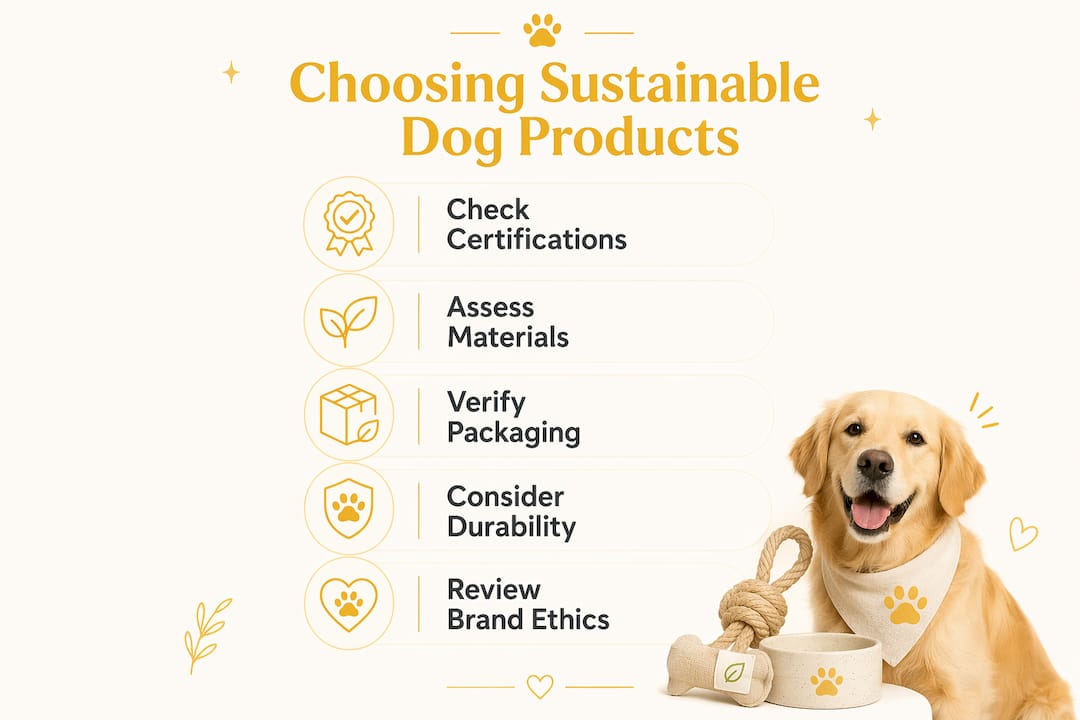
Third-party certifications are the fastest way to verify a sustainability claim. 84% of pet owners want businesses to take climate responsibility, yet vague terms like “eco-friendly” without certification backing are less effective at building trust. Look for these specific labels:
- B Corp: Verifies a company meets high social and environmental standards across its entire operation.
- GOTS (Global Organic Textile Standard): Confirms organic fiber content and responsible processing in textiles like dog beds and bandanas.
- USDA Biobased: Certifies that a product contains a verified percentage of renewable biological ingredients.
- Land to Market: Confirms ingredients are sourced from farms using regenerative agriculture practices.
Pro Tip: Ask brands directly for their certification documentation. Legitimate certifiers like B Lab and the USDA publish verified company lists online, so you can cross-check any claim in under two minutes.
Which product categories have the best sustainable options?
Sustainable alternatives exist across every major pet product category. The quality and environmental benefit vary widely by material and manufacturing method, so knowing what to look for in each category saves time and money.
Toys and accessories
Hemp and natural rubber toys biodegrade and avoid the chemical leaching risks associated with conventional PVC toys. Recycled plastic accessories, particularly those made from post-consumer ocean plastic, reduce landfill and ocean waste simultaneously. The key comparison is longevity: a well-made hemp rope toy lasts longer than a cheap “eco” toy made from low-grade recycled material.
| Category | Sustainable material | Conventional alternative | Key benefit |
|---|---|---|---|
| Toys | Natural rubber, hemp | PVC, virgin plastic | No chemical leaching, biodegradable |
| Beds | Organic cotton, recycled fill | Polyester, foam | Lower carbon footprint, GOTS certifiable |
| Waste bags | Compostable cornstarch | Standard polyethylene | Decomposes in industrial compost |
| Collars | Hemp, recycled nylon | Virgin nylon, leather | Renewable source, durable |
| Food packaging | PLA, PBAT films | Conventional plastic | Reduced energy and water in production |
Sustainable dog food
Shelf-stable dry and canned foods often carry a lower total carbon footprint than fresh or frozen options because cold chain energy demands raise the environmental cost of preserved foods significantly. That finding runs counter to what most dog owners assume. Brands like Canidae partner with Land to Market-verified farms to source ingredients that restore soil health and sequester carbon. Regenerative agriculture is one of the most meaningful improvements a pet food brand can make to its environmental footprint.
Waste bags and grooming products
Compostable waste bags made from cornstarch break down in industrial composting facilities. Standard biodegradable bags, by contrast, often require specific conditions that landfills do not provide, so the label alone does not guarantee decomposition. For grooming, look for products with plant-based surfactants, no synthetic fragrances, and packaging made from recycled or refillable containers.
Pro Tip: Check whether your city’s composting program accepts pet waste before buying compostable bags. Some municipal programs exclude animal waste entirely, which changes the calculus on which bag type is actually better for your area.
How do you verify sustainability claims on dog products?
Sustainability communication is effective only when it is credible, transparent, and product-specific. Vague ESG claims erode trust and reduce willingness to pay premiums for sustainable pet products. Value chain signals like clear packaging instructions and ingredient traceability are the most reliable indicators of a brand that takes sustainability seriously.
Follow these steps to verify any sustainability claim before you buy:
- Check for named certifications. B Corp, GOTS, USDA Biobased, and Land to Market are all publicly verifiable. If a brand claims certification, look it up on the certifier’s official website.
- Read the ingredient or material list. Specific materials like organic cotton, recycled nylon, or cornstarch are verifiable. Generic terms like “natural materials” are not.
- Look for packaging instructions. A brand committed to sustainable packaging will tell you exactly how to dispose of it, whether that means curbside recycling, industrial compost, or a take-back program.
- Search for supply chain transparency. Brands that name their farms, mills, or manufacturing partners are harder to fake. Anonymous supply chains are a red flag.
- Cross-reference third-party reviews. Organizations like the World Wildlife Fund and the Environmental Working Group publish guidance on pet product safety and environmental claims.
56% of pet industry firms have integrated sustainability strategies, and 79% have formal sustainability teams. That means the infrastructure for genuine transparency exists. Brands that still rely on vague green language are choosing not to be transparent, not failing to have the information.
What are practical steps to switch to sustainable pet supplies affordably?
Almost 75% of pet owners say pet ownership costs are higher than last year. Balancing sustainability with affordability is not optional for most dog owners. The good news is that the most sustainable choice is usually the most durable one, and durable products cost less over time.
- Start with high-use items. Replace waste bags, food packaging, and grooming products first. These are consumables you buy repeatedly, so the environmental and cost impact compounds quickly.
- Buy durable over disposable. One well-made organic cotton bed or hemp collar replaces multiple cheap alternatives. Test a product’s durability against your dog’s activity level before buying in bulk.
- Choose refillable or multi-use packaging. Some pet shampoo and supplement brands offer refill pouches that cut packaging waste by more than half per use.
- Repurpose before replacing. Old towels make excellent dog bed liners. Worn bandanas work as cleaning rags. Delaying disposal is itself a sustainable act.
- Support brands with verified commitments. Brands that donate to local animal shelters or publish clear sustainability reports reinforce community and environmental values simultaneously.
- Avoid buying excess. A dog with three toys it ignores is not a sustainable outcome. Buy fewer items your dog actually uses.
Key Takeaways
Choosing eco-conscious dog products requires verified certifications, durable materials, and transparent packaging claims, not just green labels.
| Point | Details |
|---|---|
| Certifications matter most | Look for B Corp, GOTS, USDA Biobased, or Land to Market labels to verify real sustainability claims. |
| Durability beats eco-labels | One high-quality hemp or recycled-material product reduces more waste than several short-lived alternatives. |
| Packaging has measurable impact | Biodegradable PLA and PBAT packaging cuts manufacturing energy by 25% and water use by 64% versus conventional plastics. |
| Shelf-stable food is often greener | Dry and canned pet foods typically carry a lower carbon footprint than fresh or frozen options due to cold chain energy costs. |
| Affordability and sustainability align | Durable, waste-reducing products cost less over time and are the most practical choice as pet ownership costs rise. |
What I have learned from watching the sustainable pet market evolve
The sustainable pet product space has matured faster than most people realize. Three years ago, “eco-friendly” on a label was enough to move product. Now, dog owners ask for certification numbers and supply chain details. That shift is the most encouraging development I have seen in this market.
What I find underappreciated is the cold chain insight. Most dog owners assume fresh food is the greener choice because it feels less processed. The data says the opposite. Shelf-stable dry food often has a meaningfully lower carbon footprint because refrigeration and freezing demand enormous energy across the entire distribution chain. That single fact changes how I think about sustainable pet food choices.
My honest view on certifications: GOTS and B Corp are the two worth prioritizing above all others for textiles and brand-level claims respectively. USDA Biobased is strong for food and packaging. Land to Market is the one to watch for pet food ingredient sourcing, especially as regenerative agriculture grows. Brands like Canidae are already using it, and more will follow.
The trap I see dog owners fall into is optimizing for the label rather than the lifecycle. A product made from recycled plastic that falls apart in two months is worse for the environment than a conventional product that lasts five years. Buy for longevity first. The certification is the tiebreaker, not the primary criterion.
Pawcaptain’s made-to-order model is a practical example of what this looks like in practice. Producing only what is ordered eliminates overstock waste entirely. That is a structural sustainability decision, not a marketing claim. It is the kind of thing worth looking for across every brand you consider. You can also explore Pawcaptain’s community impact work to see how sustainability extends beyond materials.
— Michael
Pawcaptain’s coastal dog beds and accessories built for eco-conscious owners
Pawcaptain designs coastal-inspired dog beds and accessories made to order, which means zero overstock and zero wasted production. Every item is built with durability and environmental mindfulness as the starting point, not an afterthought.
The Coastal Crab Plaid Dog Bed combines comfort, style, and responsible materials in a design your dog will actually use. For dog owners who want their accessories to reflect the same values, Pawcaptain’s sustainable dog bandanas are made from responsibly sourced materials and available in matching sets for owners and dogs. Browse the full collection at Pawcaptain to find products that hold up to real use while holding to real environmental standards.
FAQ
What is a sustainable pet product?
A sustainable pet product is any item designed to minimize environmental harm across its full lifecycle, including materials, manufacturing, packaging, and disposal. Certifications like B Corp, GOTS, and USDA Biobased provide verified proof of those claims.
Are biodegradable waste bags actually better for the environment?
Compostable cornstarch bags decompose in industrial composting conditions, but standard biodegradable bags often require specific environments that landfills do not provide. Check whether your local composting program accepts pet waste before choosing a bag type.
How do I spot greenwashing in pet products?
Greenwashing relies on vague terms like “natural” or “eco-friendly” without certification backing. Verified certifications, named materials, and clear packaging disposal instructions are the signs of a brand making honest claims.
Is dry dog food more sustainable than fresh food?
Shelf-stable dry and canned foods typically carry a lower total carbon footprint than fresh or frozen options because cold chain energy demands significantly raise the environmental cost of refrigerated distribution.
Which certifications should I prioritize when shopping for dog products?
B Corp is the strongest brand-level certification. GOTS covers organic textiles. USDA Biobased applies to food and packaging. Land to Market verifies regenerative agriculture sourcing for pet food ingredients.