

Bespoke pet apparel is defined as clothing made from a unique pattern created from scratch for a specific pet’s measurements and style preferences, not modified from an existing template. The term “bespoke” comes from traditional tailoring and means the garment is spoken for before it exists. Unlike off-the-shelf pet clothing or even most custom pet clothing, bespoke animal fashion starts with your pet’s exact body dimensions, fabric choices, and design details. The result is a one-of-a-kind garment built around your dog, not a size chart.
What is bespoke pet apparel vs. custom and personalized options?
Bespoke, custom, and personalized are three different things. Confusing them costs pet owners money and leads to disappointing fits.
Bespoke means the pattern is drafted from scratch for one specific pet. No existing template is used. The maker designs the cut, selects the materials, and specifies every hardware detail around your pet’s body and your preferences. The customer is involved at every stage, from fabric choice to final fitting.
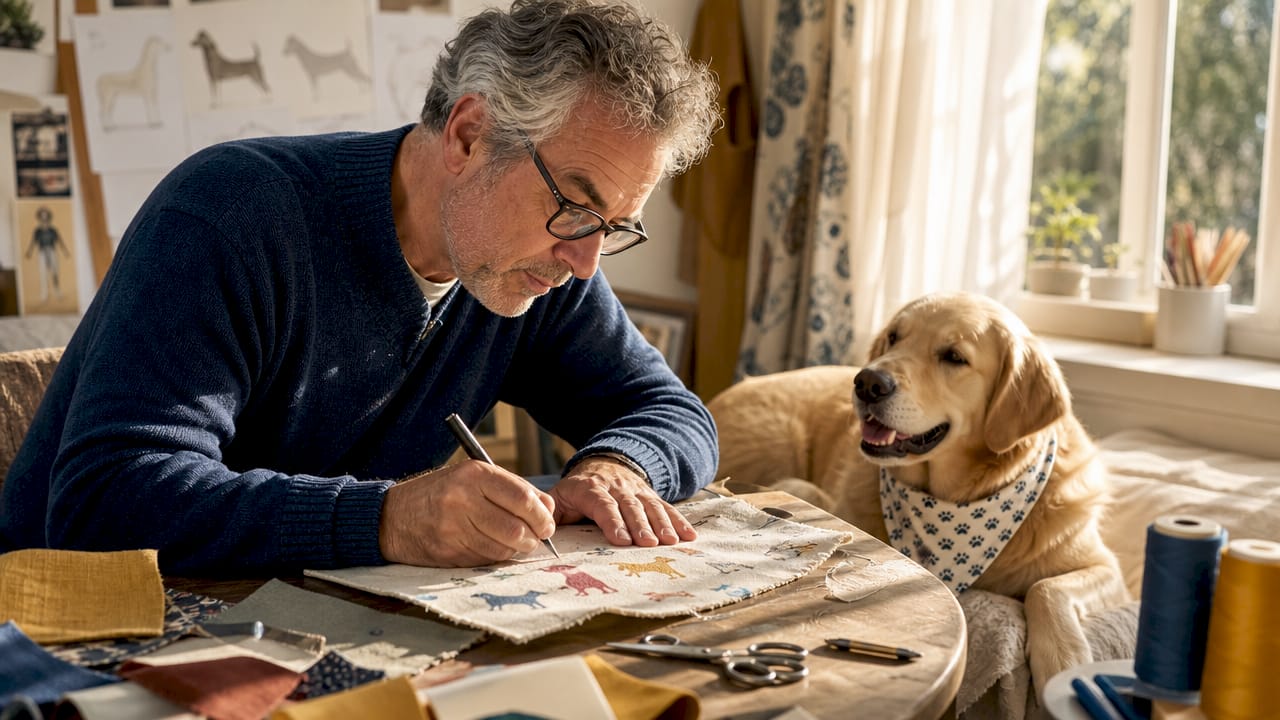
Custom typically means a maker takes an existing base pattern and adjusts it to fit your pet’s measurements. The structure of the garment already exists. The maker scales or modifies it. This produces a better fit than off-the-shelf sizing, but the underlying design is not original.
Personalized is the most basic tier. A finished product receives a name, logo, or embroidered detail. Retail personalization adds decorative features to an existing item without changing the core product at all. The fit, fabric, and construction remain identical to the stock version.
| Feature | Bespoke | Custom | Personalized |
|---|---|---|---|
| Pattern creation | Unique, from scratch | Modified base pattern | Stock pattern, unchanged |
| Fit | Exact to individual measurements | Close fit via adjustments | Standard sizing |
| Material control | Full selection by client | Limited options | No control |
| Hardware and trim | Fully specified | Sometimes adjustable | Fixed |
| Price range | $350–$1,200+ | $80–$350 | $15–$80 |
Pro Tip: Ask any vendor one direct question before ordering: “Do you draft a new pattern for my pet, or do you adjust an existing one?” The answer tells you immediately whether the product is truly bespoke.
What measurements does bespoke pet apparel require?
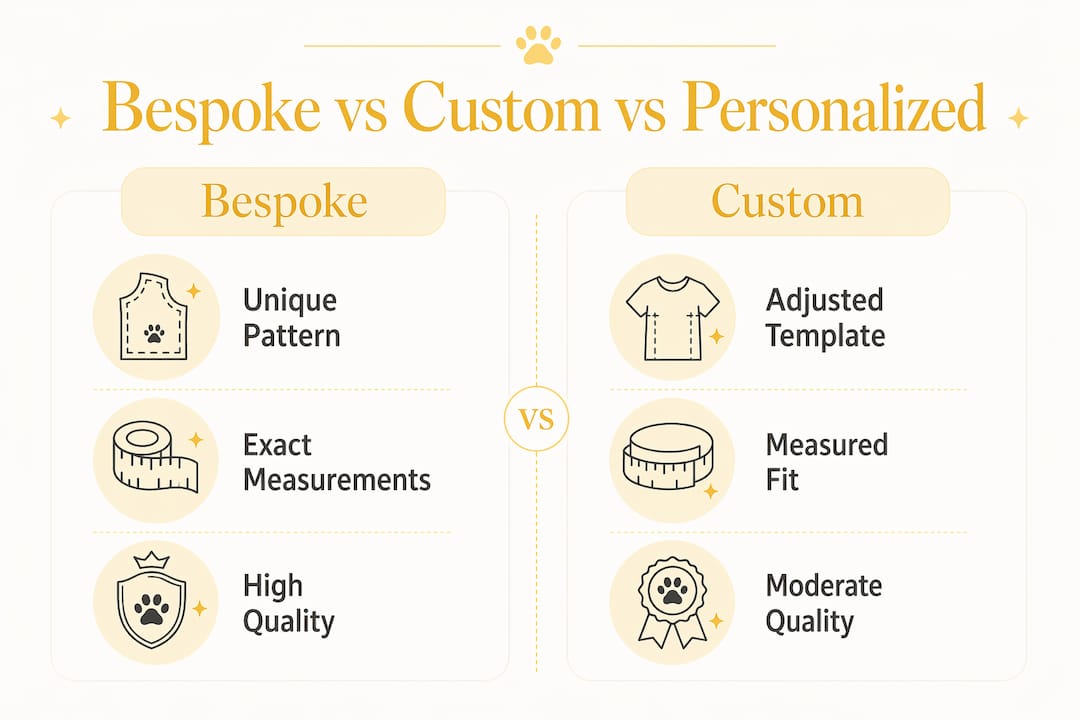
Precise measurements are the foundation of any well-fitted tailored pet apparel. Three measurements are non-negotiable: neck girth, chest girth, and back length.
- Neck girth: Measure where the collar sits. Apply the two-finger rule. Slide two fingers under the tape after measuring. If they fit comfortably, the garment will not restrict breathing or movement.
- Chest girth: Measure at the widest point of the chest, directly behind the front legs. This is the most critical measurement for coats and jackets.
- Back length: Measure from the base of the neck to the base of the tail. This determines the garment’s overall coverage and prevents bunching or riding up.
Photos add a layer of accuracy that measurements alone cannot provide. A 2026 bespoke dog coat guide recommends at least three core measurements plus photos, followed by prototyping one to two sizes per style with live fit sessions. That process catches problems that a tape measure misses.
Motion testing matters as much as static fit. A garment can look perfect on a still dog and bind completely when the dog walks, sits, or shakes. Live fit sessions on dogs reveal these issues before the final garment is cut. Small decisions, like where the neck girth sits and how much tension the tape applies, directly affect function and prevent slipping or restricted movement.
Pro Tip: Request a written measurement guide from your vendor before you start. A reputable bespoke maker specifies exactly where each measurement is taken, not just which measurements are needed.
What materials define quality bespoke pet apparel?
Material selection is where bespoke animal fashion separates itself from mass production. A true bespoke garment gives you full control over fabric, lining, hardware, and trim. That control directly affects durability, comfort, and how the garment ages.
Fabric tiers
- Waterproof synthetics (nylon, polyester with DWR coating): Used in everyday outdoor coats. Lightweight, easy to clean, and weather-resistant. These anchor the entry-level bespoke tier.
- Insulated fills (down or synthetic batting): Added to mid-tier and premium coats for cold climates. The fill weight determines warmth without bulk.
- Luxury wool and tweed: Found in high-end bespoke coats. Wool regulates temperature naturally and holds structure well. Tweed patterns can be exclusive to a single maker, adding genuine rarity.
- Performance fleece and stretch knits: Used for active dogs or breeds that resist rigid garments. These fabrics move with the dog and reduce chafing.
- Hand-finished linings and trims: Silk, cotton lawn, or custom-woven linings appear in the luxury tier. Hand-stitched seams and artisan buttons signal true craftsmanship.
Bespoke tailoring involves the customer at every stage, including fabric choice and finishing details. That principle applies directly to pet apparel. When a vendor controls the full supply chain, from pattern design to hardware specifications, the product is genuinely bespoke. When a vendor private-labels a factory template, it is not.
Mass-produced pet clothing uses commodity fabrics selected for cost, not performance. Bespoke makers source fabrics for specific properties: breathability, stretch recovery, colorfastness, and wash durability. The difference shows after six months of wear.
How much does bespoke pet apparel cost?
Pricing for bespoke pet apparel follows a clear tier structure. Each tier reflects a different combination of materials, labor, and design complexity.
| Tier | Style | Price range |
|---|---|---|
| Entry | Waterproof everyday coat | $30–$70 |
| Mid-tier | Insulated coat with lining | $80–$160 |
| Premium | Structured coat, quality fabrics | $170–$350 |
| Luxury bespoke | Hand-finished, exclusive materials | $350–$1,200+ |
Pricing depends on materials, craftsmanship, and finish quality. Perceived value also plays a role. Luxury bespoke pricing is supported by storytelling, provenance, and the exclusivity of the pattern itself.
Several factors drive price upward:
- Material cost: Luxury wool and hand-woven fabrics cost significantly more than commodity synthetics.
- Labor intensity: Hand-stitched seams, multiple fittings, and pattern drafting from scratch require skilled time.
- Design exclusivity: A pattern created for one pet and never reused carries inherent scarcity value.
- Hardware: Custom buckles, solid brass fittings, and branded closures add cost and durability.
- Turnaround time: Rush orders on bespoke garments command a premium because the workflow cannot be compressed without sacrificing quality.
The entry tier at $30–$70 is not truly bespoke in most cases. Garments at that price point typically use adjusted base patterns, not original drafts. Genuine bespoke work starts reliably at the premium tier and above.
Practical tips for ordering bespoke pet clothing
Knowing what to ask before you order separates a great experience from a costly mistake.
- Verify the pattern process. Ask directly whether the maker drafts a new pattern or adjusts an existing one. Genuine bespoke involves full control over pattern creation, material selection, and hardware design.
- Request a measurement protocol. A credible vendor provides written instructions specifying exact measurement points, not just a list of measurements to take.
- Ask about prototyping. Reputable bespoke makers offer a muslin or test garment before cutting the final fabric. This step prevents expensive remakes.
- Check turnaround times. True bespoke takes time. Be skeptical of any vendor promising bespoke quality with a 48-hour turnaround.
- Evaluate transparency. A maker who cannot explain their fabric sources, construction methods, or fitting process is likely selling custom or personalized work under a bespoke label.
Pro Tip: Browse the Paws for a Cause page at Pawcaptain to understand how a brand’s values and community commitments reflect the care they put into their products.
The pet apparel market uses “bespoke” loosely. Your job as a buyer is to ask specific questions and evaluate the answers against what true bespoke actually requires.
Key takeaways
Bespoke pet apparel requires a unique pattern drafted from scratch, precise measurements, quality material selection, and multiple fit sessions to produce a garment that truly fits one specific pet.
| Point | Details |
|---|---|
| Bespoke means from scratch | The pattern is drafted uniquely for your pet, not adapted from an existing template. |
| Three measurements are non-negotiable | Neck girth, chest girth, and back length form the foundation of any accurate fit. |
| Motion testing catches hidden fit issues | Live fit sessions on dogs reveal problems that static measurements and photos cannot. |
| Pricing starts at the premium tier | Genuine bespoke work reliably starts around $170–$350; luxury tiers reach $1,200 and above. |
| Verify before you buy | Ask vendors directly about pattern drafting, material sourcing, and prototyping to confirm true bespoke claims. |
Why fit and fabric matter more than the label
I have seen a lot of pet apparel marketed as bespoke that is nothing more than a factory template with a name embroidered on it. The word gets used because it sells. What actually matters is whether the garment fits your dog’s specific body and holds up after real use.
The most common mistake pet owners make is prioritizing aesthetics over construction. A coat can look beautiful in a product photo and bind at the shoulders the moment a dog moves. That happens when the maker skips motion testing or relies on static measurements alone. A garment built from a unique pattern, fitted on a live dog, and made from fabric chosen for that dog’s activity level will outlast three mass-produced alternatives.
The market is also maturing. Pet owners are asking better questions, and the gap between genuine bespoke and labeled custom is becoming harder for low-effort vendors to hide. That is good news for anyone willing to do a little homework before ordering.
Coastal-inspired pet style at Pawcaptain
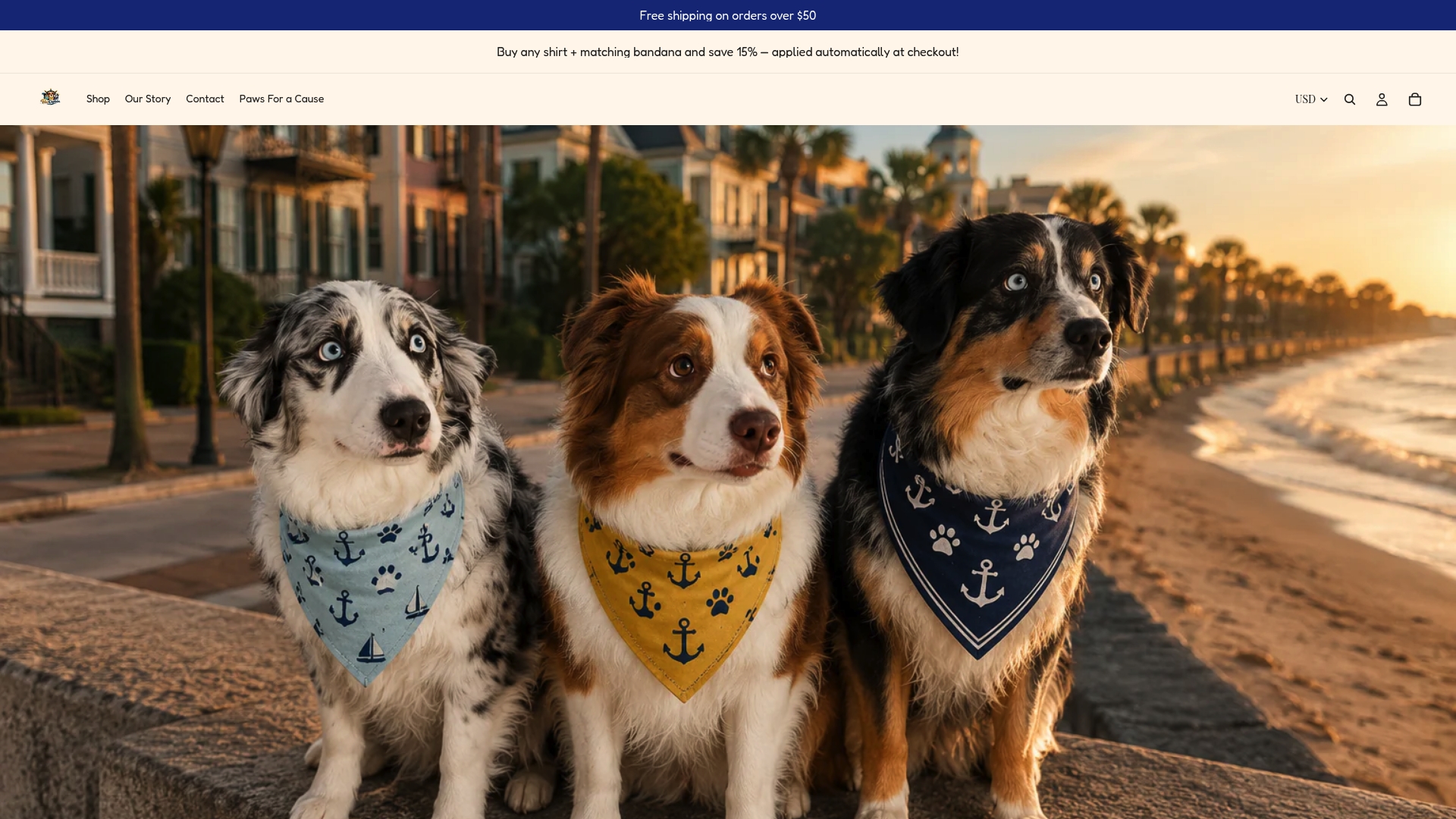
Pawcaptain builds every product with the same attention to detail that bespoke pet apparel demands. Made-to-order production means nothing sits in a warehouse waiting to be sold. Every piece is crafted when you order it, reducing waste and keeping quality consistent.
The Coastal Crab Plaid Dog Bed and the Nautical Striped Paw Captain Pet Bandana reflect the brand’s coastal design ethos: clean patterns, quality fabrics, and details that hold up. Pawcaptain also offers matching sets for dogs and their owners, a rare find in a market where most brands stop at the pet. If you want pet goods made with purpose and style, Pawcaptain is worth your time.
FAQ
What does bespoke mean in pet apparel?
Bespoke pet apparel means a garment is made from a unique pattern drafted specifically for one pet’s measurements and preferences. No existing template is used or modified.
How is bespoke different from custom pet clothing?
Custom pet clothing adjusts an existing base pattern to fit your pet. Bespoke creates an entirely new pattern from scratch, giving full control over fit, fabric, and construction.
What measurements are needed for bespoke pet apparel?
The three core measurements are neck girth, chest girth, and back length. Vendors should also request photos and conduct live fit sessions to catch motion-related fit issues.
How much does bespoke pet apparel cost?
Prices range from $170–$350 for premium bespoke work and $350–$1,200 or more for luxury hand-finished garments. Entry-level pricing below $80 rarely reflects true bespoke production.
How do I know if a vendor is truly offering bespoke pet apparel?
Ask whether they draft a new pattern for your pet or adjust an existing one. A genuine bespoke maker also provides written measurement protocols, offers prototyping, and can explain their material sourcing.
— Michael