

A dog’s nap corner is a dedicated sleeping zone designed to meet a pet’s physical and emotional rest needs. Dogs require 12–18 hours of sleep per day depending on age, which means the quality of their sleeping space directly affects their mood, behavior, and long-term health. A well-designed dog nap area reduces a pet’s reliance on human furniture and gives them a reliable sanctuary they can return to on their own terms. Getting this right takes more than tossing a blanket in a corner. Location, bedding type, sensory comfort, and positive reinforcement all determine whether your dog actually uses the space.
How to create a cozy dog nap corner: finding the right spot
Location is the single most important factor in a successful dog nap corner. Dogs choose resting spots based on quietness, safety, and accessibility. A spot that fails on any of those three points will go unused, no matter how nice the bed looks.
Start by watching your dog for a few days. Notice where they already curl up during the day. That behavior tells you exactly what conditions they prefer, whether that is near a window, along a wall, or tucked into a low-traffic hallway. Building the nook where your dog naturally rests gives the space the best chance of immediate use.
Once you identify the general area, apply these placement rules:
- Avoid high-traffic zones. Doorways, hallways near the front entrance, and spots beside the TV create too much noise and movement for consistent rest.
- Pick accessible spots. The dog should be able to enter and exit freely. A corner that feels like a trap will be avoided.
- Use underutilized spaces. Under-stair areas, unused closet corners, and built-in shelf alcoves work well in smaller homes without requiring any renovation.
- Check airflow and temperature. Avoid spots directly under air vents or beside radiators. Consistent, moderate temperature year-round keeps the space comfortable in every season.
- Keep it near the family. Dogs are social animals. A quiet corner that still allows them to see or hear household activity hits the right balance between calm and connection.
Pro Tip: Place a worn T-shirt or a piece of your clothing in the spot before adding the bed. Your scent signals safety and encourages your dog to investigate and settle there naturally.
The calm corner placement should feel like a retreat, not an isolation cell. Quiet, visible, and freely accessible is the formula that works.
What bedding should you use for a comfortable dog sleeping space?
Bedding choice depends on two things: how your dog sleeps and how old they are. Curlers benefit from donut-style beds with raised edges, while stretchers prefer flat rectangular beds. Matching the bed shape to the sleeping style prevents the dog from hanging off the edge or ignoring the bed entirely.
| Sleeping style | Best bed type | Key feature |
|---|---|---|
| Curler | Donut or bolster bed | Raised edges for head and chin support |
| Stretcher | Flat rectangular mat | Full-body surface area |
| Burrower | Cave or hooded bed | Enclosed top for warmth and security |
| Senior dog | Orthopedic memory foam | Joint pressure relief and mobility support |
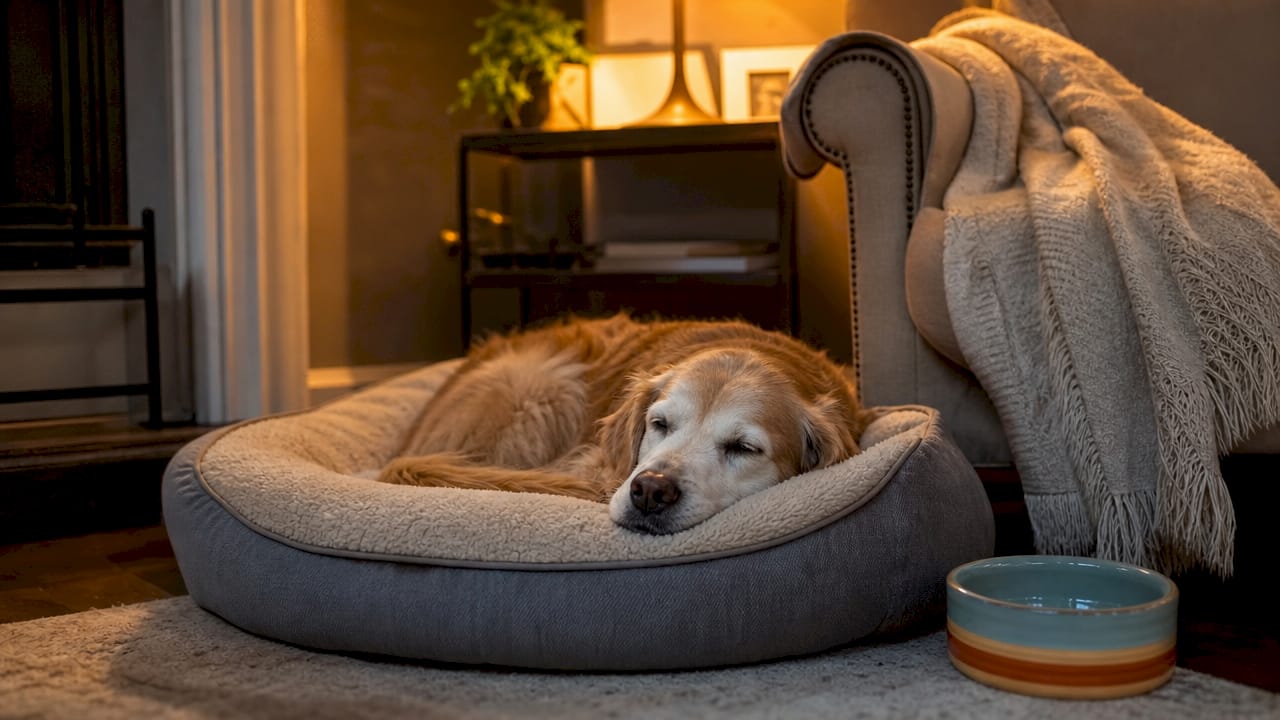
Orthopedic bedding directly influences joint health and long-term mobility, especially for dogs over seven years old. If your dog shows stiffness after lying down, an orthopedic base is not optional. Pawcaptain’s guide on padding and joint health explains how foam density affects pressure distribution across a dog’s hips and shoulders.
Size matters as much as shape. The bed must allow the dog to stand, turn around, and stretch fully. A bed that is too small will be abandoned. Measure your dog from nose to tail while they are lying stretched out, then add at least six inches on each side.
For anxious dogs or breeds that prefer enclosed spaces, a canopy or cave-style bed is the right call. Canopy beds replicate the ancestral den instinct by providing a semi-enclosed overhead structure that signals safety. This is especially effective for small breeds, rescue dogs, and pets with noise sensitivity.
Pro Tip: Choose a bed cover with a removable, machine-washable shell. Washing the cover weekly removes allergens, odors, and bacteria that build up faster than most owners expect.
Adding a soft blanket on top of the bed gives your dog something to paw and arrange before lying down. That pawing behavior is instinctive and signals the dog is settling in comfortably.
How do you personalize a dog nap area for calm and relaxation?
A warm dog nap spot becomes a true relaxation zone when it appeals to more than just physical comfort. Sensory details shape how quickly a dog settles and how deeply they rest. These additions make a real difference:
- Familiar toys or chews. Place one or two of your dog’s favorite items in the corner. Familiar objects create positive associations with the space and give the dog something to do before sleep.
- Soft, warm lighting. Harsh overhead lighting disrupts rest. Natural light from a nearby window works well during the day. In the evening, a low-wattage lamp or soft LED strip placed away from the dog’s eye line keeps the area calm.
- White noise or calming music. Studies on canine auditory responses show that classical music and species-specific sound frequencies reduce stress indicators in dogs. A small speaker playing ambient sound at low volume can help dogs in noisy households settle faster.
- Scent control. Keep the area free from strong cleaning products, air fresheners, and perfumes. Dogs have a sense of smell roughly 10,000 times more sensitive than humans, so chemical odors that seem mild to you register as overwhelming to them.
- Visual calm. Position the corner away from windows that face busy streets or areas where other animals pass frequently. Reactive dogs will not rest if they can see triggers.
The calm corner must always function as a positive space, never as a place of punishment. Sending a dog to their corner after bad behavior destroys the emotional association you are trying to build. That association is the whole point. Once the dog links the space with safety and rest, they will choose it voluntarily and consistently.
Pro Tip: Pair the corner with a specific verbal cue like “go rest” during training. Over time, the cue alone will prompt the dog to head to their spot, which is useful during guests, mealtimes, or when you need quiet.
For dogs that need extra reassurance, a cozy outdoor pet corner follows the same sensory principles and can extend the concept to porches or patios during warmer months.
How do you get your dog to actually use their nap corner?
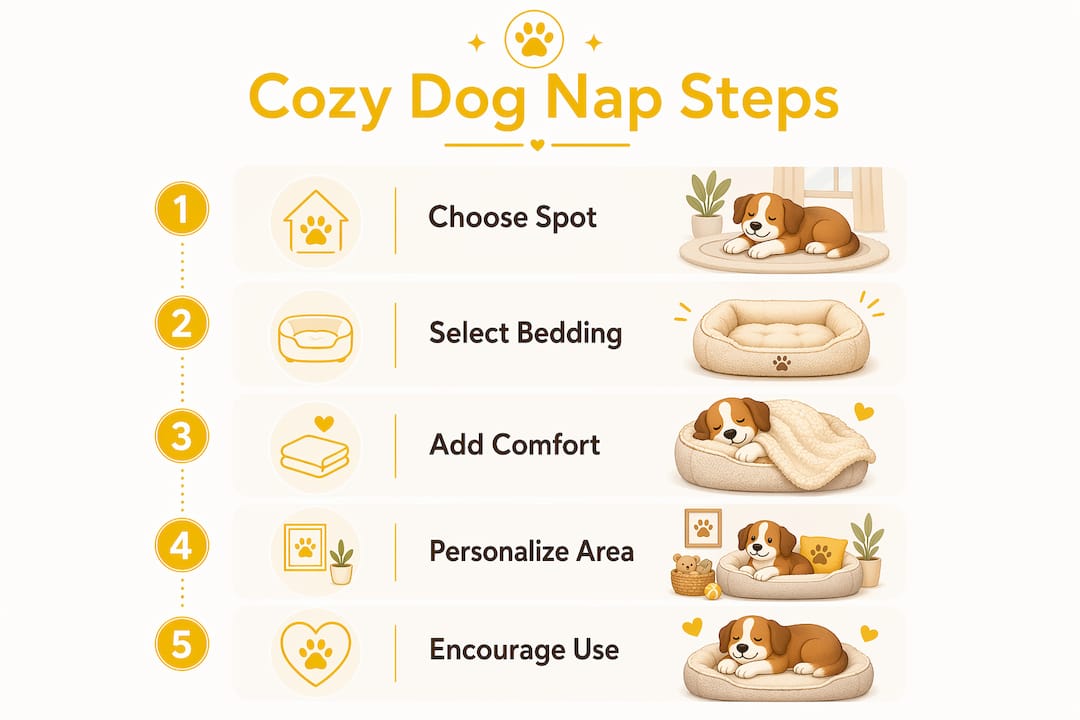
Getting a dog to use a new space takes patience and consistency. Positive reinforcement through praise, treats, and feeding meals in the corner builds the fastest and most durable association. Follow these steps in order:
- Introduce the space without pressure. Let your dog sniff and explore the corner freely. Do not guide them in or block their exit. First impressions matter.
- Feed meals there for the first week. Place the food bowl at the edge of the corner, then gradually move it further in over several days. Eating in a space creates a strong positive link.
- Reward any voluntary use. The moment your dog steps into the corner or lies down there, mark it with a calm “yes” and offer a treat. Keep the reward low-key so you do not excite them out of resting.
- Observe and adjust. If your dog avoids the corner after a week of encouragement, something is wrong with the setup. Check temperature, noise level, and bed size before assuming the dog is being stubborn.
- Keep bedding clean and arranged. A flat, tangled, or dirty bed discourages use. Fluff the bed daily and wash the cover weekly. A fresh, well-arranged space signals that the corner is maintained and safe.
Never force your dog into the corner. Forced placement creates fear, not comfort. Voluntary use builds trust and makes the space genuinely useful over the long term.
Pro Tip: If your dog keeps choosing a different spot despite your setup, move the corner to where they are already resting. Adapting to your dog’s preference is faster than training them out of it.
Key Takeaways
A well-placed, properly fitted dog nap corner with the right bedding and sensory details is the most reliable way to give your dog consistent, quality rest.
| Point | Details |
|---|---|
| Location drives success | Place the corner where your dog already rests naturally, in a quiet, accessible spot. |
| Match bed to sleep style | Curlers need donut beds; stretchers need flat mats; seniors need orthopedic foam. |
| Sensory details matter | Soft lighting, familiar scents, and low noise levels help dogs settle faster and rest longer. |
| Positive reinforcement works | Use treats, meals, and praise to build a strong association. Never use the corner as punishment. |
| Maintenance keeps it usable | Wash covers weekly, fluff bedding daily, and adjust the setup if your dog avoids the space. |
What I have learned from watching dogs choose their own corners
Most owners set up a dog nap area based on what looks good in the room. That is the wrong starting point. The dog’s existing behavior is the only reliable design brief. Every time I have seen a beautifully arranged corner go unused, the reason was the same: the owner picked the spot, not the dog.
The other mistake I see constantly is under-sizing the bed. Owners buy a bed that looks proportional to the dog standing up, but dogs sprawl. A Labrador that looks compact while sitting needs a bed that fits them fully stretched. Get that wrong and the dog will find the couch instead.
The emotional side of this is real and often underestimated. A dog that has a reliable, safe corner shows measurably calmer behavior during stressful events like thunderstorms or guests arriving. The corner becomes a coping tool, not just a sleeping spot. That shift happens only when the space is built around the dog’s actual preferences, not the owner’s aesthetic choices. Spend one week observing before you spend one dollar on setup. That week is the most valuable part of the whole process.
— Michael
Pawcaptain beds and accessories for your dog’s nap corner
Your dog’s nap corner deserves a bed that holds up to daily use and looks good doing it.

Pawcaptain’s Coastal Crab Plaid Dog Bed combines supportive padding with a coastal-inspired design that fits naturally into any home. Made to order with eco-friendly practices, each bed is built for dogs who actually use their space. For a finishing touch, the Nautical Striped Paw Captain Pet Bandana adds personality to your dog’s corner setup without adding clutter. Pawcaptain ships a range of sizes to match any breed, and every product is designed for the dog parent who treats their pet as family.
FAQ
How many hours a day do dogs need to sleep?
Dogs need 12–18 hours of sleep daily depending on age and breed. Puppies and senior dogs typically need the most rest.
What is the best location for a dog nap corner?
The best location is a quiet, low-traffic area where the dog already prefers to rest. Avoid busy doorways, loud appliances, and spots with extreme temperature fluctuations.
What type of bed works best for senior dogs?
Orthopedic memory foam beds work best for senior dogs. They relieve joint pressure and support mobility, which becomes critical for dogs over seven years old.
Should I use a covered or open bed for my dog?
Anxious dogs and breeds with den instincts do better with canopy or cave-style beds that provide overhead enclosure. Confident, heat-tolerant dogs generally prefer open flat or bolster beds.
How do I get my dog to use their new nap corner?
Feed meals in the corner for the first week and reward any voluntary entry with calm praise and treats. Never force the dog into the space, as forced placement creates avoidance rather than comfort.