

Padding in dog beds is defined as the structural layer that cushions a dog’s body, distributes weight evenly, and protects joints from hard floor contact. The role of padding in dog beds goes far beyond simple softness. Dogs spend 12–20 hours per day lying down, which means the quality of that resting surface directly affects chronic conditions like osteoarthritis. That rest time makes padding quality one of the most consequential health decisions you make for your dog. High-quality memory foam, orthopedic-grade foam density, and adequate thickness are the three factors that separate a bed that heals from one that harms.
How does padding thickness and foam density affect dog bed support?
Thickness and foam density are not the same thing, and confusing them is the most common mistake dog owners make. Thickness measures how tall the foam is. Density measures how much material is packed into each cubic foot. A thick but low-density foam still collapses under a heavy dog, leaving joints pressing against the floor.
Large dogs over 50 kg require a minimum foam thickness of 13–15 cm to prevent the bed from bottoming out under their weight. For smaller dogs under 15 kg, 5–8 cm of quality foam is generally sufficient. The key word is quality. Foam density should be 3.0 lb/ft³ or higher for true orthopedic support. Below that threshold, foam compresses too quickly and loses its ability to hold the dog’s weight off the floor.
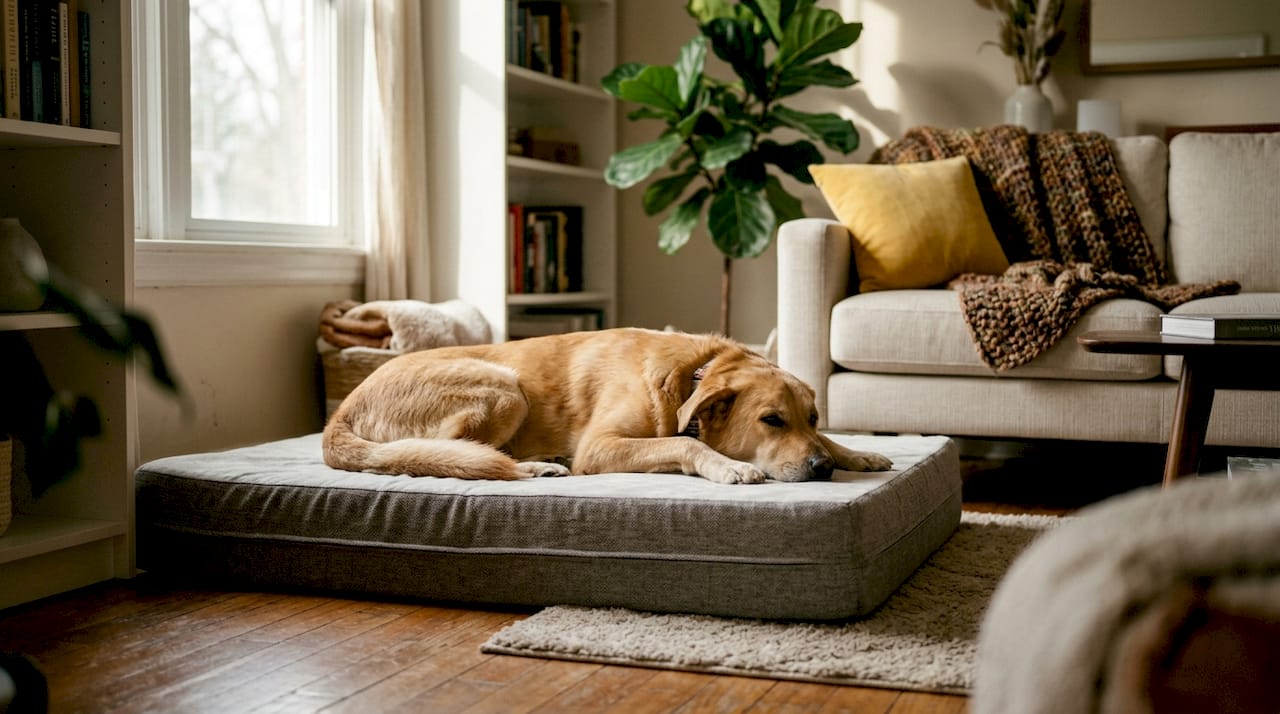
Pro Tip: Press your fist firmly into a dog bed before buying. If your knuckles touch the base within two seconds, the foam density is too low for any dog over 20 kg.
The table below shows how foam density and thickness interact across dog sizes.
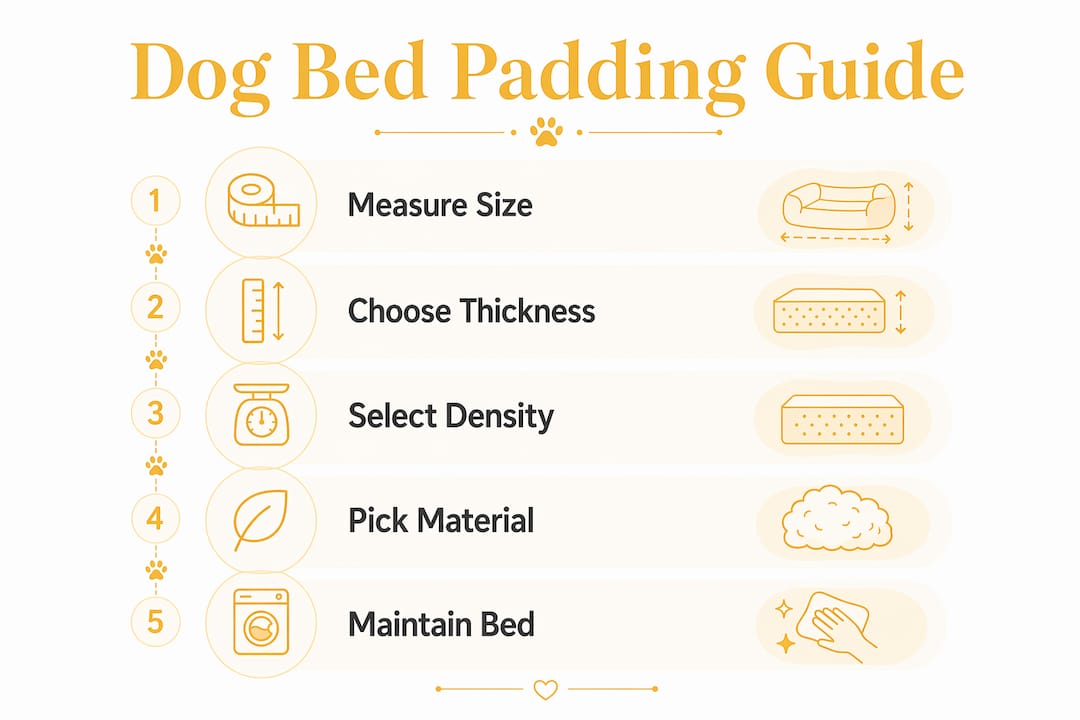
| Dog Size | Recommended Thickness | Minimum Foam Density | Joint Support Outcome |
|---|---|---|---|
| Small (under 15 kg) | 5–8 cm | 1.8 lb/ft³ | Adequate for healthy joints |
| Medium (15–30 kg) | 8–10 cm | 2.5 lb/ft³ | Good pressure distribution |
| Large (30–50 kg) | 10–13 cm | 3.0 lb/ft³ | Orthopedic-grade support |
| Giant (over 50 kg) | 13–15 cm | 3.5 lb/ft³+ | Critical for joint protection |
True orthopedic beds use a base layer of high-density foam topped with a contouring memory foam layer. The base provides lift. The top layer molds to the dog’s body. That dual-layer construction delivers both skeletal support and pressure relief in a way that single-layer foam cannot.
What are the best padding materials for dog beds?
The best padding materials for dog beds each carry specific trade-offs between support, temperature regulation, durability, and cost. Knowing those trade-offs helps you match the material to your dog’s actual needs.
Here is how the main dog bed padding options compare:
-
Memory foam. High-quality memory foam reduces peak hip joint pressure by nearly 60% compared to standard polyester-filled beds. That pressure reduction is significant for dogs with arthritis or hip dysplasia. The downside is heat retention. Memory foam traps body heat, which can worsen joint inflammation during long rest periods.
-
Polyester fiber fill. This is the most common and least expensive option. It feels soft initially but compresses quickly and does not provide structural support. Polyester fill works for young, healthy dogs with no joint concerns. It is not suitable as the primary padding for senior or large breed dogs.
-
High-density wool batting. Wool is an emerging alternative that regulates temperature better than synthetic foams and resists compression over time. It naturally wicks moisture and stays cooler in summer and warmer in winter. Wool batting costs more upfront but lasts longer than polyester fill.
-
Egg-crate foam. The convoluted surface increases airflow and distributes pressure across a wider area. Egg-crate foam works well as a top layer but lacks the density to function as a standalone base for heavy dogs.
Pro Tip: For dogs with arthritis or inflammatory conditions, pair a high-density foam base with a wool or gel-infused top layer. You get the structural lift from the base and the temperature regulation from the top.
The importance of padding in dog beds becomes clearest when you look at material failure. Soft, fluffy beds without structural support cause joints to absorb pressure from the floor directly. A bed that looks plush but lacks density provides no skeletal lift and no spinal alignment. That distinction matters more than any marketing claim about comfort. For a deeper look at how plush bedding materials compare in terms of pressure relief, Pawcaptain’s guide covers the key differences clearly.
How does proper padding reduce joint pain in senior dogs?
Veterinarians now treat resting surface quality as a form of environmental pain management. The concept is straightforward. When a dog rests on an unsupportive surface, inflammatory compounds pool around compressed joints. That pooling extends recovery time and worsens chronic conditions like osteoarthritis, hip dysplasia, and intervertebral disc disease (IVDD).
“Orthopedic-grade padding increases the surface area in contact with the dog’s body, which distributes weight more evenly and keeps the spine in a neutral position. That neutral alignment reduces the mechanical stress that drives inflammation during rest.” — Veterinary environmental pain management principle
Orthopedic padding works by spreading the dog’s weight across the entire contact surface rather than concentrating it at the hips and shoulders. That wider distribution lowers peak pressure at any single point. For a dog with hip dysplasia, that difference between concentrated and distributed pressure can determine whether the dog wakes up stiff or mobile.
Senior dogs and large breeds benefit most from this effect. A dog with osteoarthritis that sleeps 16 hours a day on a low-density bed accumulates hours of joint compression every single day. Switching to orthopedic-grade padding reduces that cumulative load. Senior dog arthritis care resources confirm that bed quality ranks among the top environmental factors in managing chronic joint pain. The practical outcome is visible. Dogs on proper orthopedic beds typically show less stiffness when rising, more willingness to use the bed, and better sleep quality overall.
What owner tips optimize dog bed padding performance?
Choosing the right padding material is only half the work. How you select, use, and maintain a padded bed determines whether it delivers long-term orthopedic benefits.
-
Match thickness to your dog’s weight. Use the density and thickness guidelines above as a baseline. Never buy a bed based on size alone without checking foam density specifications.
-
Avoid shredded foam fill as the primary support layer. Shredded foam and low-quality polyester fill shift inside the bed during use, leaving hips and shoulders unsupported by morning. Solid foam layers do not shift.
-
Prioritize a non-slip bottom for senior dogs. A non-slip base prevents falls and encourages older dogs with reduced mobility to actually use the bed. A bed that slides on hardwood floors creates a fall hazard and discourages use.
-
Inspect padding every six months. Press the foam firmly in multiple spots. If it bottoms out or does not spring back within three seconds, the foam has lost its density and needs replacing.
-
Match bed shape to sleeping style. Dogs that curl up retain heat well and may prefer bolster-style beds. Dogs that sprawl flat need flat orthopedic mattress beds with full-body coverage. Matching the shape to the behavior maximizes how much of the padding actually supports the dog.
For dogs with chronic conditions, practical senior dog care tips recommend replacing orthopedic beds every 18–24 months, even when the exterior looks intact. Foam degrades from the inside out.
Key takeaways
Padding quality determines whether a dog bed protects joints or worsens them, with foam density, material type, and thickness each playing a distinct and measurable role.
| Point | Details |
|---|---|
| Foam density over thickness | Density of 3.0 lb/ft³ or higher prevents bottoming out under heavy dogs. |
| Memory foam trade-offs | Memory foam cuts hip pressure by nearly 60% but retains heat that can worsen inflammation. |
| Dual-layer construction | A high-density base topped with contouring foam delivers both lift and pressure relief. |
| Non-slip base for seniors | Anti-slip backing prevents falls and encourages older dogs with mobility issues to use the bed. |
| Replace padding regularly | Inspect foam every six months and replace beds every 18–24 months as foam degrades internally. |
What I’ve learned about padding that most owners miss
Most dog owners shop for a bed the same way they shop for a throw pillow. They squeeze it, feel how soft it is, and decide based on that. That test tells you almost nothing useful.
The single most important number on a dog bed is foam density, not thickness and not the cover material. I have seen beds marketed as orthopedic that use 1.5 lb/ft³ foam. That foam collapses under a 30 kg dog within weeks. The word orthopedic has no regulated definition in the pet industry. You have to check the spec sheet yourself.
Temperature regulation is the factor owners overlook most. A dog sleeping 14 hours on heat-trapping memory foam is accumulating hours of elevated joint temperature. For dogs already dealing with inflammation, that heat makes things worse, not better. Wool batting and gel-infused foam layers exist specifically to solve this problem. They are worth the extra cost for any dog with a chronic condition.
My honest recommendation: prioritize density first, then temperature regulation, then thickness. A thinner bed with high-density foam and a wool top layer will outperform a thick, plush, low-density bed every time. And for senior dogs, add the non-slip base as a non-negotiable. A dog that slides off the bed stops using it, and then all the orthopedic engineering is wasted.
— Michael
Pawcaptain dog beds built for real orthopedic support
Pawcaptain designs its dog beds with the same principles covered in this article. High-density foam padding, anti-slip backing, and durable coastal-inspired fabrics come together in beds built to support joint health over the long term.
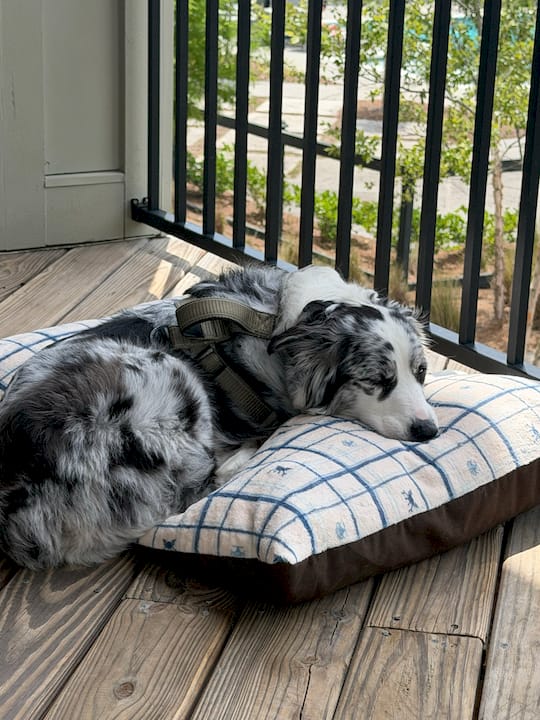
The Coastal Crab Plaid Dog Bed features orthopedic-grade padding and a built-in non-slip base, making it a practical choice for senior dogs and large breeds. Pawcaptain makes each bed to order using eco-friendly practices, so nothing goes to waste. Every purchase also supports local animal shelters as the brand grows. If you want a bed that looks good and actually does the orthopedic work your dog needs, Pawcaptain’s dog bed collection is worth a close look.
FAQ
What is the role of padding in dog beds?
Padding cushions a dog’s body, distributes weight evenly across the sleeping surface, and protects joints from floor contact. High-density orthopedic padding keeps the spine in a neutral position and reduces peak pressure at the hips and shoulders.
How thick should dog bed padding be for large breeds?
Large dogs over 50 kg need at least 13–15 cm of foam thickness to prevent the bed from bottoming out. Thickness alone is not enough. Foam density must also meet or exceed 3.0 lb/ft³ for the bed to maintain support over time.
Is memory foam the best padding material for dogs?
Memory foam is one of the best options for pressure relief, reducing hip joint pressure by nearly 60% compared to standard polyester beds. Dogs prone to joint inflammation may benefit from a wool or gel-infused top layer to offset memory foam’s heat retention.
Why does my dog’s padded bed stop working after a few months?
Foam degrades from the inside out, especially in low-density beds. Shredded foam and polyester fill shift during use, leaving pressure points unsupported. Inspect the foam every six months and replace the bed every 18–24 months to maintain orthopedic benefits.
Do senior dogs need a special type of padding?
Senior dogs need high-density orthopedic foam to reduce joint compression during long rest periods. A non-slip base is equally important. It prevents falls on hard floors and encourages dogs with reduced mobility to actually use the bed consistently.