

A dog accessories styling checklist is a practical sequence that starts with fit and comfort, then builds toward style. Most dog owners skip straight to aesthetics and end up with a collar that chafes or a harness that twists mid-walk. The right approach covers measurements, material quality, and eco-conscious certification before you add any decorative layer. This guide covers every step, from the two-finger collar check to spotting greenwashing on product labels, so your dog looks great and stays comfortable.
1. How to check fit and comfort for collars and harnesses
Collar and harness fit is the foundation of any canine fashion checklist. Get this wrong and every accessory on top of it causes problems.
Collar fit: the two-finger rule
The two-finger rule is the standard method for checking collar fit. With your dog standing naturally, slide two fingers under the collar and reach skin level. If your fingers slide in with light resistance, the fit is correct. If the collar lifts off the neck, it is too loose. If you cannot slide both fingers in, it is too tight.
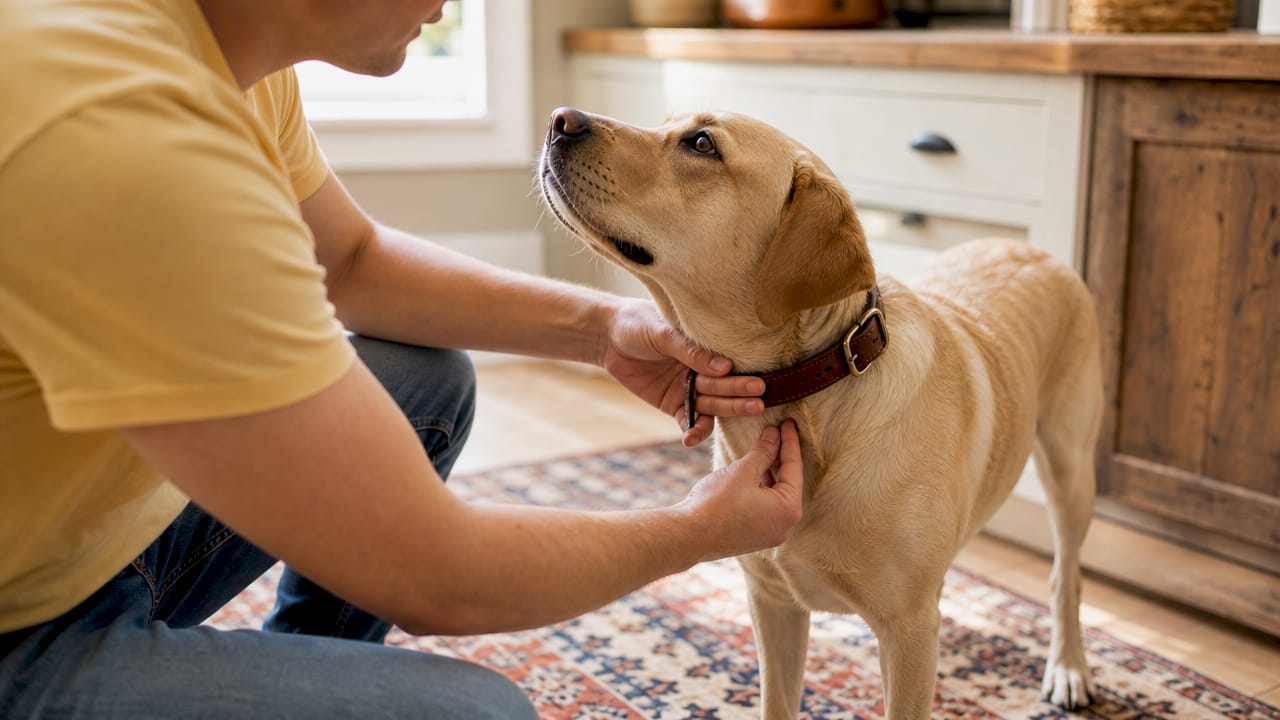
One limitation applies here. The two-finger rule depends on hand size and technique, so it works best as a quick check rather than a primary sizing method. A measuring tape plus a size chart gives a more precise baseline. Measure your dog’s neck circumference, then add two inches for the final collar size.
Dogs with thick coats need extra attention. Dense fur compresses under pressure, which makes a collar feel looser than it actually sits against the skin. Part the fur before checking fit.
Harness fit: chest girth and the walk test
Harness sizing relies on two measurements: chest girth and neck girth, with chest girth being the most critical for stability. Wrap a soft tape around the widest part of the chest, just behind the front legs. Use that number against the manufacturer’s size chart, not a generic one, because sizing varies by brand and model.
A static fit check is not enough. Even correctly sized harnesses can climb, twist, or slide during movement. Walk your dog, watch the straps during turns and pulling, and check for any shifting after five minutes of movement.
Common fit mistakes to avoid:
- Measuring over a thick winter coat instead of against the body
- Relying on breed weight charts instead of actual body measurements
- Skipping the walk test after purchasing a new harness
- Ignoring strap placement under the armpits, where chafing starts first
- Buying a harness that fits today without accounting for a puppy’s growth
Pro Tip: For dogs with sensitive skin or thick coats, check harness fit again after the first wash. Fabric can shrink slightly, and what fit perfectly before washing may be too snug afterward.
2. Selecting the right fabrics and materials for comfort and style
The role of fabric in dog comfort is direct. The wrong material causes friction, heat buildup, and skin irritation. The right one keeps your dog cool, comfortable, and looking sharp.
Common materials compared
| Material | Best for | Watch out for |
|---|---|---|
| Fleece | Cold climates, sensitive skin | Overheating in warm weather |
| Nylon webbing | Durability, everyday use | Chafing without padding |
| Cotton | Warm climates, bandanas | Absorbs moisture, dries slowly |
| Organic cotton | Eco-conscious buyers | Verify GOTS certification |
| Mesh | Hot weather, breathability | Less durable over time |
Fleece-lined harness materials offer a plush barrier that prevents rubbing and hair loss. Soft fleece absorbs friction and allows full range of motion without irritation, compared to traditional nylon webbing. For dogs with sensitive skin, fleece lining is the clearest upgrade available.
Friction, pressure, and moisture combine to cause the most common comfort problems. Chafing and hair loss under the armpits are preventable by choosing the right material and keeping gear clean. Grime and dried sweat on harness straps act like sandpaper against skin. Wash harnesses regularly to remove buildup.
Eco-friendly fabric options
Organic cotton certified by GOTS (Global Organic Textile Standard) meets strict environmental and social criteria across the full production chain. OEKO-TEX certified fabrics are tested for harmful substances, making them safe for dogs with skin sensitivities. Both certifications are third-party verified, which means the claim holds up beyond a marketing label.
For dogs with known skin sensitivities, smooth edges and padding are the two most important design features to prioritize. Comfort-first styling leads to healthier skin and a happier dog.
Pro Tip: Wash new accessories before the first use. Manufacturing residues on fabric can irritate skin, especially for dogs prone to allergies. A single cold-water wash removes most surface chemicals.
3. Adding stylish yet practical accessories to enhance your dog’s look
The role of pet accessories in style is to complement function, not compete with it. Modern dog fashion treats the collar, harness, and leash as the foundational elements of style, with fashionable accessories layered afterward. Start with well-fitted base gear, then build the look from there.
Layering accessories without restricting movement
The two-finger rule extends beyond collars. Applying it to dog apparel confirms that garments do not restrict movement or cause chafing. Run two fingers under any sleeve, neckline, or chest band to check clearance. If you cannot, the fit is too tight.
Seasonal apparel materials vary widely. Knitwear suits moderate temperatures and adds a polished look. Puffer jackets protect in cold weather while keeping your dog mobile. Lightweight cotton tees work for warm days and coordinate easily with bandanas or matching sets.
Key styling checks for accessories:
- Bandanas should tie loosely enough to allow full neck movement
- Bows and clips must attach securely with no small parts that can be chewed off
- Matching owner and dog sets should use the same color palette, not identical cuts
- Decorative snaps and buttons need to be double-stitched and tested before outdoor use
- Seasonal color choices, like navy and white in summer or plaid in fall, create a cohesive look without extra effort
Coordinating sets work best when the base gear and the accent piece share a color or pattern. A matching bandana and collar combo ties the look together without adding bulk or restricting movement. Pawcaptain’s coastal-inspired designs, like the Lighthouse Tide Stripe bandana, are built to coordinate with standard collar colors while staying lightweight and comfortable.
4. Eco pet product quality checklist for environmentally conscious buyers
An eco pet product quality checklist separates genuine sustainability from marketing language. The word “natural” on a label carries no legal definition and no accountability. Third-party certification does.
Certifications to look for
Eco-conscious pet accessories should be verified by third-party certifications like GOTS, OEKO-TEX, and ASTM for authentic environmental and safety standards. PETA approval confirms vegan and cruelty-free materials. ASTM standards apply to compostable items like waste bags. Each certification has a public database where you can verify a brand’s status.
Checklist for evaluating eco-friendly pet accessories:
- GOTS certification: Confirms organic textile production from fiber to finished product
- OEKO-TEX Standard 100: Confirms fabric is free from harmful substances
- PETA approval: Confirms no animal-derived materials or animal testing
- ASTM D6400: Confirms compostable claims for waste bags and packaging
- Made-to-order production: Reduces overstock waste at the manufacturing level
- Recycled or upcycled materials: Check for post-consumer recycled content claims with supporting documentation
Steps to verify a brand’s eco claims:
- Search the brand name in the GOTS or OEKO-TEX public certification database
- Look for a certification number on the product label, not just a logo
- Check whether the certification covers the full product or only one component
- Read the brand’s sustainability page for specifics on production practices
- Look for made-to-order or small-batch production as a waste-reduction signal
Choosing certified fabrics replaces brand trust with independent verification. That shift reduces greenwashing risk and gives you a clear basis for comparison. Pawcaptain’s made-to-order model is one example of a production practice that directly reduces waste without requiring a certification label. For a deeper look at what to check before buying, the sustainable pet product guide from Pawcaptain covers certification labels and what they actually mean.
Key takeaways
A complete dog accessories styling checklist covers fit, material quality, layered styling, and eco certification in that order.
| Point | Details |
|---|---|
| Fit comes first | Use the two-finger rule and a measuring tape before selecting any accessory. |
| Walk tests reveal hidden problems | Static sizing misses strap climbing, twisting, and chafing that only appear during movement. |
| Fabric choice prevents chafing | Fleece-lined and OEKO-TEX certified materials reduce friction and skin irritation. |
| Layer style over function | Start with a well-fitted collar and harness, then add bandanas and coordinating pieces. |
| Verify eco claims with certifications | GOTS, OEKO-TEX, PETA, and ASTM labels confirm sustainability beyond marketing language. |
What I’ve learned from years of watching dogs wear the wrong gear
Most styling mistakes I see come from the same place: owners buy the look first and check the fit second. A bandana that photographs beautifully can still be tied too tight. A harness in a trending color can still climb up into the armpits after two blocks of walking. The accessory looks right in the store and causes problems on the street.
The walk test is the single most underused step in the entire process. Dynamic testing during walks reveals fit problems that static sizing cannot detect. I have seen correctly measured harnesses twist completely sideways on a dog that pulls. The measurement was right. The design was wrong for that dog’s body shape. You only find that out by walking.
Eco-conscious choices are easier to make than most people expect. You do not need to research every brand from scratch. You need three things: a GOTS or OEKO-TEX label, a certification number you can verify, and a production model that does not generate excess inventory. Made-to-order brands clear that bar automatically.
The matching set trend is genuinely fun and worth trying. Coordinating your bandana with your dog’s collar takes thirty seconds and creates a pulled-together look that holds up in photos and in person. Start with one coordinating piece and build from there. Style does not require a complete wardrobe overhaul. It requires one good fit check and one piece that ties the look together.
— Michael
Pawcaptain’s coastal-inspired accessories built for fit and style
Pawcaptain designs every accessory around two principles: comfort first, style second. Each piece is made to order, which cuts waste and keeps quality consistent across every run.
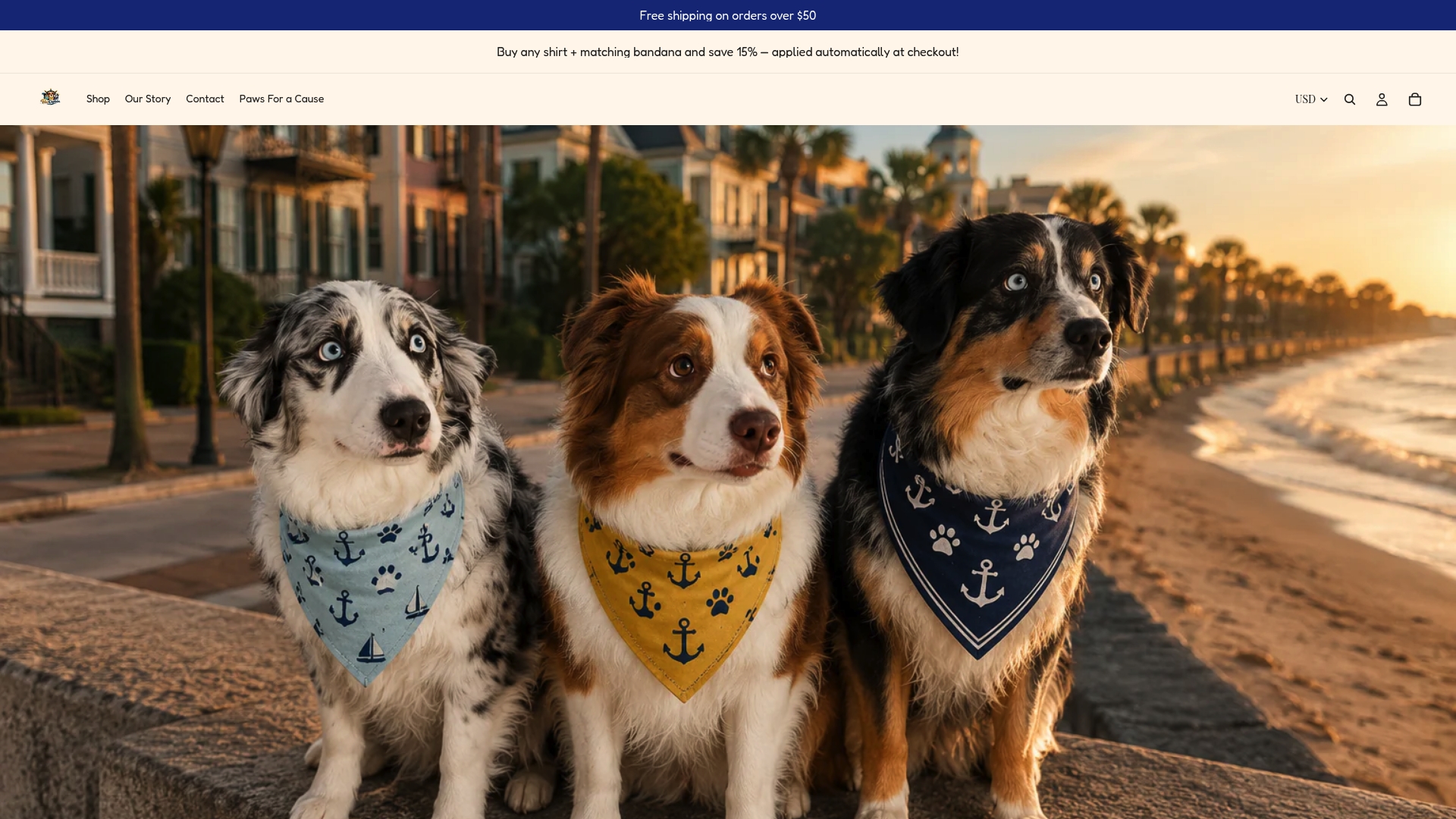
The Coastal Bow Club Matching Set is one of Pawcaptain’s most popular coordinating options. It pairs a dog bandana with a matching owner piece, built from lightweight fabric that sits comfortably against the neck without restricting movement. The Dockside Plaid Stripe bandana coordinates with most standard collar colors and works across seasons. Every Pawcaptain product ships with fit guidance, and the brand’s commitment to local animal shelter support means your purchase goes further than your dog’s wardrobe.
FAQ
What is the two-finger rule for dog collars?
The two-finger rule means sliding two fingers under your dog’s collar while they stand naturally. If both fingers reach skin level with light resistance, the fit is correct.
How do I measure my dog for a harness?
Measure chest girth at the widest point behind the front legs, then check neck girth. Use the manufacturer’s specific size chart, not a generic breed weight guide.
What fabrics are best for dogs with sensitive skin?
Fleece-lined and OEKO-TEX certified fabrics reduce friction and avoid harmful substances. Smooth edges and padding at contact points prevent chafing and hair loss.
How do I spot greenwashing on pet product labels?
Look for third-party certifications like GOTS, OEKO-TEX, or PETA approval with a verifiable certification number. The word “natural” alone carries no regulated meaning.
What accessories should I add after fitting the base gear?
Once the collar and harness fit correctly, add bandanas, bows, or matching sets that share a color or pattern with the base gear. Check that all decorative items allow full neck and body movement.