

Plush dog bedding is defined as a category of pet sleep surfaces built from ultra-soft fabrics and supportive fill materials to maximize a dog’s comfort and rest quality. Common plush fabrics include faux fur, microfiber suede, and genuine sheepskin, while fill options range from high-density foam to natural wool. The material choices inside and outside the bed directly affect your dog’s health, warmth, and how long the bed holds its shape. This guide breaks down what plush dog bedding is made of, what it does for your dog, and how to pick the right one.
What is plush dog bedding made of?
Plush dog bedding combines a soft outer fabric with a supportive inner fill. The outer layer is what your dog feels directly, and the fill is what carries their weight and protects their joints.
The most common outer fabrics are faux fur, microfiber suede, and Cordura. Faux fur is the softest option and gives that classic plush look. Microfiber suede is smoother and resets faster daily, meaning it releases trapped hair and debris more easily than shaggy faux fur. Cordura is a tightly woven nylon fabric used when durability matters more than softness, often on the underside or bolster edges.
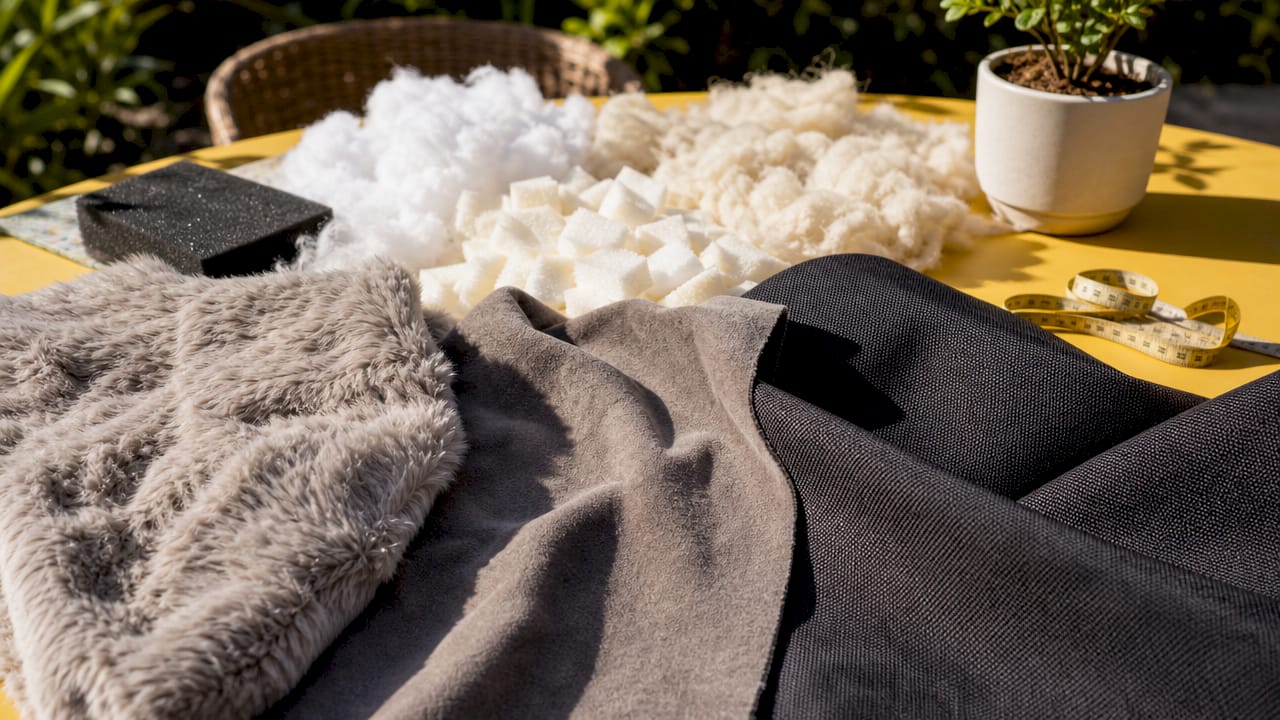
Fill materials split into two categories: synthetic and natural. Synthetic fills include polyurethane foam and polyester fiber. Natural fills include wool, sheepskin, and cotton batting. CertiPUR-US certified foam limits harmful VOC off-gassing and is the standard to look for in any synthetic foam bed. Foam with a density above 1.8 pounds per cubic foot prevents premature flattening within 6–12 months. That density threshold is the difference between a bed that lasts two years and one that goes flat by summer.
Pro Tip: Check the product listing for foam density or CertiPUR-US certification before buying. If neither is listed, the fill quality is likely below standard.
Synthetic vs. natural fill: which is better?
| Feature | Synthetic Foam | Natural Sheepskin or Wool |
|---|---|---|
| Safety | CertiPUR-US certified options available | No off-gassing; chemical-free when naturally tanned |
| Temperature control | Can cause overheating | Regulates temperature naturally |
| Antimicrobial | No inherent properties | Natural lanolin resists bacteria and odor |
| Durability | Depends on density (1.8+ PCF recommended) | Long-lasting with proper care |
| Cost | Lower upfront cost | Higher upfront cost |
Natural fiber beds using wool or sheepskin outperform synthetic foam in chemical safety, temperature regulation, and longevity. Natural materials also eliminate off-gassing concerns common with petroleum-based synthetics. That said, a CertiPUR-US certified foam bed is a safe and practical choice when budget is a factor.
What are the benefits of plush dog beds?
Plush dog beds deliver benefits that go beyond simple softness. The texture, fill, and material properties each contribute to your dog’s physical and mental well-being.
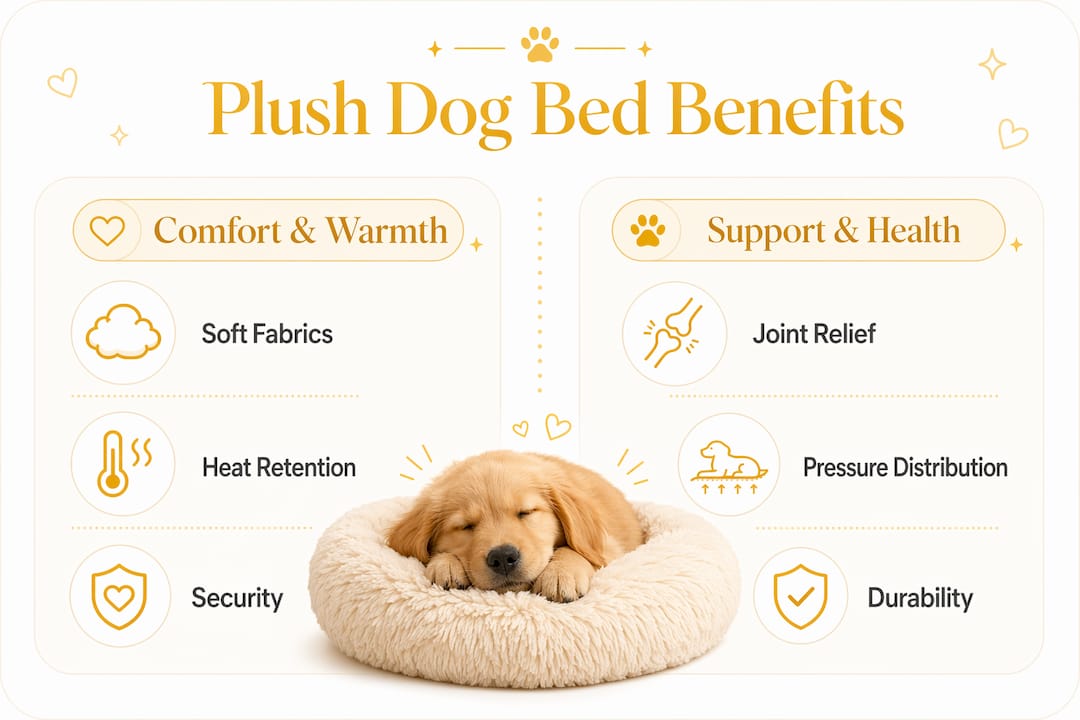
The most direct benefit is warmth and security. Plush fabrics trap body heat, which matters for small breeds, puppies, and short-coated dogs that lose warmth quickly. Dogs that curl up or burrow when sleeping respond especially well to soft, enveloping textures.
Joint support is the second major benefit. A quality plush bed with dense foam or sheepskin fill distributes your dog’s body weight evenly. Sheepskin beds reduce joint inflammation by distributing body weight effectively while keeping the dog cool. Memory foam provides support but can cause overheating, which worsens some health conditions. That distinction matters most for senior dogs or dogs recovering from surgery.
The third benefit is anxiety reduction. Sheepskin’s natural lanolin scent and tactile properties help reduce anxiety in dogs, offering a calming effect that synthetic plush beds lack. Dogs that pace, circle, or struggle to settle often show calmer behavior on sheepskin or high-quality faux fur surfaces.
Key benefits of plush dog beds at a glance:
- Warmth: Plush fabrics retain body heat for small breeds and puppies.
- Pressure relief: Dense foam or sheepskin distributes weight to protect joints.
- Calming effect: Natural lanolin in sheepskin reduces anxiety and restlessness.
- Restful sleep: Soft textures encourage dogs to stay in one position longer.
- Thermoregulation: Wool and sheepskin adjust to your dog’s body temperature.
Pro Tip: Senior dogs with arthritis benefit most from certified natural sheepskin, which provides medical-grade pressure relief and thermoregulation that synthetic foam cannot match.
How do plush beds compare to other dog bed types?
Plush beds are not the right fit for every dog or every home. Comparing them to other bed types helps you understand where they excel and where they fall short.
Orthopedic beds prioritize firm, structured support over softness. They use solid-core foam or memory foam and are designed specifically for dogs with joint disease or post-surgical recovery. Plush beds with high-density foam fill can overlap with orthopedic function, but a true orthopedic bed offers more targeted support. The trade-off is that orthopedic beds often use smoother, less cozy covers.
Canvas and ballistic nylon beds sit at the opposite end of the spectrum. Ballistic nylon and ripstop canvas resist damage from digging, chewing, and frequent washing better than plush covers. These materials are the right call for heavy chewers or dogs that spend time outdoors. Plush covers pill, snag, and trap hair more readily than canvas.
Durability is where plush beds face their biggest challenge. Low-density polyester fill commonly compresses into a flat layer within 6–12 months, removing all comfort benefits. High-quality beds use solid-core foam or resilient fibers that spring back rather than deform permanently. The cover material also matters. Shaggy faux fur traps loose hair and debris, requiring vacuuming rather than simple brushing. Microfiber suede resets faster and is easier to maintain daily.
| Bed Type | Softness | Durability | Best For |
|---|---|---|---|
| Plush (faux fur, sheepskin) | High | Moderate | Puppies, anxious dogs, small breeds |
| Orthopedic foam | Low to moderate | High | Senior dogs, joint issues |
| Canvas or ballistic nylon | Low | Very high | Chewers, outdoor use |
| Memory foam | Moderate | High | Post-surgery recovery |
What to look for when choosing plush dog bedding
Choosing the right plush bed comes down to five practical factors. Work through each one before buying.
-
Check fill certification. Look for CertiPUR-US on synthetic foam or GOLS certification on natural latex. Standard polyurethane foam may contain flame retardants linked to health risks, so certification is not optional. If a product page does not list a certification, contact the brand directly.
-
Match bed size and thickness to your dog. A bed that is too small forces your dog to curl unnaturally. A bed that is too thin provides no meaningful cushioning for dogs over 30 pounds. Measure your dog from nose to tail while stretched out, then add at least 6 inches to find the minimum bed length.
-
Assess cleaning ease. Plush fabrics require more maintenance than smooth ones. Choose a bed with a removable, machine-washable cover. Covers without zippers or with complex fastenings are harder to clean consistently, and a dirty bed undermines every comfort benefit.
-
Evaluate fabric texture for your dog’s habits. Dogs that dig or scratch at their bed before lying down will wear through faux fur faster than microfiber suede. Dogs that shed heavily will find hair embedded in shaggy textures. Match the fabric to your dog’s actual behavior, not just what looks appealing.
-
Consider allergy and temperature needs. Dogs prone to skin irritation do better on breathable natural fibers like wool or sheepskin. Dogs that overheat should avoid memory foam and opt for wool, which actively regulates temperature. You can find guidance on sustainable material choices that also address breathability and chemical safety.
Pro Tip: Pull on the cover fabric before buying. If it stretches or pills easily between your fingers, it will not hold up to regular washing or a dog that kneads before lying down.
Key Takeaways
Plush dog bedding delivers real comfort benefits only when the fill density and material certifications meet minimum quality standards.
| Point | Details |
|---|---|
| Fill density matters most | Choose foam rated above 1.8 PCF or certified natural sheepskin to prevent early flattening. |
| Certifications protect your dog | CertiPUR-US for foam and GOLS for natural latex limit harmful chemical exposure. |
| Fabric affects daily maintenance | Microfiber suede releases hair faster than faux fur, reducing cleaning effort. |
| Natural fibers outperform synthetics | Sheepskin and wool regulate temperature, resist bacteria, and eliminate off-gassing. |
| Size and washability are non-negotiable | A bed that fits poorly or cannot be cleaned consistently loses its comfort value quickly. |
What I have learned from years of watching dogs sleep
Most dog owners shop for a plush bed the same way they shop for a throw pillow. They pick the softest one that looks good in the living room. That approach almost always leads to a flat, matted bed within a year and a dog that has gone back to sleeping on the floor.
The single biggest mistake I see is prioritizing cover softness over fill quality. A bed can feel incredibly plush in the store and compress completely within months if the fill is low-density polyester. The fill is the foundation. Material quality inside the bed is the most critical factor for dog health and comfort, and it consistently outweighs external branding or fabric softness. That is the insight most product reviews skip.
My personal preference for senior dogs or dogs with any joint sensitivity is certified natural sheepskin. It is more expensive upfront, but it holds its structure, regulates temperature without effort, and the natural lanolin genuinely calms anxious dogs in a way that synthetic plush cannot replicate. For younger, healthy dogs, a CertiPUR-US certified foam bed with a microfiber suede cover is practical, washable, and durable enough to last.
The maintenance piece is also underestimated. Wash the cover every two weeks at minimum. Vacuum shaggy faux fur weekly. A plush bed that is not cleaned regularly becomes a source of allergens and bacteria, which defeats the purpose entirely.
— Michael
Pawcaptain’s coastal plush dog beds
Pawcaptain designs plush dog beds with the same attention to material quality and comfort that this guide outlines. Each bed is made to order, which means no excess inventory and no shortcuts on materials.
The Coastal Crab Plaid Dog Bed features soft, durable fabric and a supportive fill built for everyday use. For a broader look at the collection, the Charleston Nights Dog Bed and the Coastal Geo Tile and Coastal Patchwork options offer different styles and sizes to fit your dog’s needs. Pawcaptain also supports local animal shelters as the brand grows, so every purchase connects to something larger than a single product.
FAQ
What is plush dog bedding?
Plush dog bedding is a type of dog bed made with soft outer fabrics like faux fur or microfiber suede and supportive fills such as high-density foam or sheepskin. It is designed to maximize comfort, warmth, and rest quality for dogs.
Is plush or orthopedic better for senior dogs?
Certified natural sheepskin plush beds provide medical-grade pressure relief and thermoregulation that benefits senior dogs more than standard memory foam, which can cause overheating. For dogs with severe joint disease, a combination of orthopedic foam fill with a plush cover is the strongest option.
How often should I wash a plush dog bed?
Wash the removable cover every two weeks and vacuum shaggy faux fur surfaces weekly. Regular cleaning prevents allergen buildup and keeps the bed hygienic, which directly supports your dog’s skin and respiratory health.
What fill density should I look for in a plush dog bed?
Look for foam with a density above 1.8 pounds per cubic foot. Beds below that threshold commonly compress into a flat layer within 6–12 months, removing all cushioning and joint support.
Are natural fiber plush beds safer than synthetic ones?
Natural fiber beds using wool or sheepskin eliminate off-gassing concerns common with petroleum-based synthetics and do not require chemical flame retardants. For synthetic foam, CertiPUR-US certification is the minimum safety standard to require.