

Conscious pet shopping is the practice of making responsible, ethical, and sustainable choices when buying pets and pet supplies to protect animal welfare and reduce environmental harm. It covers two distinct areas: how you acquire a pet and how you purchase the products that support their daily life. Both require verified documentation, transparent sourcing, and a willingness to ask hard questions. This guide breaks down conscious pet shopping explained in full, from spotting greenwashing on product labels to understanding what a legitimate breeder looks like, so you can make decisions that hold up under scrutiny.
What does conscious pet shopping explained actually mean?
Conscious pet shopping is the industry’s shorthand for what consumer ethics researchers call “responsible consumption applied to animal care.” The term covers every purchase decision from the moment you choose a breeder or shelter to the day you buy a replacement dog bed. The core principles are animal welfare, supply chain transparency, and circular economy practices. These three pillars separate genuine ethical purchasing from marketing theater.
Animal welfare means the pet or the animals used to produce pet food lived under humane conditions. Supply chain transparency means a brand can tell you exactly where its materials come from and show third-party proof. Circular economy practices mean products are designed to last, be reused, or return safely to the environment. Without all three, a purchase is not fully conscious, regardless of how the packaging looks.

How to ethically acquire a pet with verified health and transparency
Ethical pet acquisition starts with documentation. Legitimate breeders provide veterinary records, written bills of sale with seller identification, and microchip registration proof. These are not optional extras. They are the baseline standard for any responsible seller.
What to verify before you commit
Before you hand over any money, confirm the following:
- Health test certificates for both parents, not just the puppy or kitten being sold
- Original vaccination records, never photocopies. Always demand originals and verify breeder credentials independently through a third-party database
- Written health guarantee covering a minimum post-acquisition period, during which a private veterinary exam is your right and your protection
- Microchip registration that you can verify through a national registry before the sale closes
- Socialization history, including the environment the animal was raised in and how it was handled
Pro Tip: Schedule an independent vet exam within 48 hours of bringing any new pet home. This exam creates a medical baseline and gives you legal standing if a health guarantee dispute arises later.
Red flags that signal an unethical seller
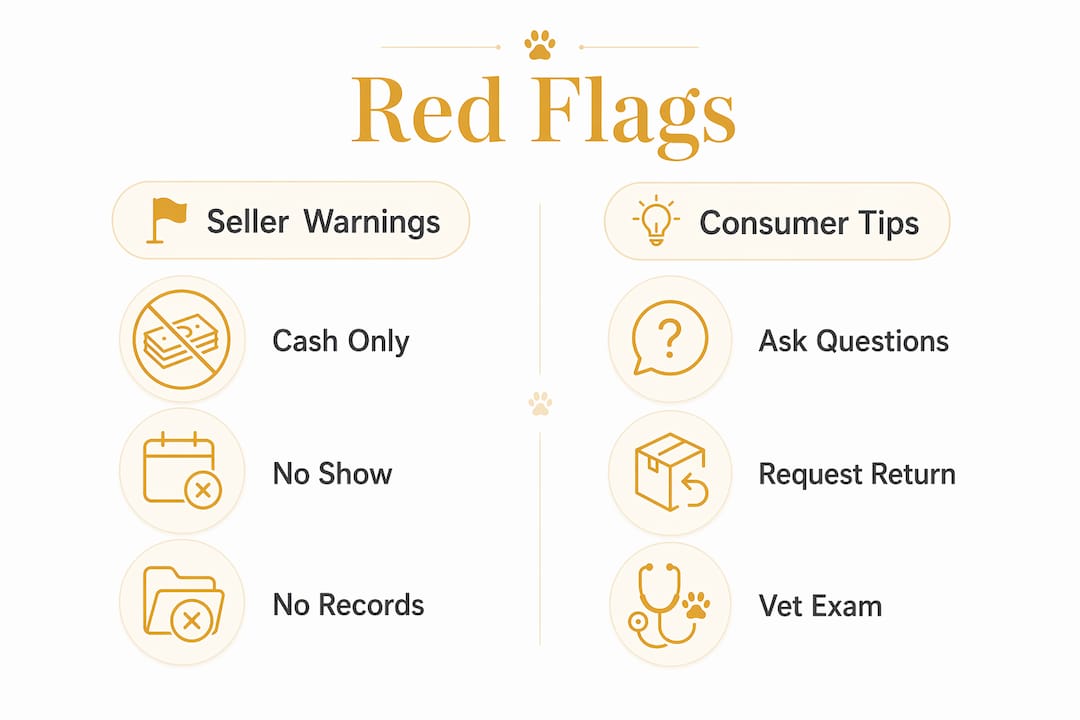
Cash-only payments, refusal to show animals, or missing original vaccination records are the clearest warning signs of unethical sourcing. Walk away from any seller who refuses to let you see where the animal lives. A seller who gets defensive when you ask about health testing is telling you something important.
[Ethical breeders accept questions](https://yourhealthmagazine.net/article/pet-health/10-questions-to ask-before-buying-a-dog-or-cat/) about health testing, socialization, and living conditions without hesitation. Reputable programs like Lakewood Ranch Doodles publish their health testing protocols and breeding philosophy openly. That level of transparency is the standard to measure every other seller against.
A written return policy is another marker of a responsible breeder. Ethical sellers accept animals back if a placement does not work out. That policy reflects genuine care for the animal, not just the sale.
How do you spot genuinely sustainable pet products?
Sustainable pet products are defined by ingredient sourcing, packaging composition, animal welfare standards, and third-party certification. Not by leaf icons or the word “natural” on a label.
Understanding certifications that actually matter
Vague terms like “eco-conscious” or “natural” without third-party validation are signs of greenwashing. Credible brands disclose exact recycled content percentages and hold certifications from recognized bodies. The certifications worth looking for include:
| Certification | What it covers | Why it matters |
|---|---|---|
| GOTS (Global Organic Textile Standard) | Organic fiber content and processing | Verifies textiles from raw material to finished product |
| PETA-approved vegan | No animal-derived materials or testing | Confirms cruelty-free sourcing |
| B Corp | Overall social and environmental performance | Requires third-party audit of the whole business |
| Animal welfare certified | Handling, space, vet care, humane practices | Links ethics directly to sourcing standards |
| Upcycled Certified | Use of rescued food-grade ingredients | Confirms measurable waste reduction |
Animal welfare certifications cover aspects like handling, space, vet care, and humane practices. They connect sustainability to ethics in a way that packaging claims alone cannot.
How to tell compostable from biodegradable
“Compostable” means a product breaks down in a controlled composting environment within a defined timeframe. “Biodegradable” has no regulated standard and can mean almost anything. A product labeled biodegradable may still sit in a landfill for decades. Always check whether a compostability claim carries a certification like the Biodegradable Products Institute (BPI) standard.
Pro Tip: Ask brands for their material composition breakdown in writing. Any brand serious about sustainability will send it. If they cannot, that is your answer.
Shoppers often mistake eco-friendly design elements like leaf icons as proof of sustainability. True sustainability comes from transparent reporting and objective supply chain impacts. The visual design of a product tells you nothing about its actual footprint.
How to balance sustainability with your pet budget
Prioritizing meaningful certifications and packaging types leads to measurable supply chain ethics improvements while keeping costs manageable. The key is knowing which features deliver real impact and which are premium labels with no substance behind them.
Here are five budget-conscious practices that work:
- Buy in bulk where shelf life allows. Larger quantities reduce per-unit packaging waste and lower your cost per serving. Dry food and treats store well in airtight containers.
- Choose upcycled ingredients. Upcycled claims are rising sharply, reflecting mainstream acceptance as a tangible sustainability win. Upcycled pet foods use rescued materials that would otherwise be wasted, improving resource efficiency without sacrificing quality.
- Use subscription services for staples. Subscriptions reduce impulse purchases and often lower per-unit costs. They also reduce packaging from multiple small orders.
- Skip the premium green label tax. A product with a GOTS or B Corp certification costs more because the audit process is real. A product with a vague “eco” claim costs more because the marketing budget is high. Only pay the premium when the certification is verifiable.
- Invest in durable accessories once. A well-made sustainable pet bed outlasts three cheap ones and generates a fraction of the waste. Durability is the most underrated sustainability metric in pet shopping.
The goal is not to spend more. The goal is to spend where it counts and stop paying for packaging theater.
What are circular economy principles in pet care?
The circular economy applied to pet care means designing out waste by reusing, maintaining, and replacing products only when necessary. It is the opposite of the “buy, use, discard” cycle that dominates most pet retail.
Circular practices in pet care include:
- Upcycled pet treats: Brands that upcycle food waste into treats minimize food landfill methane emissions and reduce demand for virgin ingredients. This is a closed-loop approach where surplus becomes product.
- Repurposed textiles in accessories: Some manufacturers use textile discards from other industries to produce bandanas, beds, and collars. This diverts material from landfill and reduces the carbon cost of new fiber production.
- Product maintenance: Washing a dog bed regularly extends its life significantly. Conditioning a leather collar prevents cracking and replacement. Sustainable pet care requires adopting a circular mindset: reuse existing products, maintain them well, and only replace when necessary with durable, multi-use items.
- Mindful replacement: Replace products when they fail, not when a new design appears. Impulse purchases are the single largest driver of unnecessary pet product waste.
- Multifunctional items: A bandana that works as a cooling cloth, a bed that doubles as a travel mat. Fewer items with broader use reduces total consumption.
The circular economy does not require sacrifice. It requires attention. Buying one well-made item from a brand that practices closed-loop production is more impactful than buying five items with green labels.
Key Takeaways
Conscious pet shopping requires verified documentation for pet acquisition, third-party certified products, and circular economy habits to deliver real animal welfare and environmental outcomes.
| Point | Details |
|---|---|
| Verify all pet health documents | Demand original veterinary records, microchip proof, and written health guarantees before any purchase. |
| Certifications over claims | Trust GOTS, B Corp, and animal welfare certifications. Ignore unverified terms like “natural” or “eco-conscious.” |
| Budget smart, not green-washed | Prioritize upcycled ingredients and recyclable packaging over premium labels with no third-party backing. |
| Circular habits reduce waste | Maintain products, buy durable items, and replace only when necessary to minimize your pet’s environmental footprint. |
| Ask hard questions | Ethical breeders and brands answer every question about sourcing, health testing, and materials without hesitation. |
Why conscious shopping is harder than it looks
Conscious pet shopping sounds straightforward until you are standing in a pet store aisle reading three different “sustainable” labels that all mean something different. I have spent years watching well-intentioned pet owners pay premiums for products that deliver no measurable benefit to animals or the environment. The frustration is real, and it is justified.
The biggest pitfall I see is confusing aesthetics with ethics. A kraft paper bag with a pine tree logo is a design choice. A B Corp certification is a business commitment backed by an independent audit. These are not the same thing, and the price difference between them is often zero. Train yourself to look past the packaging and ask one question: “Where is the proof?”
The second pitfall is all-or-nothing thinking. Conscious pet ownership is not a binary state. Choosing one certified product over an uncertified one is progress. Asking a breeder one more question than you would have last year is progress. The responsible pet shopping guide that actually works is the one you build incrementally, not the one you abandon because it felt too demanding on day one.
Support brands and breeders who make transparency easy. They exist, they are growing, and they deserve your business more than the ones who make you work to find basic information.
— Michael
Pawcaptain’s coastal pet goods: style with substance
Pawcaptain builds every product to order, which means nothing sits in a warehouse generating waste before it reaches your dog. That made-to-order model is one of the most direct ways a brand can reduce overproduction, and it is built into how Pawcaptain operates from day one.
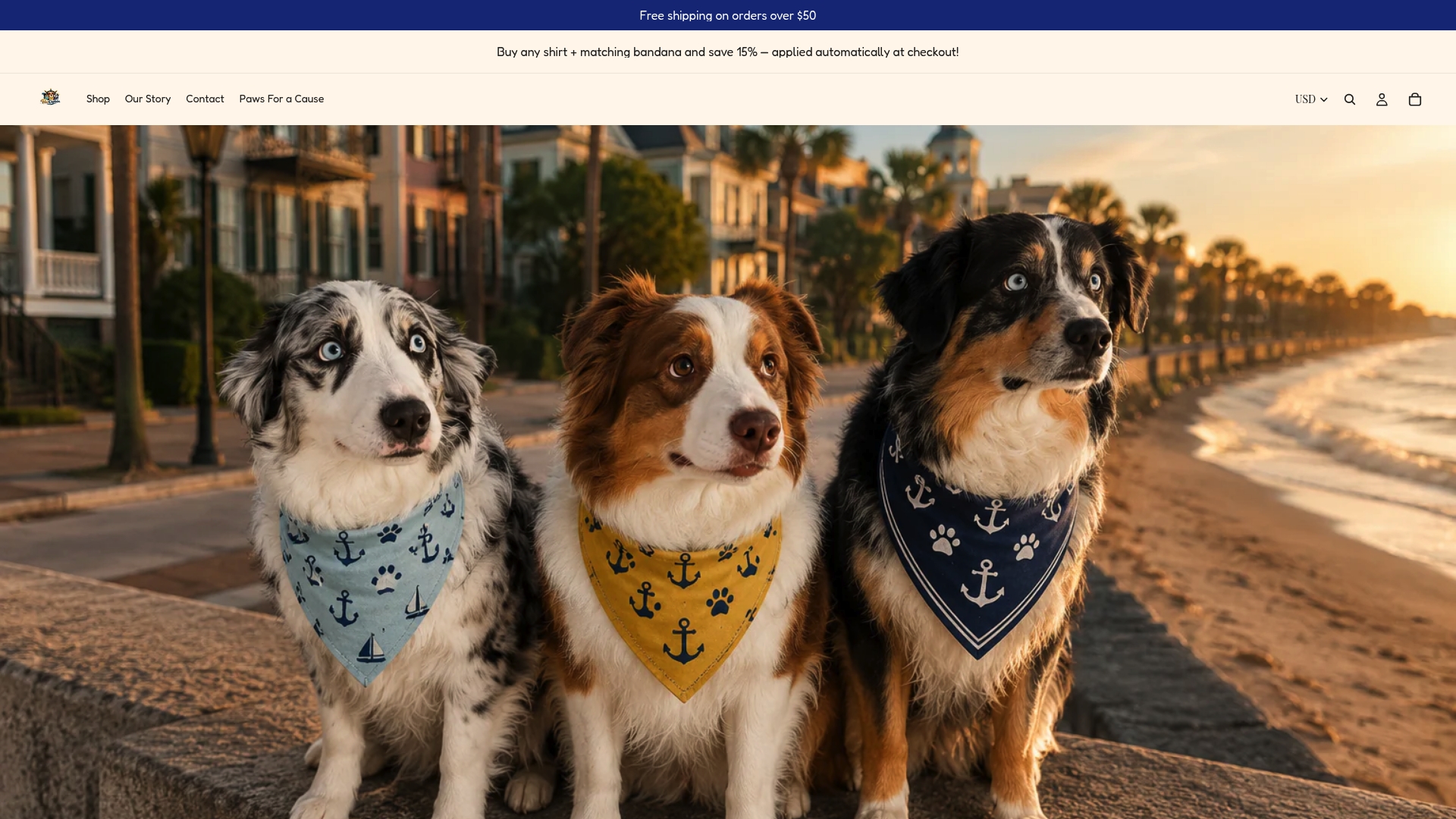
The Coastal Bow Club Matching Set is a strong example of conscious design: a coordinated bandana set for dog and owner, made with attention to material quality and longevity rather than fast-fashion turnover. For pet owners prioritizing durability, the Coastal Crab Plaid Dog Bed is built to last through real daily use. Pawcaptain also directs a portion of its growth toward supporting local animal shelters, connecting your purchase to community-level animal welfare.
FAQ
What is conscious pet shopping?
Conscious pet shopping is the practice of making ethical and sustainable decisions when buying pets and pet supplies, covering verified health documentation for animals and third-party certified products for supplies.
How do I verify an ethical pet breeder?
Ethical breeders provide original health test certificates, written health guarantees, microchip registration, and full access to the animal’s living environment. Walk away from any seller who refuses documentation.
What certifications should I look for on pet products?
Look for GOTS, B Corp, PETA-approved, and animal welfare certifications. These require independent audits and cover sourcing, materials, and business practices, unlike unverified terms like “natural” or “eco-friendly.”
What is greenwashing in pet products?
Greenwashing is the use of vague sustainability claims, like “eco-conscious” or “natural,” without third-party proof. Credible brands disclose exact recycled content and hold verifiable certifications rather than relying on design elements like leaf icons.
How do I shop for eco-friendly pet supplies on a budget?
Prioritize upcycled ingredients, recyclable packaging, and durable products over premium green labels. Buying in bulk, using subscriptions for staples, and investing in long-lasting accessories all reduce cost and environmental impact simultaneously.