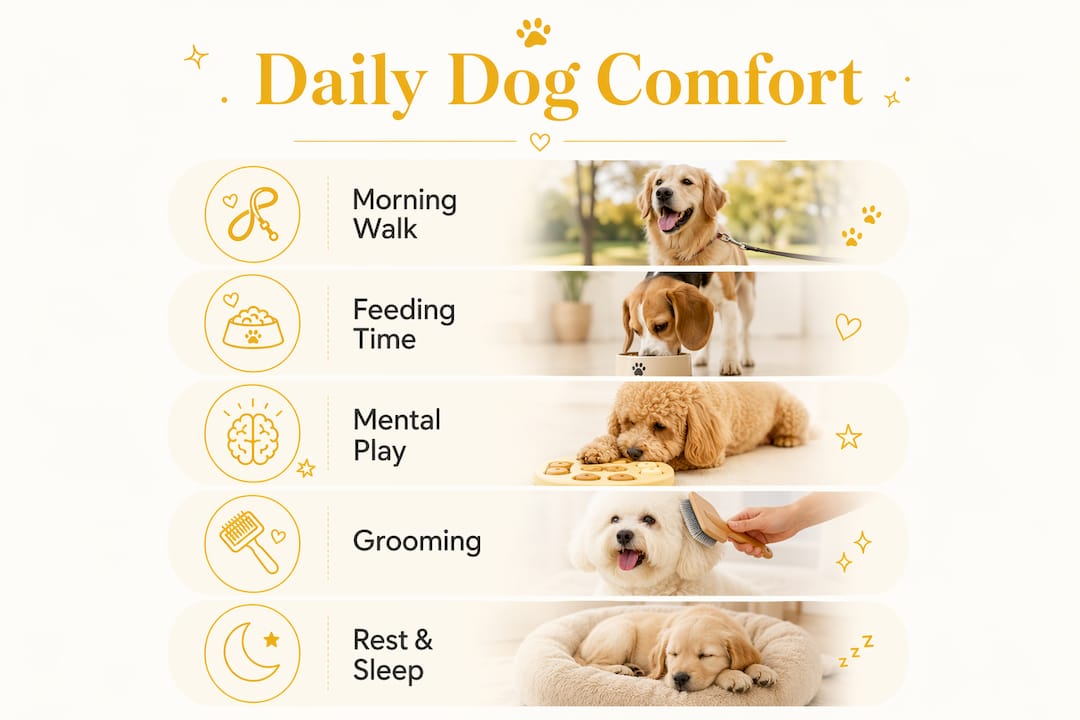
A solid dog comfort routine built on daily steps covers six core pillars: consistent feeding times matched to your dog’s age, scheduled potty breaks throughout the day, exercise or play sessions suited to energy level, a predictable bedtime wind-down, brief daily health checks, and mental enrichment activities like sniff walks or puzzle toys.
- Feeding: Puppies 8–10 weeks old need 4 meals per day; dogs 6 months and older do well on 2 meals spaced 8–12 hours apart
- Potty breaks: At minimum, morning, midday, and before bed; puppies and seniors need more
- Exercise: Daily exercise duration varies depending on breed energy level
- Bedtime wind-down: Lower lights, guide your dog to their sleep spot, use a consistent verbal cue
- Daily health check: Eyes, paws, coat, and movement; 5 minutes is enough
- Mental enrichment: Sniff walks, lick mats, puzzle feeders, or a “find it” scatter game
These six habits, repeated in the same order each day, form the foundation of a calm, well-adjusted dog.
Why routine matters so much for your dog’s health and behavior
Predictability in routine lowers cortisol and anxiety, builds confidence, and reduces unwanted behaviors in dogs. When a dog knows what comes next, it stops spending energy anticipating or worrying. That mental relief shows up as calmer behavior, better focus, and fewer stress-driven habits like excessive barking or destructive chewing.
Consistent mealtimes also train the digestive system. Stable feeding schedules cause a dog’s gut to anticipate food, which prevents the restlessness and grass-eating that often follow irregular meals. Physical and emotional health reinforce each other here.
- Predictable schedules reduce stress hormones and help dogs regulate arousal
- Consistent feeding prevents digestive discomfort and restless behavior between meals
- Routine reinforces confidence and emotional security, especially in anxious dogs
- Regular exercise windows support healthy weight and reduce pent-up energy
- Structured days prevent anxiety-driven destructive behaviors like chewing or digging
The ASPCA notes that exercise and mental stimulation together satisfy a dog’s instinctual urges to dig, chew, retrieve, and chase. Without a routine that addresses those needs, boredom fills the gap.
How to adjust your dog’s routine by life stage
No single schedule fits every dog. Tailoring routines to life stage optimizes wellbeing across a dog’s entire lifespan, from the high-frequency needs of a puppy to the gentler pace a senior dog requires.
Puppies need structure more than any other life stage, but in shorter bursts. Frequent meals multiple times per day, frequent potty breaks, and short training sessions build the neural pathways that make adult behavior easier to manage. Socialization during this window is irreversible; the Merck Veterinary Manual recommends vet visits every 3–4 weeks until 4 months old to stay on top of vaccinations and development.
Adult dogs thrive on two meals per day, regular walks, and a midday enrichment break. The exact times matter less than the sequence. Event order provides stability even when the clock shifts, so potty break then breakfast then walk, in that order, works whether it starts at 6:30 AM or 7:30 AM.
Senior dogs generally benefit from more frequent comfort checks, softer orthopedic bedding, and adjusted exercise that keeps joints moving without strain. Veterinary hospice experts recommend raised food and water bowls set just above elbow height to allow neutral spine alignment during meals, reducing back pain. Non-skid rugs on hard floors prevent slipping and ease chronic joint discomfort.
- Puppies: 4 meals per day, frequent potty breaks, short play and training sessions
- Adults: two meals per day, regular walks, midday enrichment
- Seniors: orthopedic bedding, raised bowls, non-skid surfaces, regular vet visits, gentler exercise
- All life stages: monitor for behavior changes that signal pain, illness, or anxiety
Pro Tip: For senior dogs showing stiffness after rest, a 5-minute slow leash walk before any stairs or jumping helps warm up joints and reduces injury risk.
How to build and maintain a daily comfort routine that actually sticks
The most common mistake owners make is trying to build a rigid clock-based schedule before establishing a consistent event sequence. Dogs find comfort in predictable event order, not exact times. Start with the sequence: potty break, then meal, then walk. Once that order is automatic, layering in consistent timing becomes much easier.
Use mealtimes as micro-training moments. Asking your dog to sit and wait before the bowl goes down takes 10 extra seconds and reinforces calm behavior every single day without a separate training session. The same applies at the door before a walk: a brief “wait” cue before stepping outside builds impulse control over weeks.
Mental enrichment belongs in the midday window, especially for owners who work away from home. Toys like a frozen Kong, a snuffle mat with kibble, or a lick mat with plain peanut butter provide focused engagement that prevents boredom and reduces afternoon restlessness. Rotate 6–8 toys weekly so each one stays novel.
Routine disruptions happen. Travel, illness, and schedule changes all shift the sequence. The fix is to preserve the core pillars: morning potty plus meal, midday break, evening walk plus dinner, and a short bedtime routine. Those four anchors hold the structure even when everything else shifts. For dogs that show stress during travel (panting, drooling, restlessness), bringing familiar bedding and maintaining feeding times as closely as possible reduces the disruption significantly.
Pro Tip: Batch prep the night before. Measure out tomorrow’s meals, fill the water bowl, and put the leash by the door. Morning routines run smoother when the setup is already done.
Sample daily routines by energy level
The right routine depends on your dog’s energy level and breed type. Low-energy dogs need less exercise but still require mental stimulation to prevent boredom. High-energy dogs need longer physical outlets and more frequent enrichment to stay calm indoors.
| Time of Day | Low-Energy Dog | Medium-Energy Dog | High-Energy Dog |
|---|---|---|---|
| Morning (7–8 AM) | Potty break, breakfast, 20-min sniff walk | Potty break, breakfast, 30 min walk | Potty break, breakfast, run or fetch |
| Midday | Lick mat or snuffle mat | Puzzle toy or short training session | Frozen Kong plus backyard play |
| Evening (5–6 PM) | 20-min walk, dinner | 30-min walk or play, dinner | Active session, dinner |
| Bedtime | Final potty break, calm bonding, sleep spot | Final potty break, brushing, sleep spot | Final potty break, lick mat wind-down, sleep spot |
Key considerations by profile:
- Low-energy dogs: Prioritize sniff walks over distance; mental enrichment prevents boredom even with short exercise windows
- Medium-energy dogs: Two walks plus one midday enrichment activity covers most needs; add a training session 3–4 times per week
- High-energy dogs: Physical exercise alone is not enough; combine fetch or running with scent work or puzzle feeders to fully satisfy the nervous system
- All profiles: Rest periods matter. Dogs need 12–16 hours of sleep daily, and midday rest supports emotional regulation
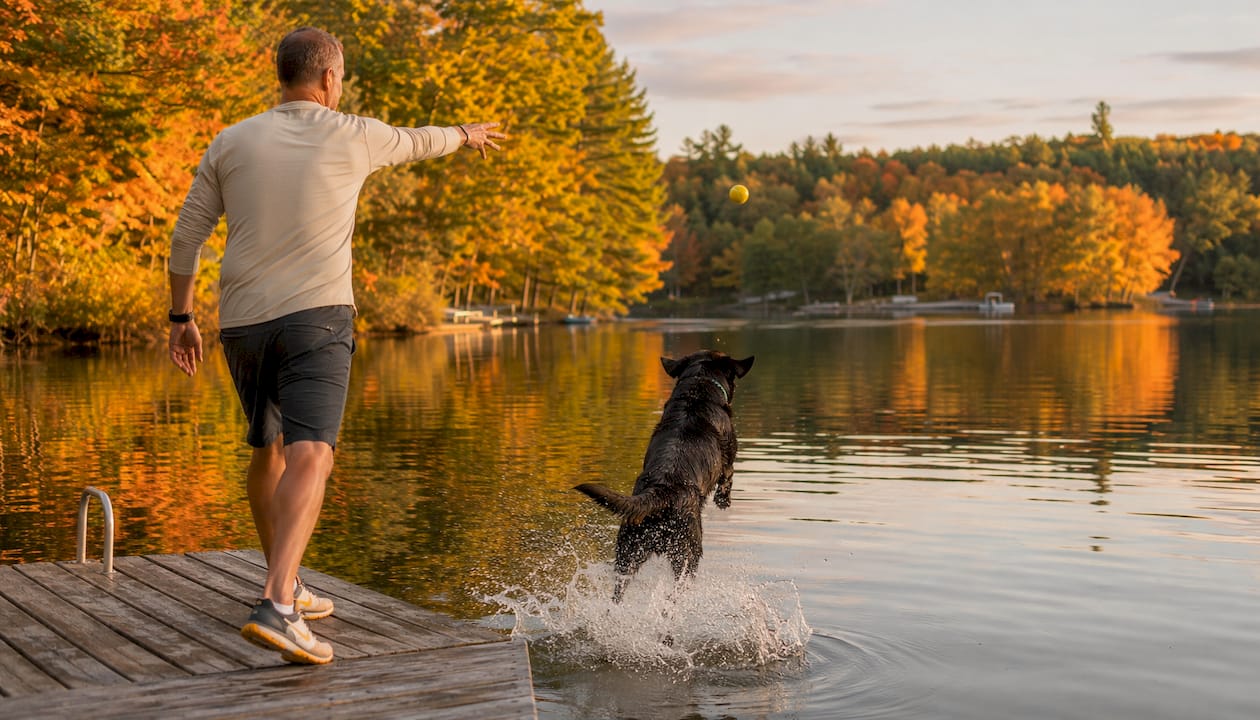
For owners who want to exercise with their dog naturally, activities like hiking, swimming, or casual jogging adapt well across energy levels and add variety without disrupting the core daily sequence.
Expert tips for maximizing comfort and wellbeing within your dog’s routine
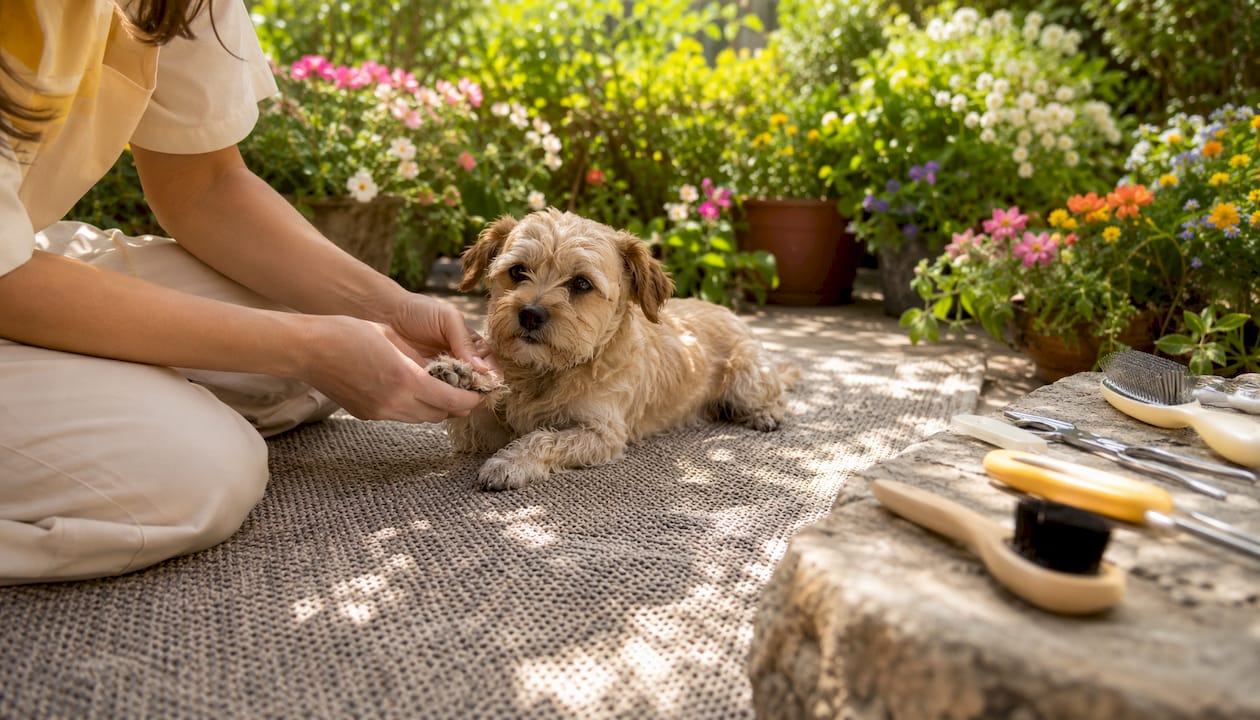
Daily grooming integrated into the routine does more than maintain coat health. Gentle brushing and paw checks reduce anxiety, reinforce the bond between dog and owner, and serve as a daily sensory check-in. When grooming is predictable, dogs show less resistance and more relaxation during the process. A 5-minute evening check of eyes, paws, skin, and coat catches early signs of infection, debris, or injury before they become serious problems.
Environmental adjustments make a measurable difference, especially for older or recovering dogs. Raised food and water bowls reduce physical strain during meals, and non-skid rugs on hard floors ease movement for dogs with joint issues. Soft, supportive bedding in a quiet corner away from foot traffic gives any dog a stable retreat. Pawcaptain’s cozy dog beds are designed with exactly this kind of daily comfort in mind, offering a designated sleep spot that anchors the bedtime routine.
Restorative enrichment activates the parasympathetic nervous system in a way that high-energy play does not. Sniff walks, lick mats, and puzzle toys trigger the “rest and digest” response, reducing anxiety and promoting genuine calm. A 20-minute sniff walk where your dog sets the pace can be more mentally satisfying than a 30-minute power walk with no stops.
Recognizing stress signals during routine helps you respond before behavior escalates. Common signs include pacing, whining, hiding, reduced appetite, excessive lip-licking, yawning, and panting that does not match the temperature. Subtler cues like whites of the eyes showing or a sudden loss of focus during a normally easy activity also signal discomfort. When a dog pulls away or tenses during petting, providing calm proximity without forced touch respects their boundary and avoids adding stress to the interaction.
- Check eyes for discharge and paws for cuts or debris daily
- Use a dog dietary health checker to monitor physical health indicators alongside your routine
- Keep the resting area temperature-appropriate; dogs regulate body temperature less efficiently than people
- Reduce sudden loud noises where possible; predictable household activity is one of the strongest environmental signals of safety
- For persistent behavioral changes alongside appetite loss or lethargy, schedule a veterinary visit
Pro Tip: Build an activation-engagement-recovery cycle into each half of the day: a walk or training session (activation), followed by a lick mat or puzzle feeder (engagement), followed by rest (recovery). This mirrors how the canine nervous system naturally resets and produces calmer behavior over time.
Key Takeaways
A consistent daily dog comfort routine built around predictable event sequences, age-appropriate feeding, and restorative enrichment is the most effective way to reduce anxiety and support long-term wellbeing.
| Point | Details |
|---|---|
| Sequence over clock time | Dogs find comfort in predictable event order (potty, meal, walk) even when exact times shift. |
| Feeding by life stage | Puppies need 4 meals per day; dogs 6 months and older thrive on 2 meals spaced 8–12 hours apart. |
| Restorative enrichment | Sniff walks and lick mats activate the parasympathetic nervous system, reducing anxiety beyond what physical exercise alone provides. |
| Environmental adjustments | Raised bowls, non-skid rugs, and supportive bedding reduce physical strain and support comfort for senior or recovering dogs. |
| Stress signal awareness | Pacing, hiding, lip-licking, and appetite changes during routine indicate discomfort that warrants a response or veterinary check. |
Give your dog a sleep routine worth looking forward to. Pawcaptain’s Charleston Nights Dog Bed and Lowcountry Stripe Dog Bed are made to order with eco-friendly materials, designed to anchor your dog’s bedtime routine with real comfort. Pair with the Coastal Bow Club Matching Set for daily walks that feel as good as they look.