

Dog comfort accessories are items specifically designed to support a dog’s physical safety, emotional well-being, and natural movement every day. The category covers beds, apparel, collars, harnesses, calming gear, and enrichment toys. Each type serves a distinct function, and choosing the wrong material or fit can reduce comfort rather than improve it. This article covers dog comfort accessories explained through the lens of materials, sizing, and calming features so you can make informed choices for your dog.
What are the main types of dog comfort accessories?
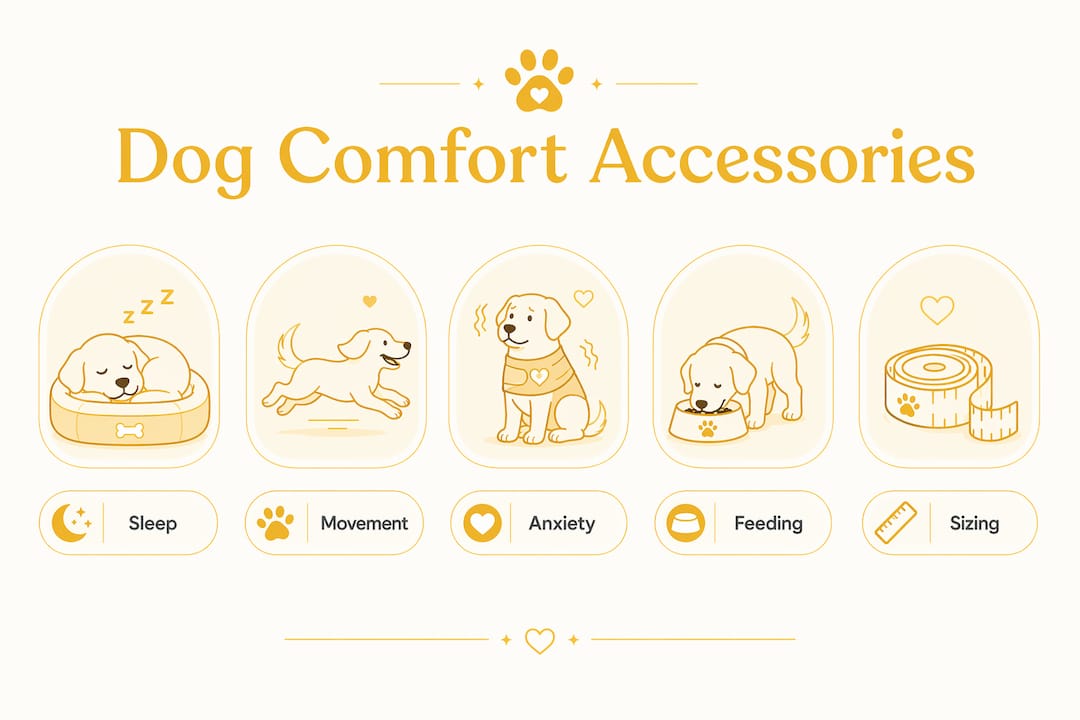
Dog comfort accessories fall into five core categories. Each one targets a different aspect of your dog’s well-being.
-
Beds and sleeping surfaces. Orthopedic beds use high-density memory foam for true joint support that resists flattening under pressure. Fiber-fill beds look similar but compress quickly and lose their shape. Calming beds add deep bolstered walls and soft faux-fur fabrics to create a nest-like environment. Senior dogs and breeds with joint issues benefit most from true orthopedic support.
-
Apparel. Dog clothing serves three practical purposes: warmth in cold weather, light compression for anxiety reduction, and mobility support after injury or surgery. Fit is the deciding factor in whether apparel helps or hinders. A poorly fitted coat restricts gait and raises stress levels.
-
Collars and harnesses. A well-fitted harness distributes pressure across the chest rather than the throat. This matters most for brachycephalic breeds like French Bulldogs and Pugs, where throat pressure creates breathing risk. Padded collars reduce skin irritation for dogs worn on leash daily.
-
Toys and enrichment tools. Puzzle feeders and chew toys reduce stress by giving dogs a mental outlet. Boredom is a direct driver of anxiety behaviors like excessive barking and destructive chewing. Enrichment tools address the root cause rather than the symptom.
-
Feeding accessories. Elevated bowls reduce neck strain in large breeds. Slow-feeder bowls prevent bloat by slowing eating pace. Both are comfort accessories in the functional sense, even if they rarely get labeled that way.
Pro Tip: Build your dog’s comfort kit by category. Identify which area (sleep, movement, anxiety, feeding) causes the most visible stress, and address that first before adding accessories in other categories.
How do different materials affect dog apparel comfort?
Material choice is the single biggest factor in dog clothing comfort explained. The wrong fabric causes overheating, skin irritation, or rapid wear.

| Fabric | Best use | Key benefit | Key limitation |
|---|---|---|---|
| Cotton | Indoor, warm climates | Breathable, absorbs up to 27% moisture by weight | Less durable outdoors |
| Polyester | Outdoor, active dogs | Water-resistant, quick-drying, easy to clean | Less breathable in heat |
| 50/50 blend | Year-round, general use | Balances softness with durability | Neither extreme is best |
Cotton’s breathability makes it the right choice for dogs with sensitive skin and for indoor wear in warm climates. It absorbs moisture well, which keeps dogs cooler during light activity. The trade-off is durability. Cotton breaks down faster with repeated washing and outdoor exposure.
Polyester-based fabrics account for approximately 55% of the pet outerwear market. That share reflects polyester’s clear advantages for active and outdoor use: it dries fast, resists water, and holds its shape through heavy use. The downside is reduced breathability, which matters in summer or for dogs that run hot.
50/50 cotton-polyester blends offer the most balanced performance for everyday wear. They combine the skin-friendly softness of cotton with the easy-care, quick-drying qualities of polyester. Textile specialists frequently recommend blends for dog apparel quality explained in terms of long-term value, because they hold up through regular washing without sacrificing comfort.
Climate and lifestyle should drive your fabric choice. A dog that hikes in the Pacific Northwest needs water-resistant polyester. A small breed that spends most of its time indoors in Florida needs breathable cotton. For dogs that do both, a blend covers the middle ground. You can also read about seasonal fabric choices to match materials to your local weather patterns.
Pro Tip: Check the fabric label before buying. If a garment lists no fabric content, treat that as a red flag for pet apparel materials explained. Unknown blends may include synthetic dyes or finishes that irritate sensitive dog skin.
Why does proper sizing matter for dog clothing comfort?
Fit is where most dog owners make their biggest mistake with pet apparel. A garment that measures correctly on paper can still fit poorly on the dog’s body.
The five-step test is the most reliable method for confirming correct apparel fit. Walk your dog in the garment and check for five specific signs:
- Natural gait. The dog should walk without shortening its stride or lifting its legs awkwardly. Any change in movement signals a fit problem.
- Fabric position. The garment should stay in place. If it twists, rides up, or slides to one side, the cut does not match the dog’s body shape.
- Skin contact. Run two fingers under the collar or sleeve edge. You should be able to do this without forcing. Tighter than that means the garment pinches.
- Range of motion. Ask the dog to sit and lie down. The fabric should not pull tight across the shoulders or bunch at the neck.
- Behavioral response. A dog that freezes, shakes, or tries to remove the garment immediately is signaling discomfort. This is not always about fit. It can also indicate fabric sensitivity.
Improper fit leads to skin irritation, restricted activity, and increased anxiety. That last point is the one most owners underestimate. A tight garment activates the same stress response as physical restraint. The dog cannot escape the pressure, so anxiety builds.
Measuring your dog accurately before buying reduces fit errors significantly. Measure the neck circumference, chest girth at the widest point, and back length from the base of the neck to the base of the tail. Use these three numbers together, not just one. Many breeds have proportions that fall between standard sizes. For those dogs, adjustable designs or bespoke pet apparel are worth considering.
Pro Tip: Measure your dog after exercise, not before. Muscles expand slightly during activity, and a garment that fits at rest may restrict movement once your dog is active.
What features make calming beds effective for anxious dogs?
Calming beds work through two physical mechanisms: enclosure and texture. Neither one alone is as effective as both together.
- Deep bolstered walls create a sense of containment. Dogs are den animals by instinct. A raised border on all sides mimics the enclosed feeling of a den and signals safety to the nervous system.
- Soft faux-fur fabrics replicate the tactile warmth of littermate contact. This is not a marketing claim. Calming beds with these features help anxious dogs settle faster by simulating warmth and security.
- Light compression from snug-fitting apparel or enclosed beds reduces restlessness. The mechanism is similar to weighted blankets used for human anxiety. Pressure signals the nervous system to downregulate.
- Washable covers matter more than most buyers realize. A bed that cannot be cleaned easily will accumulate odors that stress some dogs. Easy-care construction supports long-term use.
- Bed placement is as important as bed design. Positioning beds away from high-traffic areas reduces stress by giving the dog a predictable, low-stimulation retreat. A calming bed placed next to a busy hallway loses most of its benefit.
For dogs with joint pain alongside anxiety, the bed needs to address both issues. True orthopedic support requires high-density memory foam, not thick fiber-fill. Memory foam distributes weight evenly and holds its shape. Fiber-fill compresses under the dog’s weight and stops providing support within weeks. If you want to understand how padding affects joint health specifically, the role of padding in dog beds is worth reading in detail. For dogs with anxiety that goes beyond what physical accessories can address, calming supplements can work alongside calming beds as part of a broader approach.
Key Takeaways
Dog comfort accessories work best when material, fit, and calming features are matched to the individual dog’s size, breed, and anxiety level.
| Point | Details |
|---|---|
| Material drives comfort | Cotton suits indoor and sensitive-skin dogs; polyester suits outdoor and active dogs; blends cover everyday use. |
| Fit determines function | Use the five-step test to confirm apparel does not restrict gait, pinch skin, or shift out of position. |
| Calming beds need two features | Deep bolstered walls and soft faux-fur fabrics work together to reduce anxiety through enclosure and texture. |
| Orthopedic support requires memory foam | High-density memory foam holds its shape; fiber-fill compresses quickly and loses support within weeks. |
| Placement affects bed performance | Position calming beds away from high-traffic areas to give anxious dogs a low-stimulation retreat. |
What I’ve learned from watching owners get accessories wrong
Most owners focus on how an accessory looks before they consider how it functions. That order of priorities costs dogs real comfort. I’ve seen beautifully styled coats that restricted shoulder movement so much the dog refused to walk normally. I’ve seen calming beds placed directly beside a television, defeating the entire point of the product.
The mistake I see most often with apparel is buying by weight class instead of by measurement. “Small” means something different across every brand. A dog that weighs 12 pounds might need a medium in one cut and an extra-small in another, depending on chest depth and back length. The dog accessories styling checklist is one of the more practical tools I’ve found for keeping fit and style in the right order.
The other consistent mistake is ignoring the dog’s behavioral response. If a dog freezes when you put on a garment, that is data. It does not always mean the garment is the wrong size. It can mean the fabric texture is aversive, or that the dog has not been conditioned to wearing clothing. Both are fixable. Neither should be ignored. Practicality must come first. Fashion that compromises a dog’s health or happiness is not worth the trade-off.
Invest in fewer, better accessories. One well-fitted harness, one correctly sized orthopedic bed, and one breathable everyday garment will do more for your dog’s quality of life than a closet full of items that were chosen for appearance alone.
— Michael
Pawcaptain’s comfort-first collection for your dog
Pawcaptain builds every product around the same principles covered in this article: breathable fabrics, accurate sizing, and calming construction. The Coastal Crab Plaid Dog Bed features deep bolstered walls and soft faux-fur fabric designed to reduce anxiety through enclosure and texture, exactly the combination that calming research supports.

For everyday wear, Pawcaptain’s bandanas and apparel use pet-safe materials with fit designed for real dogs, not just standard size charts. Every item is made to order, which reduces waste and means your dog’s accessories are produced specifically for them. Pawcaptain also supports local animal shelters as the brand grows, so each purchase contributes beyond your own dog’s comfort.
FAQ
What are dog comfort accessories?
Dog comfort accessories are products designed to support a dog’s physical safety, emotional well-being, and natural movement. Common examples include orthopedic beds, fitted apparel, padded harnesses, calming beds, and enrichment toys.
What fabric is best for dog clothing?
The best fabric depends on the dog’s lifestyle. Cotton suits indoor dogs and sensitive skin; polyester suits active and outdoor dogs; 50/50 blends work well for everyday use across seasons.
How do I know if my dog’s clothing fits correctly?
Use the five-step test: check that the dog walks with a natural gait, the fabric stays in place, two fingers fit under all edges, the dog can sit and lie down freely, and the dog shows no signs of stress while wearing the garment.
Do calming beds actually reduce dog anxiety?
Calming beds with deep bolstered walls and soft faux-fur fabrics help anxious dogs settle faster by mimicking warmth and containment. Placement away from high-traffic areas increases their effectiveness.
What is the difference between an orthopedic bed and a calming bed?
An orthopedic bed uses high-density memory foam to support joints and resist compression over time. A calming bed prioritizes enclosure and soft texture to reduce anxiety. Some beds combine both features for dogs that need joint support and anxiety relief together.