

Picking the right dog apparel size is defined by three measurements: chest girth, back length, and neck girth, taken while your dog stands naturally. Get these numbers right, and every jacket, bandana, or sweater fits the first time. Get them wrong, and you risk restricted movement, chafing, or a garment your dog refuses to wear. This guide walks you through the exact measurement techniques, size chart interpretation, and breed-specific adjustments that make the difference between a well-dressed dog and a frustrated owner.
How to pick dog apparel size: tools and preparation
Accurate sizing starts before you touch the measuring tape. The right setup makes the process faster and less stressful for both of you.
Gather these items before you start:
- Flexible fabric measuring tape. A rigid ruler or metal tape gives inaccurate readings on a curved body. A soft tailor’s tape conforms to your dog’s shape.
- A helper. One person holds the dog still and calm while the other takes measurements. Solo measuring almost always produces inconsistent numbers.
- Treats. Short, positive sessions keep your dog cooperative. Measure in two or three quick rounds if your dog gets restless.
- A notepad or phone. Record each measurement immediately. Memory is unreliable when you are shopping later.
Your dog must be standing naturally on a flat surface during every measurement. Sitting, lying down, or leaning shifts the body and distorts the numbers. If your dog won’t stay still, practice a short “stand” command with treats for a few days before measuring.
Pro Tip: Measure your dog twice on different days. Dogs hold tension differently depending on their mood. Averaging two sets of numbers gives you the most reliable baseline.
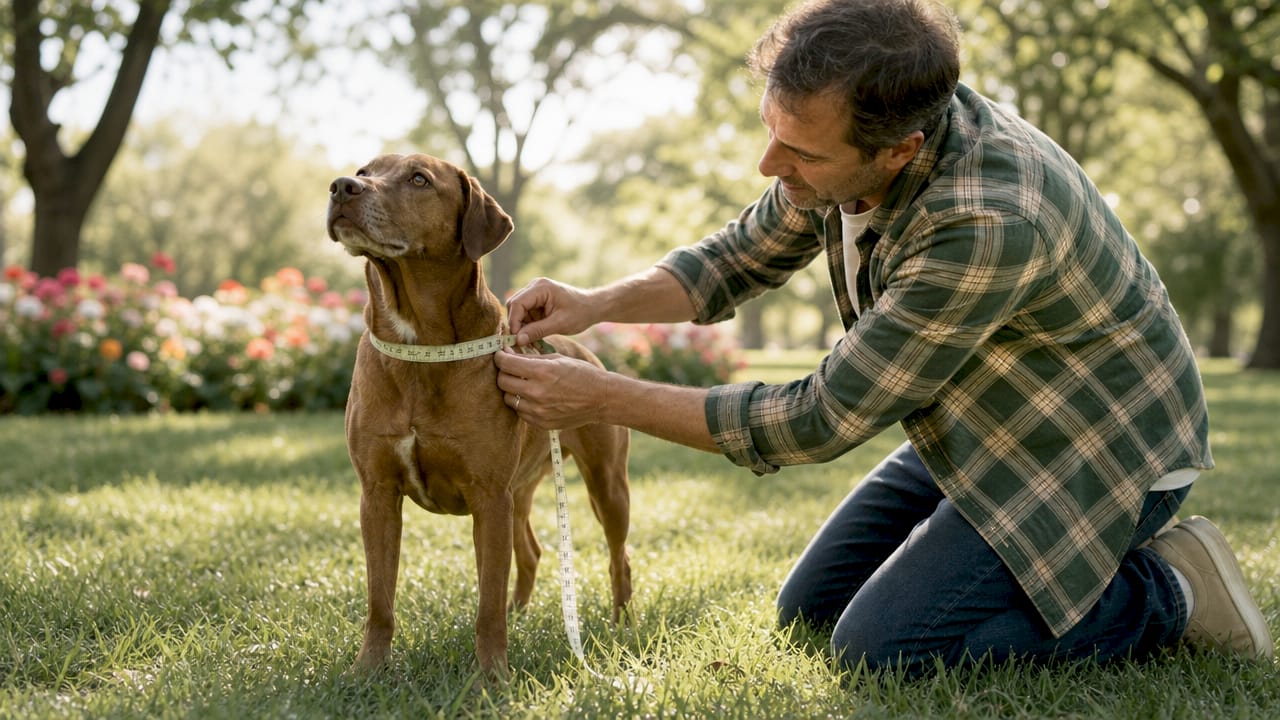
What are the three key measurements for dog clothing?
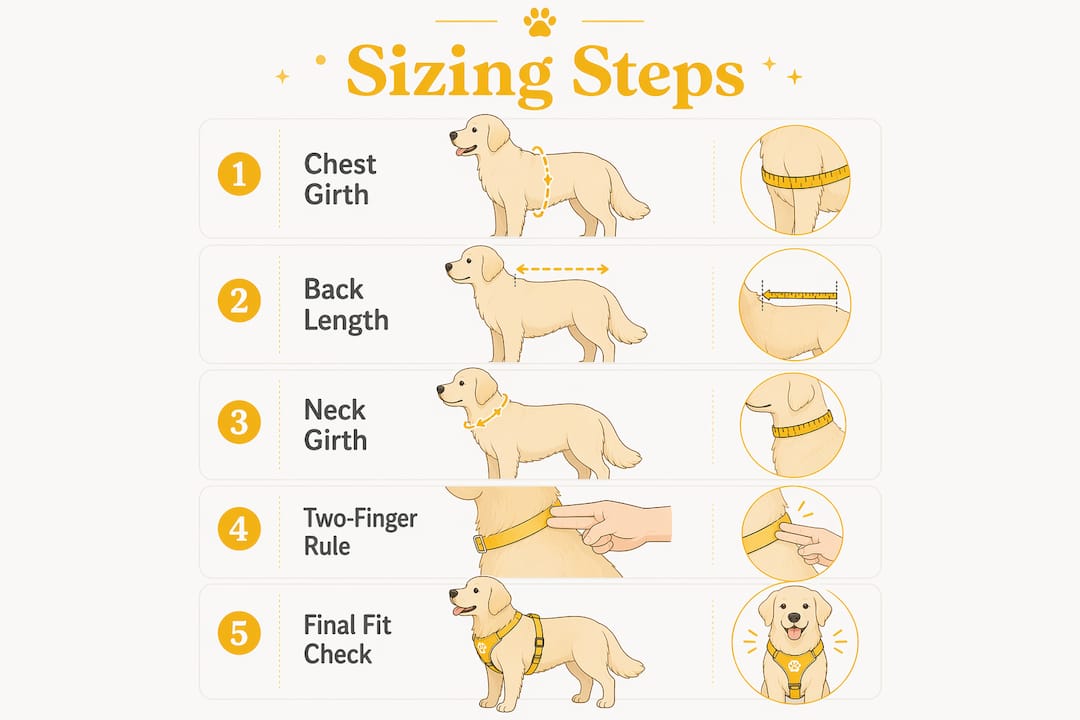
The three essential measurements for any dog clothing size guide are chest girth, back length, and neck girth. Each one serves a different purpose, and skipping any one of them leads to a poor fit.
1. Chest girth
- Wrap the tape around the widest part of your dog’s chest, just behind the front legs.
- Keep the tape snug but not tight. You should be able to slide two fingers underneath.
- Record the number in inches or centimeters, depending on the size chart you plan to use.
- For non-stretch fabrics, add 2–3 cm to the raw measurement before comparing to a size chart. Rigid fabric needs that extra room to allow full movement.
Chest girth is the single most important measurement for most garments. A jacket that fits the chest will usually work for the rest of the body.
2. Back length
- Find the base of your dog’s neck, where the collar sits.
- Run the tape straight along the spine to the base of the tail.
- Keep the tape flat against the back. Do not follow the curve of the spine downward.
- Record the number.
Back length determines whether a coat covers your dog properly or rides up. A garment too short in the back exposes the hindquarters in cold weather. One too long bunches at the tail and restricts movement.
3. Neck girth
- Wrap the tape around the base of the neck, where a collar normally sits.
- Apply the two-finger rule: the tape should sit snug enough to stay in place, but you must be able to slide two fingers underneath comfortably.
- Record the number.
The two-finger rule is the industry standard for checking that apparel neither restricts circulation nor creates a loose, snagging hazard. It applies equally when checking fit after the garment is on.
Pro Tip: If your dog has a thick winter coat, measure over the coat for cold-weather garments and against the skin for lightweight summer pieces. The difference can be a full size.
Common measurement mistakes to avoid
Measuring a dog who is sitting or leaning produces numbers that are 10–15% smaller than the real standing measurement. Always confirm your dog is square on all four feet. Pulling the tape too tight is the other common error. Tight tape gives a “minimum” number that leaves no room for movement or layering.
How do you read a dog apparel size chart?
A pet clothing size chart translates your measurements into a labeled size, typically XS through XXL or a numeric equivalent. The process is straightforward, but a few rules prevent the most common sizing errors.
Compare each of your three measurements to the chart’s corresponding column. The governing measurement is the one that lands in the largest size category. If your dog’s chest girth falls in “Large” but the back length falls in “Medium,” select Large. Fitting the largest dimension protects comfort and mobility.
Sizing up between sizes is the correct move whenever your measurements fall between two options, especially for non-stretch fabrics or structured jackets. A slightly larger garment can be layered or adjusted. A garment that is too small cannot be stretched safely.
Breed-specific body shapes add another layer of complexity. Broad-chested breeds like English Bulldogs, French Bulldogs, and Staffordshire Bull Terriers often need a chest girth addition of 3–4 cm before sizing. Their chest-to-back ratio falls outside the “average” proportions most size charts assume. For dogs with uniquely proportioned bodies, bespoke apparel options offer a better fit than standard sizing.
Fabric type also changes the size decision:
- Stretch knits and jersey fabrics: Size to your exact measurement or even one size down. The fabric gives.
- Woven cotton, denim, or canvas: Size up by one. These fabrics have no give.
- Fleece and quilted linings: Account for the added bulk. A dog wearing a base layer under a fleece jacket may need to size up.
Relying on generic size names instead of actual measurements is the most common sizing mistake owners make. A “Medium” from one brand may match a “Large” from another. Always compare your numbers to the specific brand’s chart, not the label.
How do you check fit once your dog is wearing the apparel?
Putting the garment on is not the end of the process. Observing your dog’s movement and behavior for the first few minutes tells you whether the fit is correct.
“Comfort should always take priority over appearance. A dog that freezes, refuses to walk, or shakes repeatedly after being dressed is signaling that the garment is too restrictive. Stiffness or freezing after dressing is a clear sign the fit needs adjustment.”
Watch for these signs of a poor fit:
- Stiffness or freezing in place. The garment restricts movement at the shoulders or chest.
- Repeated shaking or scratching. The fabric irritates the skin or the garment is too loose and shifting.
- Visible skin bunching or red marks. The garment is too tight at the neck or chest.
- Tripping on the hem. The back length is too long.
Male dogs require one additional check. Belly length is often overlooked, but a garment that extends too far along the underside can interfere with urination. Look for garments with a higher belly cut-out, or size down in length if that is the only dimension causing a problem.
Closures matter as much as measurements. Velcro, snap buttons, and stretch openings reduce dressing stress and make it easier to get a precise fit without forcing the garment over your dog’s head. For dogs who resist dressing, step-in designs that fasten along the back are the most practical option.
For night walks, reflective materials on jackets and trim increase visibility to drivers and pedestrians. This is a practical safety feature, not just a style choice. Check the seasonal apparel guide for fabric and feature recommendations by weather condition.
Key Takeaways
Accurate dog apparel sizing depends on three body measurements taken while your dog stands naturally, compared against the specific brand’s size chart, with a size up whenever measurements fall between options.
| Point | Details |
|---|---|
| Three measurements drive fit | Chest girth, back length, and neck girth are the only numbers that matter for sizing. |
| Two-finger rule sets the standard | Slide two fingers under the tape at the neck and chest to confirm the garment is neither too tight nor too loose. |
| Size up between sizes | When measurements fall between two chart options, always choose the larger size for comfort and mobility. |
| Breed shape changes the math | Broad-chested breeds need 3–4 cm added to chest girth before comparing to a size chart. |
| Observe behavior after dressing | Stiffness, freezing, or repeated shaking signals a restrictive fit that needs correction. |
What I’ve learned from years of watching owners get sizing wrong
Dog owners consistently make the same mistake: they pick a size based on their dog’s weight or breed name, then wonder why the garment doesn’t fit. Weight tells you almost nothing about chest girth or back length. A lean Greyhound and a stocky Beagle can weigh the same and need completely different sizes.
The second mistake is buying for looks first. I’ve seen owners squeeze a dog into a smaller size because the color or print looked better in that cut. The dog tolerates it for five minutes, then refuses to move. Comfort drives compliance. A dog that moves freely in its clothing will wear it willingly. A dog that feels restricted will fight every dressing session.
My honest advice: measure twice, buy once, and always size up when you’re on the border. Adjustable closures and stretch fabrics give you more room to correct a near miss. Rigid garments with no give leave you no options. For dogs with unusual proportions, standard sizing rarely works well. Adjustable or bespoke options are not a luxury for those dogs. They are the practical solution.
The dog accessories styling checklist is a resource I recommend to anyone who wants a structured approach to fitting and styling together. Fit and style are not competing priorities. They work together when you start with accurate measurements.
— Michael
Pawcaptain’s coastal-inspired accessories for every size
Once you have your dog’s measurements confirmed and a well-fitted garment in hand, the right accessory pulls the whole look together.
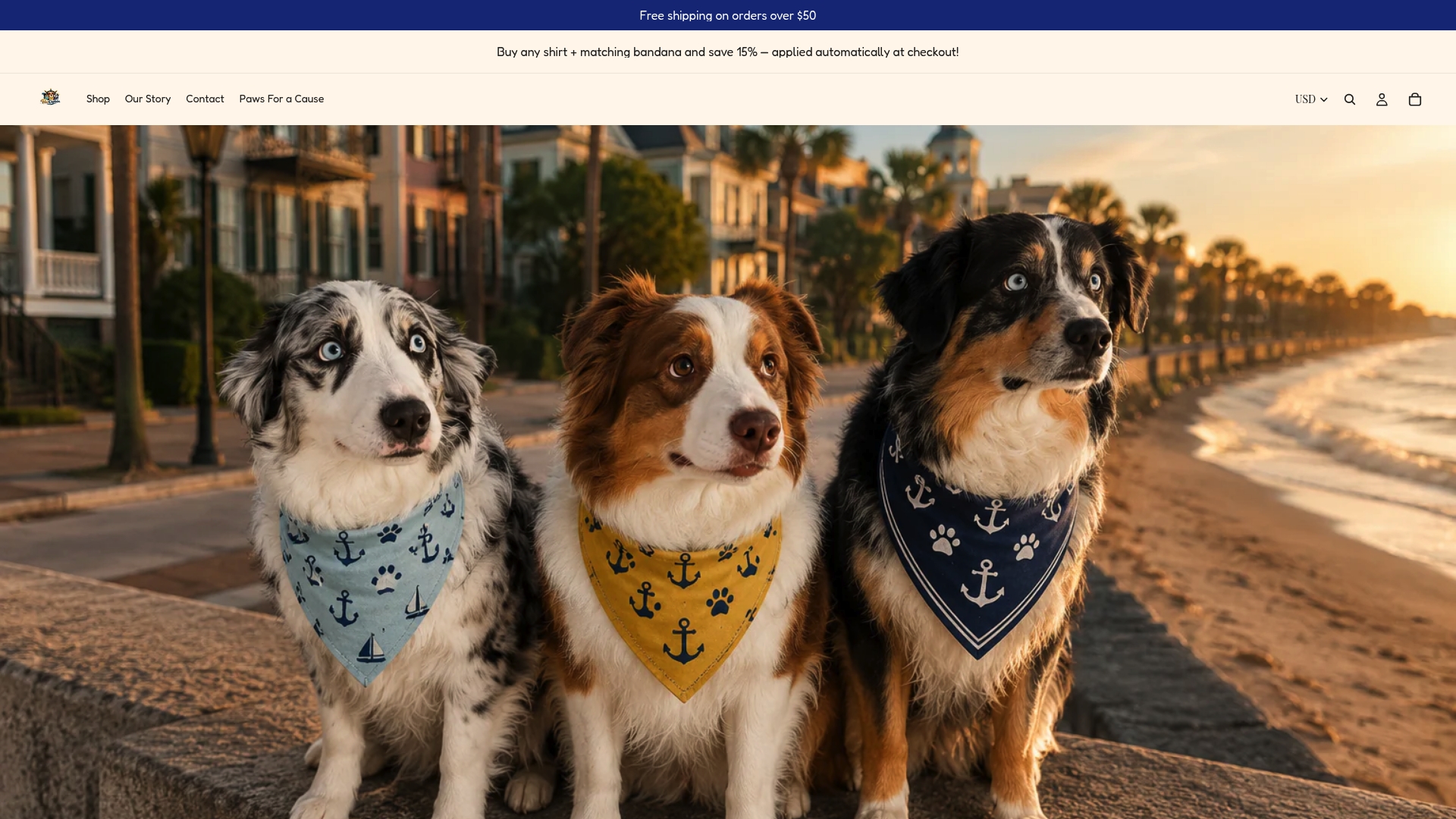
Pawcaptain designs coastal-inspired bandanas and accessories made to complement dogs of every size and shape. The Coastal Bow Club Matching Set pairs pastel patterns with a relaxed fit that works over any collar or neckline. The Nautical Striped Paw Captain Pet Bandana offers a clean, classic look suited for everyday wear. All Pawcaptain pieces are made to order with eco-friendly practices, so nothing goes to waste. Browse the full collection at Pawcaptain and find the piece that fits your dog’s style as well as their measurements.
FAQ
What are the three measurements needed for dog apparel sizing?
The three measurements are chest girth, back length, and neck girth, all taken while the dog stands naturally on a flat surface. Chest girth is the most critical dimension for most garments.
What should I do if my dog’s measurements fall between two sizes?
Always choose the larger size, especially for non-stretch or structured fabrics. A slightly larger garment allows full movement; a too-small garment restricts circulation and causes discomfort.
How do I apply the two-finger rule when measuring?
Wrap the tape around the neck or chest and check that two fingers slide comfortably underneath. This confirms the measurement is snug enough to stay in place without restricting blood flow or movement.
Do broad-chested breeds need special sizing adjustments?
Yes. Breeds like English Bulldogs and French Bulldogs benefit from adding 3–4 cm to the chest girth measurement before consulting a size chart, because standard charts assume average chest-to-back proportions.
How can I tell if a garment fits correctly once my dog is wearing it?
Watch for stiffness, freezing in place, or repeated shaking, which signal a restrictive fit. The dog should walk, sit, and turn freely with no visible skin bunching or red marks at the neck or chest.