

Washable pet bedding is any pet bed designed with materials and construction that allow for regular cleaning through machine or hand washing, keeping your pet’s sleep space hygienic and fresh. Unlike standard beds that trap dirt, dander, and parasites over time, washable designs feature removable covers, waterproof liners, or fully washable fills that hold up through repeated wash cycles. Veterinary guidelines consistently recommend machine-washable pet beds as a frontline tool for controlling allergens, odors, and pests. For pet owners who treat their dogs as family, understanding what qualifies as truly washable bedding is the first step toward a cleaner, healthier home.
What is washable pet bedding made of?
Washable pet beds fall into two main categories: cover-only washable designs and fully washable beds. Knowing the difference saves you from buying a bed that looks easy to clean but falls apart after a few cycles.
Cover-only washable beds use a zippered outer shell that you remove and toss in the machine. The internal foam or fill stays dry and protected. Removable covers prevent degradation of orthopedic foam and support structures, which is why most veterinary sources recommend this design over fully washable alternatives.
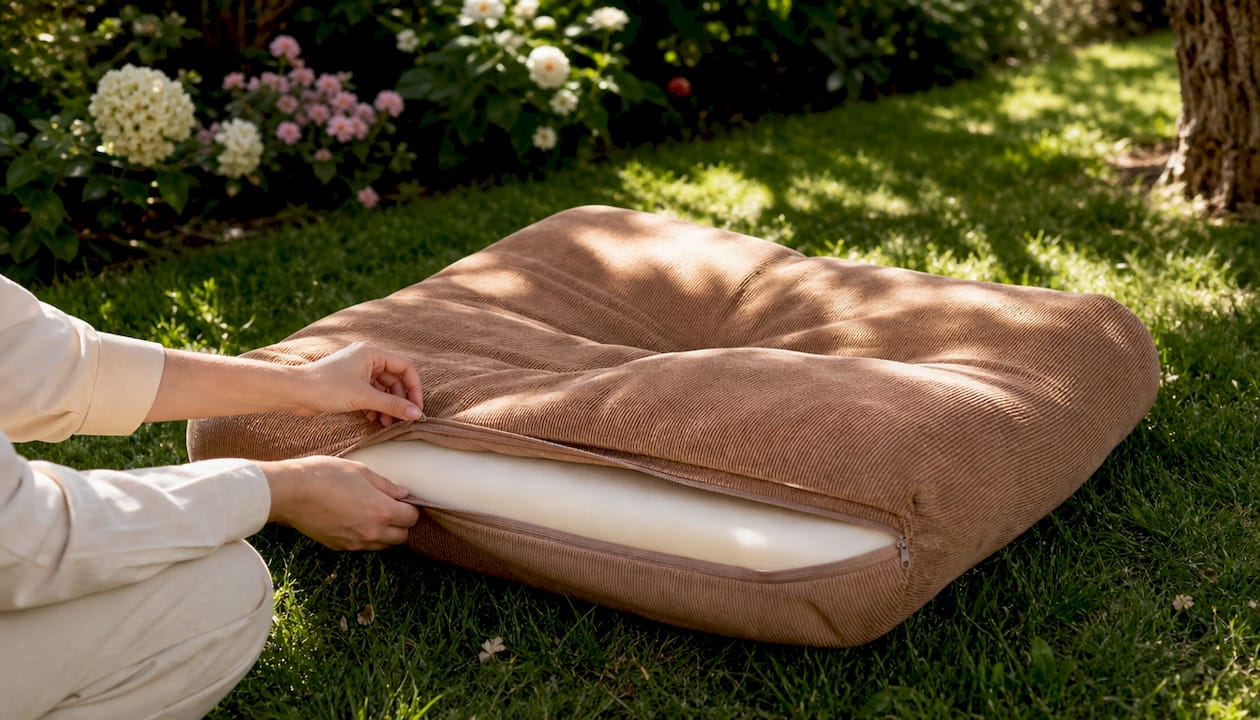
Fully washable beds allow you to wash the entire product, fill included. The problem is that washing full beds with poor-quality filling causes clumping and loss of support quickly. A polyester fiber fill that feels plush on day one can turn into a lumpy, flat mess within a few months of regular washing.
The gold standard design combines a washable outer shell with a waterproof inner liner. The liner blocks moisture from reaching the supportive foam beneath. Without that liner, liquid accidents penetrate deeply, causing odors and bacterial buildup even after surface cleaning.
| Design type | Washability | Best for |
|---|---|---|
| Removable cover only | Cover washes; fill stays dry | Orthopedic and memory foam beds |
| Fully washable | Entire bed washes | Flat mats and thin-fill beds |
| Cover plus waterproof liner | Cover washes; liner blocks moisture | Puppies, senior pets, accident-prone dogs |
| Waterproof shell only | Surface wipes clean | Outdoor or travel use |
Pro Tip: Check the care label before buying. A bed labeled “spot clean only” is not a washable pet bed, regardless of how the marketing describes it.
How does washable bedding improve pet hygiene and health?
Pet beds are one of the most overlooked sources of parasites in the home. Fleas, mites, and bacteria accumulate in bedding fibers over time, and a non-washable bed gives them a permanent home. Machine washing is the single most effective defense against pests in bedding, breaking the parasite lifecycle before it can take hold.
The hygiene benefits extend well beyond pest control:
- Allergen reduction. Pet dander, dust mites, and pollen collect in bedding fabric. Regular washing removes these particles, which matters especially for households with allergy-prone family members.
- Odor control. Bacteria feeding on skin oils and moisture produce the “dog smell” that builds up in beds. Washing eliminates the bacteria, not just the surface odor.
- Parasite lifecycle interruption. Flea eggs and larvae live in bedding between feeding cycles. Washing at the right temperature kills them before they mature. Pairing clean bedding with a flea prevention protocol gives you the strongest defense.
- Skin and coat health. A clean sleep surface reduces the risk of skin irritation and secondary infections caused by bacteria or mite activity.
Veterinary sources confirm that regular washing of pet bedding is one of the most practical steps an owner can take to reduce parasite load and allergen exposure in the home. A bed that cannot be washed is a bed that accumulates everything your pet brings in from outside.
Washing frequency matters as much as the act of washing. Most veterinary sources recommend washing pet bedding at least once every one to two weeks. Pets with skin conditions, allergies, or flea history need more frequent cycles.
What are the best washable bedding materials for different pets?
The right washable bedding material depends on your pet’s age, size, and behavior. A one-size-fits-all approach leads to beds that either fall apart too fast or fail to support the pet they were bought for.
-
Puppies. Young dogs chew, scratch, and have accidents. Durable, waterproof fabrics work best here. Look for tightly woven nylon or canvas covers with a waterproof liner underneath. Avoid loose-weave fabrics that snag on puppy claws.
-
Senior dogs. Older pets need orthopedic foam for joint support. The foam itself should never get wet, so a removable cover paired with a waterproof liner is the correct design. Padding quality directly affects joint health in aging dogs, so protect the fill at all costs.
-
Small mammals (rabbits, guinea pigs, hamsters). Paper-based bedding is the safest washable option for most small mammals. Veterinary guidelines advise avoiding cedar and pine bedding due to respiratory risks from aromatic oils. Fleece liners are a popular washable alternative, but check that your specific animal does not ingest the fibers. Certain fills like cotton fiber pose an intestinal blockage risk to rodents and rabbits.
-
Burrowing animals. Species that burrow naturally, like hamsters and gerbils, need deeper bedding they can dig into. Paper pulp and unscented paper strips are both washable-adjacent options that can be fully replaced rather than machine washed.
-
Dogs with allergies. Choose hypoallergenic covers made from tightly woven microfiber or organic cotton. These materials resist allergen penetration and hold up well through frequent washing cycles. Pawcaptain’s sustainable bed materials guide covers fabric choices that balance washability with eco-friendly production.
Matching the material to the pet’s actual behavior, not just their species, produces the best results. A senior dog who never has accidents needs different bedding than a young dog who does.
How to clean washable pet bedding properly
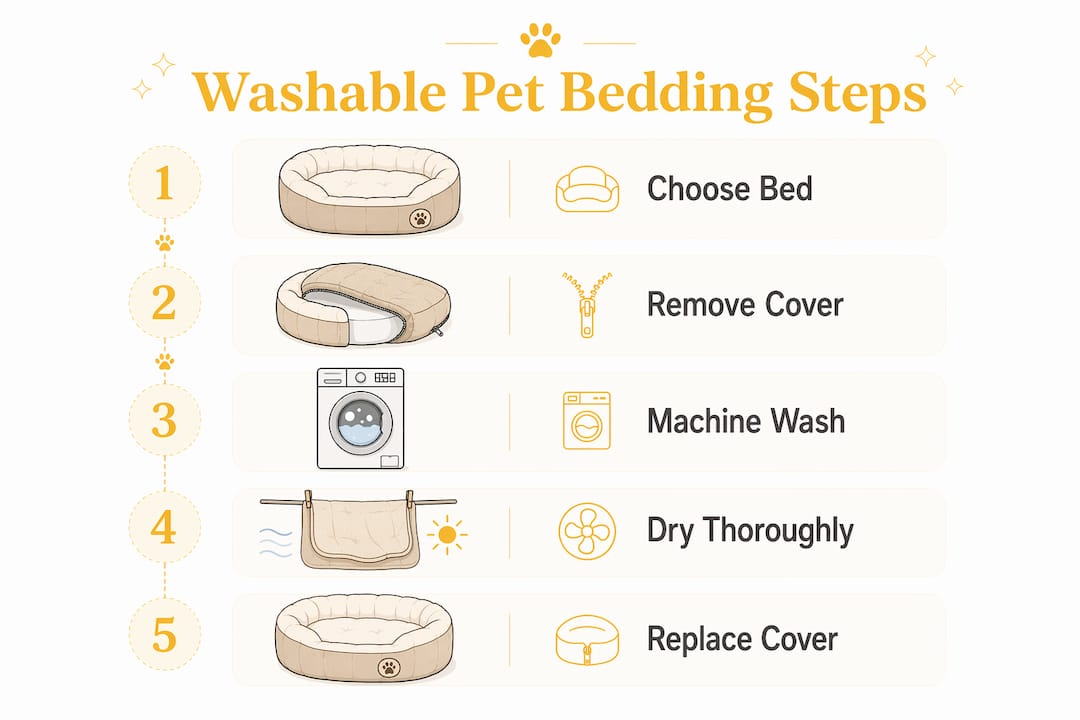
Washing pet bedding incorrectly is almost as bad as not washing it at all. Residual moisture, wrong detergents, and improper drying all create new problems while solving the original one.
Follow these steps for a clean, long-lasting result:
- Shake the bed outside first. Remove loose fur, dirt, and debris before loading the machine. This protects your washer and improves cleaning results.
- Wash pet bedding alone. Washing pet bedding separately from clothing prevents fur transfer and improves overall cleanliness. Pet hair can clog machine filters when mixed with other laundry.
- Use a pet-safe detergent. Standard detergents with strong fragrances or optical brighteners can irritate sensitive skin. Choose an unscented, enzyme-based detergent that breaks down organic matter without leaving a chemical residue.
- Select the right water temperature. Hot water kills bacteria and parasite eggs more effectively than cold. Check the care label first, but 140°F (60°C) is the temperature most often cited for effective parasite control.
- Dry completely before use. Residual moisture trapped in thick fills or dense fabric is the primary cause of mold and musty odors. Run a full dryer cycle, then feel the center of the bed. If it is still damp, run another cycle.
Pro Tip: Add a half cup of white vinegar to the rinse cycle. It neutralizes odors without leaving a scent and helps break down mineral deposits from hard water.
Avoid fabric softeners entirely. They coat fibers with a residue that reduces absorbency and can irritate pet skin. The same applies to dryer sheets, which leave a chemical film that pets may lick off the bed surface.
Key Takeaways
Washable pet bedding is the most practical tool for controlling parasites, allergens, and odors in your pet’s sleep environment.
| Point | Details |
|---|---|
| Design matters most | Choose a removable cover plus waterproof liner for the best hygiene and durability. |
| Washing breaks parasite cycles | Machine washing at 140°F kills flea eggs and mites before they can spread. |
| Match material to your pet | Puppies need waterproof fabrics; senior dogs need protected orthopedic foam. |
| Dry completely every time | Residual moisture causes mold and odors, even in freshly washed beds. |
| Wash bedding alone | Separating pet bedding from clothing prevents fur transfer and improves cleaning results. |
What I have learned from years of watching pet owners choose bedding
The most common mistake I see is buying a bed based on how it looks in a photo rather than how it actually cleans. A beautiful plush bed with no removable cover is a hygiene problem waiting to happen. After a few weeks, the smell sets in, and the only real option is to replace the whole thing.
The second mistake is trusting the word “washable” without reading the fine print. Cheap polyester fiber fills degrade fast. Frequent washing of low-quality fills causes clumping and flattening, reducing support within months. That is not a washable bed. That is a disposable bed with a misleading label.
What actually works is simple: a durable outer cover that unzips, a waterproof liner underneath, and a quality foam core that never touches water. This design costs more upfront, but it lasts years instead of months. The math is straightforward.
Consistency matters too. Washing a bed once a month is better than never, but once every one to two weeks is where you actually see the health benefits. Pets with skin issues or flea history need even more frequent cycles. The bed is only as clean as your last wash.
— Michael
Pawcaptain’s washable dog beds: built for real life
Pet owners who want bedding that holds up through regular washing without losing its shape or comfort have a clear option with Pawcaptain.

Pawcaptain’s Charleston Nights Dog Bed features a removable, washable cover and durable construction designed for dogs who actually use their beds. The Lowcountry Stripe Dog Bed brings the same easy-care design with a coastal-inspired look that fits any home. Every bed is made to order, which means less waste and a product built with your dog in mind from the start. Pawcaptain also supports local animal shelters as the brand grows, so your purchase does more than outfit your dog.
FAQ
What is washable pet bedding?
Washable pet bedding is any pet bed designed with materials that allow regular cleaning through machine or hand washing. Most washable designs feature removable zippered covers, waterproof liners, or fully washable fills.
How often should you wash pet bedding?
Veterinary sources recommend washing pet bedding at least once every one to two weeks. Pets with allergies, skin conditions, or flea exposure need more frequent washing.
Are fully washable beds better than cover-only washable beds?
Cover-only washable beds are generally more durable because the internal foam never gets wet. Fully washable beds with low-quality fills often clump and flatten after repeated washing cycles.
What materials are safest for small animal bedding?
Paper-based bedding is the safest option for most small mammals. Cedar and pine should be avoided due to respiratory risks from aromatic oils, and cotton fiber fills pose an ingestion risk to rodents and rabbits.
Can you use regular detergent on pet bedding?
Standard detergents with strong fragrances can irritate pet skin. Use an unscented, enzyme-based detergent and skip fabric softeners, which leave a residue that reduces absorbency and may irritate sensitive animals.