

Dog outdoor adventure comfort is defined as the combined result of shade, airflow, hydration, and ergonomic rest working together to keep your dog safe and at ease outside. No single product achieves this alone. The ASPCA and AVMA both identify heat stress as one of the most preventable risks for dogs during outdoor activity. Getting this right means layering solutions: a UPF 50+ shade structure, ground-level airflow, cool water within reach, and a supportive place to rest. This guide covers each element and shows you how to put them together for real results.
How to enhance dog outdoor adventure comfort with shade and airflow
Shade is the foundation of any outdoor comfort setup for dogs. Without it, every other measure works harder and delivers less. The right shade material makes a measurable difference.
HDPE mesh fabric blocks 98% of UV radiation while maintaining 70–90% airflow. That combination prevents heat from building up beneath the shade structure, which is the failure point of solid canopy alternatives. Solid tarps block sun but trap heat underneath, turning a shaded area into a still, humid pocket that raises your dog’s body temperature instead of lowering it.
Choosing the right shade setup:
- Use shade sails or pergolas rated UPF 50+ with HDPE mesh fabric
- Position the shade to cover your dog’s resting and water areas from 10 AM to 4 PM
- Avoid placing shade structures against walls or fences that radiate stored heat
- Check that the shaded zone has open sides to allow cross-ventilation
Ground surface matters as much as overhead shade. Concrete surfaces can reach temperatures over 120°F and retain that heat for hours after the sun moves. Your dog’s paws and belly absorb that heat directly. Natural grass, rubber tiles, or cooling mats placed in the shaded zone give your dog a safe surface to stand and lie on.
Airflow at the right height is the third piece. Stagnant air at 6–18 inches above ground traps warm, humid air from panting and raises heat stress risk. That is your dog’s breathing zone. Position shade structures to allow a breeze to pass through at that height, not just above it. A simple test: hold your hand at your dog’s nose height and check whether you feel moving air.
Pro Tip: Place a small battery-powered fan at ground level, angled across the shaded rest area, on days with no natural breeze. It costs almost nothing and directly addresses the airflow gap that most setups miss.
| Surface type | Heat risk | Best use |
|---|---|---|
| Concrete or asphalt | Very high (120°F+) | Avoid for resting |
| Rubber tiles | Moderate | Good transition surface |
| Natural grass (shaded) | Low | Preferred resting surface |
| Cooling mat overlay | Low | Best for direct contact |
What cooling gear and hydration methods work best for active dogs?
Cooling gear for dogs falls into two categories: active cooling during movement, and passive cooling during rest. Both matter, and they serve different moments in your dog’s outdoor time.
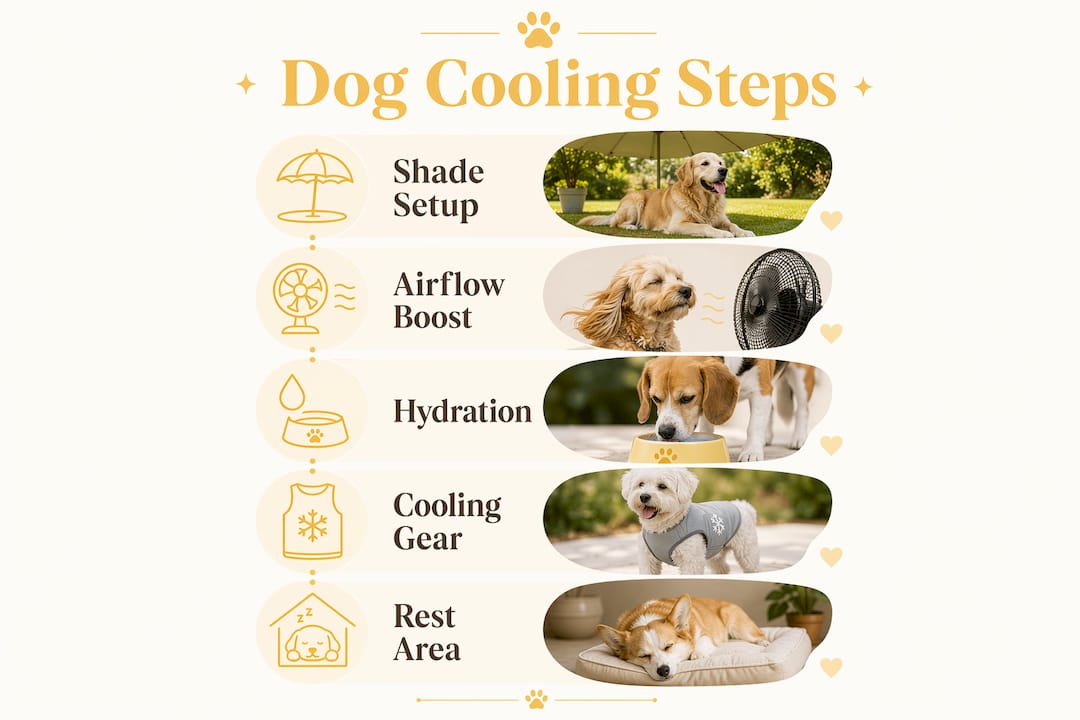
Evaporative cooling harnesses work by storing water in an absorbent layer and releasing it as heat through evaporation. Owners of dark or thick-coated dogs report that evaporative harnesses reduce panting and extend active outdoor time on hot days. The mechanism is the same as sweating in humans. The harness pulls heat away from the dog’s core as water evaporates from the outer layer. These harnesses need rewetting every 30–60 minutes in high heat to stay effective.
Cooling mats work differently. Pressure-activated or water-filled mats absorb body heat on contact without requiring electricity. They are best placed in the shaded rest zone, adjacent to the water station, so your dog can move between activity and recovery without leaving the comfort area. Check the mat surface temperature before your dog lies down on warm days, since dark-colored mats can absorb radiant heat if left in direct sun.
Hydration setup checklist:
- Place at least two water bowls in the shaded zone, within a 10-foot radius of the rest area
- Use insulated bowls or automatic waterers to keep water cool
- Refill water every 30–60 minutes on hot days
- Never leave bowls in direct sun: water in direct sun reaches 90°F within two hours in warm climates
Knowing your dog’s energy level and breed type helps you calibrate how much cooling support they need. High-energy working breeds and brachycephalic dogs (flat-faced breeds like Bulldogs and Pugs) overheat faster and need more frequent water access and shorter active intervals.
Pro Tip: Freeze a second set of water bowls the night before a long outdoor session. Swap in the frozen bowl when the first one warms up. Your dog gets consistently cool water without any extra gear.
How do you create a supportive outdoor resting area for your dog?
A resting area is not optional. Dogs need a place to recover between active periods, and the surface they rest on directly affects their body temperature and joint comfort.
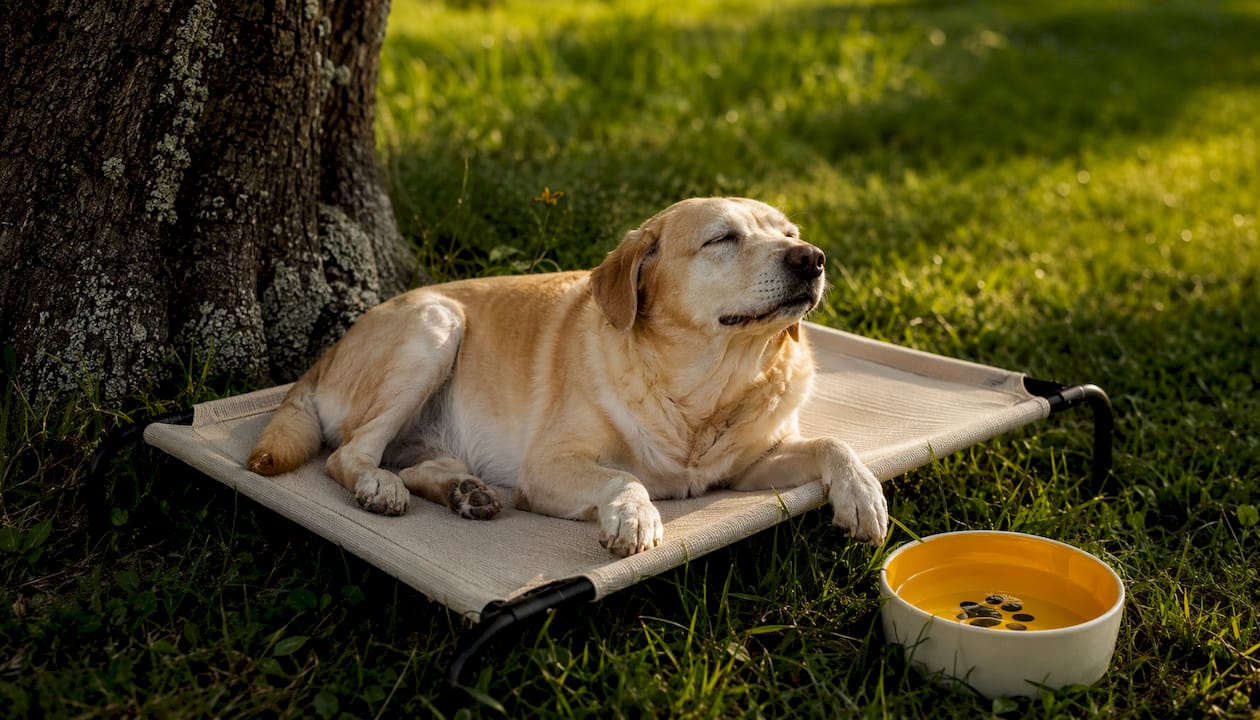
Raised dog beds keep dogs off hot, damp, or rough ground and create a microclimate of moving air underneath the sleeping surface. That airflow underneath is what separates a raised cot from a ground-level mat. Mesh-top raised beds work best in warm climates because the open weave allows heat to escape downward. Orthopedic foam beds work better in cooler conditions where insulation matters more than ventilation.
What to look for in an outdoor dog bed:
- Breathable mesh or quick-dry fabric for warm climates
- Stable, non-tip frame with paw-safe edges (no sharp corners or exposed bolts)
- Height appropriate for your dog’s size and mobility
- Easy to clean: removable covers or hose-down surfaces
- Placement on flat, shaded ground away from heat-radiating walls
For dogs with joint issues or older dogs, elevated resting solutions improve body temperature regulation and reduce pressure on joints compared to lying on hard ground. A low-profile ramp alongside the bed removes the step-up barrier for dogs with arthritis or hip dysplasia.
Pawcaptain’s coastal dog beds use breathable materials designed for warm-weather outdoor use. The construction prioritizes airflow and durability, which aligns directly with what a proper outdoor rest setup requires. You can also review sustainable bed materials to match your dog’s needs to the right fabric type.
Pro Tip: Set the bed in place before your outdoor session and check the surface temperature with your hand. If it feels warm to the touch after sitting in shade for 10 minutes, the location still gets too much reflected heat. Move it further from hard surfaces.
How to build a complete dog cooling and comfort station outdoors
A three-layer outdoor cooling system combining shade, cool ground surfaces, and ground-level airflow outperforms any single element. Removing one layer causes the others to compensate and eventually fail. The goal is a consolidated comfort zone where your dog can move freely between cooling, hydration, and rest without leaving the shaded area.
Step-by-step setup:
- Anchor with shade. Install a UPF 50+ HDPE mesh shade sail or pergola covering the entire comfort zone. Confirm it blocks direct sun from 10 AM to 4 PM and allows cross-ventilation at ground level.
- Add a water feature or paddling pool. Position a shallow paddling pool or large water tub at one end of the shaded zone. This gives your dog an active cooling option and a reason to stay in the comfort area.
- Place a cooling mat adjacent to the pool. Dogs exiting the water will naturally seek a cool surface. The mat captures that moment and extends the cooling effect.
- Set up multiple water stations. Place two or more water bowls within a 10-foot radius. Use insulated bowls and refill frequently. Shaded placement is non-negotiable.
- Verify airflow at dog level. Crouch down to your dog’s height and check for moving air. Adjust shade structure placement or add a low fan if the air feels still.
- Test surface temperatures. Press your palm to the ground surface for five seconds. If it is uncomfortable for you, it is unsafe for your dog. Adjust with cooling mats, rubber tiles, or grass.
A consolidated cooling station combining paddling pool, cooling mat, and shaded water stations in a single zone significantly improves dogs’ willingness to stay outside during heat. Positioning all elements within a 10-foot radius is the key factor. Dogs self-regulate better when relief options are immediately accessible rather than spread across a yard.
Reassess the setup each season. Summer sun angles shift, and a shade position that worked in june may leave gaps in august. A five-minute check at the start of each month keeps the system working as intended.
Key Takeaways
Effective dog outdoor comfort requires shade, ground-level airflow, cool hydration, and ergonomic rest working together as a system, not as isolated fixes.
| Point | Details |
|---|---|
| Use UPF 50+ shade fabric | HDPE mesh blocks 98% of UV radiation while maintaining 70–90% airflow beneath the structure. |
| Manage ground surface heat | Concrete exceeds 120°F in sun; use cooling mats, rubber tiles, or shaded grass for safe contact. |
| Keep water cool and accessible | Place insulated bowls in shade within a 10-foot radius and refill every 30–60 minutes on hot days. |
| Choose the right resting surface | Raised mesh beds create airflow underneath and reduce heat absorption compared to ground-level mats. |
| Build a consolidated comfort zone | Combine shade, paddling pool, cooling mat, and water stations within one 10-foot shaded area for best results. |
What I’ve learned from layering dog comfort solutions
Most dog owners pick one product and expect it to solve the problem. They buy a cooling mat, place it in partial sun, and wonder why their dog avoids it. The mat is fine. The placement is the problem.
What actually works is treating outdoor dog comfort the way you would treat a campsite setup. You think about sun angle, wind direction, ground surface, and access to water before you put anything down. The gear is secondary to the layout. I have seen dogs ignore expensive cooling products placed in the wrong spot and spend the whole afternoon on a patch of shaded grass near a water bowl.
The behavior your dog shows tells you everything. A dog that keeps moving, panting heavily, or seeking shade in corners is not comfortable. A dog that settles, drinks regularly, and rests without restlessness has what it needs. Watch the behavior first, then adjust the setup.
Coat type and size change the equation significantly. A dark-coated Labrador in a humid climate needs active cooling gear like an evaporative harness and a paddling pool. A short-coated Whippet in a dry climate may do fine with shade and a cool mat. Matching the solution to the dog matters more than buying the most expensive option. For a full checklist before any outdoor outing, the beach day prep guide from Pawcaptain covers heat stress prevention in practical detail.
— Michael
Pawcaptain’s outdoor comfort gear for your next adventure
Pawcaptain builds coastal-inspired pet goods with outdoor use in mind. Every product is made to order using eco-friendly materials, so nothing sits in a warehouse and nothing goes to waste.
The Lowcountry Stripe Dog Bed and Coastal Crab Plaid Dog Bed use breathable construction suited to warm-weather outdoor resting. For coordinated adventure style, the Coastal Postcard Dog Bandana pairs well with any outdoor setup and comes in Pawcaptain’s signature coastal prints. Each purchase supports Pawcaptain’s commitment to local animal shelters. Browse the full collection at pawcaptain.com and find gear that fits your dog’s outdoor life.
FAQ
What does UPF 50+ mean for dog shade structures?
UPF 50+ means the fabric blocks 98% of UV radiation. HDPE mesh shade sails rated UPF 50+ also maintain 70–90% airflow, preventing heat buildup beneath the structure.
How often should I refill my dog’s water bowl outdoors?
Refill water every 30–60 minutes on hot days. Water left in direct sun reaches 90°F within two hours, which discourages drinking and increases heat stress risk.
Are raised dog beds better than ground-level cooling mats?
Raised beds create airflow underneath the sleeping surface, which lowers body temperature more effectively than ground-level mats on hot days. Cooling mats work best as a supplement placed adjacent to the raised bed.
What is the best cooling gear for thick-coated dogs on hikes?
Evaporative cooling harnesses are the most effective option for thick or dark-coated dogs during active outdoor time. They require rewetting every 30–60 minutes to maintain their cooling effect.
How do I know if my dog is uncomfortable outdoors?
Heavy panting, constant movement, seeking shade in corners, and reluctance to settle are the clearest behavioral signs. A comfortable dog drinks regularly, rests calmly, and does not seek escape from the designated comfort area.