

Pet loungewear is clothing designed to give pets comfort and mobility during their relaxed, awake hours, not just at bedtime. The category sits between everyday pet apparel and sleepwear, filling the gap for dogs who spend long stretches of the day resting, moving around the house, or simply hanging out with their owners. Understanding what is pet loungewear explained properly means knowing how it differs from pajamas, what fabrics work best, and how fit affects your pet’s behavior and health. This guide covers all of it, from fabric science to 2026 style trends, so you can make a confident choice for your dog.
What is pet loungewear, and how does it differ from sleepwear?
Pet loungewear is defined as apparel built for versatile off-duty use, supporting activities like light exercise and household movement throughout the day. Pet pajamas, by contrast, focus on rest and warmth during sleep. The distinction matters because the demands on each garment are completely different.
Pajamas prioritize softness and warmth for a stationary pet. Loungewear must handle movement, friction, and repeated wear without breaking down. That means higher durability construction and fabrics that hold their shape after multiple washes.
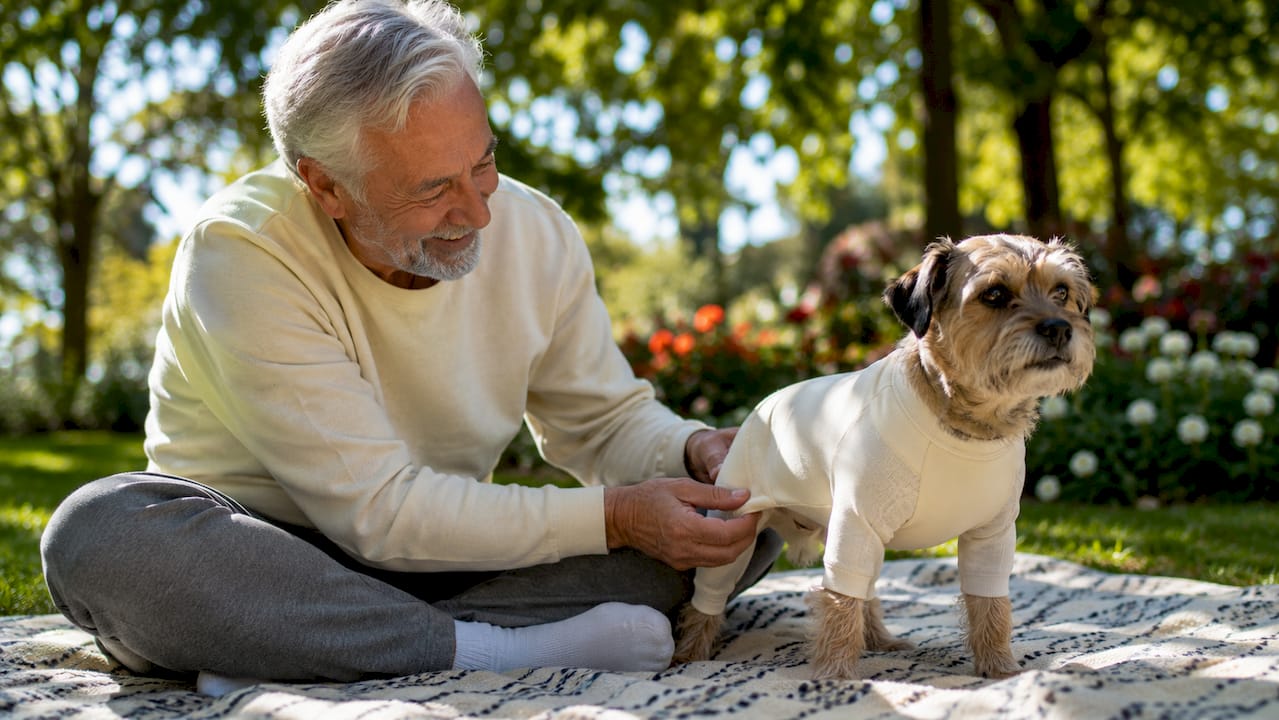
The functional overlap confuses many pet owners. A well-made pair of pet pajamas can work for short lounging sessions, but it will not hold up to a full day of activity. Loungewear is built to do both. Think of it as the pet equivalent of human athleisure: comfortable enough to relax in, durable enough to move in.
If you want a deeper look at how these categories compare in practice, the guide on bespoke pet apparel breaks down functional distinctions with useful detail.
What makes pet loungewear comfortable and functional for pets?
Comfort in pet clothing is not automatic. Poor fit, non-breathable fabrics, and lack of thermal regulation cause pet discomfort, not the clothing itself. The right design choices remove every friction point between the garment and your dog’s body.
Fabrics that move with your pet
4-way stretch fabrics like cotton-spandex blends prevent restriction of movement and improve clothing tolerance. These fabrics accommodate shoulder and hip movement, which are the two joints most likely to cause a dog to freeze or try to remove a garment. Modal is another strong option. It is softer than standard cotton, breathes well, and resists pilling after repeated washing.
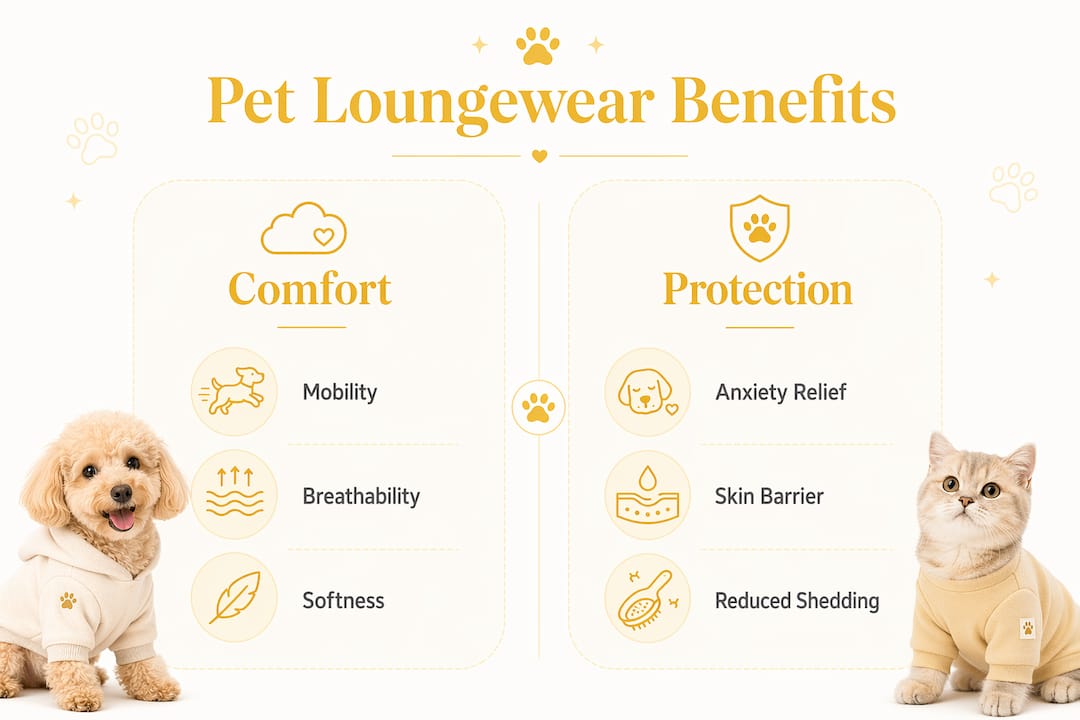
Moisture-wicking inner layers pull sweat and heat away from the skin. This matters most for dogs with dense coats or skin conditions. Without it, trapped moisture creates the exact environment where irritation and hot spots develop.
Seam construction and skin health
Seamless or flatlock seam construction minimizes chafing and avoids worsening skin irritations in sensitive pets. This is especially critical around high-friction areas like underarms and inner thighs. Standard sewn seams create raised ridges that press against the skin during movement, triggering the itch-scratch-lick cycle that worsens existing conditions.
Key fabric and construction features to look for:
- 4-way stretch: Cotton-spandex blends or modal for full joint mobility
- Moisture-wicking inner layer: Pulls heat and sweat away from skin
- Flatlock or seamless seams: Eliminates chafing at underarms and inner thighs
- Breathable outer layer: Prevents heat buildup during light activity
- Shape retention: Fabrics that resist pilling and hold fit after washing
Pro Tip: Measure your dog’s chest girth, neck circumference, and back length before buying. Most sizing errors happen because owners use weight alone, which does not account for breed-specific body proportions.
What are the main benefits of pet loungewear beyond comfort?
The benefits of pet loungewear extend well past keeping your dog cozy. The right garment can reduce anxiety, protect healing skin, and even strengthen the bond between you and your pet.
Calming effects and anxiety reduction
Compression-style pet apparel can significantly calm anxious pets and improve healing. Properly fitted compression loungewear offers calming proprioceptive feedback comparable to weighted blankets for humans. This gentle, even pressure on the torso signals the nervous system to reduce arousal, which is why many veterinarians recommend compression garments for noise-sensitive or separation-anxious dogs.
“Compression-style pajamas can rapidly improve anxiety and comfort if introduced gradually in calm moments, not during panic.” — pajamas.live
The key word is gradually. Putting a compression garment on a dog mid-panic will not work. Introduce it during a calm, positive moment so your dog builds a neutral association with wearing it.
Skin protection and reduced shedding
Pet loungewear acts as a soft barrier between your dog’s skin and environmental irritants. For dogs recovering from surgery or managing skin conditions, this protection reduces the urge to lick or scratch. Well-designed recovery garments feature snap closures and reinforced leg openings for ease and durability during healing, making them a practical alternative to plastic cones.
Loungewear also reduces shedding on furniture and clothing. A lightweight layer traps loose fur before it reaches your couch or car seat.
Key benefits at a glance:
- Anxiety reduction: Compression fit provides calming proprioceptive feedback
- Skin protection: Prevents licking, scratching, and contact with irritants
- Shedding control: Traps loose fur before it reaches furniture
- Injury support: Covers healing wounds without restricting movement
- Companionship: Matching sets reinforce shared routines between pet and owner
How to choose the best pet loungewear: fabrics, fit, and style
Choosing pet loungewear well comes down to three things: the right fabric for your dog’s body, a fit that does not restrict movement, and a style that works for your lifestyle.
-
Measure first, buy second. Take chest girth, neck circumference, and back length. Use the brand’s size chart, not a generic size label. Incorrect clothing fit raises cortisol levels in pets within minutes, which shows how fast a poor-fitting garment creates stress.
-
Prioritize breathability for active dogs. Dogs that move around the house frequently need fabrics with moisture-wicking properties. Cotton-spandex blends and modal are the two most reliable options for daily wear.
-
Check seam placement before purchasing. Run your finger along the inside of the garment. Raised seams at the underarm or inner thigh are a red flag. Flatlock or seamless construction is the standard to look for in quality loungewear.
-
Match the style to your dog’s personality and your aesthetic. Solid colors work for minimalist owners. Coastal prints, plaids, and coordinated sets work well for owners who want their dog’s look to reflect their own. The dog accessories styling checklist from Pawcaptain is a practical resource for matching fit, style, and eco-conscious choices.
-
Choose easy-care fabrics for longevity. Durable fabrics like cotton-spandex blends and modal retain shape, resist pilling, and maintain comfort after repeated washing. Avoid delicate fabrics that require hand washing if your dog wears loungewear daily.
Pro Tip: Wash new loungewear once before your dog wears it. This removes manufacturing residues and softens the fabric, reducing the chance of initial skin irritation.
What are the biggest pet loungewear trends in 2026?
The pet loungewear category is growing fast, and the designs available in 2026 reflect both better technology and stronger owner demand for style.
Matching pet and owner loungewear sets are one of the most visible trends. Coordinated patterns balance practicality with the social bonding of shared routines. Brands like Pawcaptain have built their entire identity around this concept, offering coastal-inspired matching sets that work for both dog and owner. The matching bandana guide explains how coordinated pet-owner styles have moved from novelty to a genuine lifestyle category.
Current trends shaping the market:
- Smart textiles: Phase-change materials that regulate body temperature during activity
- Matching sets: Coordinated owner-pet designs that reinforce companionship
- Sustainable fabrics: Organic cotton, recycled fibers, and low-waste production methods
- Customization: Made-to-order options that account for breed-specific body shapes
- Minimalist aesthetics: Clean lines and neutral palettes replacing novelty prints
| Trend | What it means for pet owners |
|---|---|
| Smart textiles | Garments that adapt to body temperature, reducing overheating risk |
| Matching sets | Coordinated styles that make shared routines more intentional |
| Sustainable fabrics | Eco-friendly options that reduce environmental impact |
| Customization | Better fit for non-standard body shapes and breed-specific proportions |
| Minimalist design | Versatile pieces that work across multiple settings |
Sustainability is no longer a niche preference. Pet owners who want to choose sustainable pet products are driving demand for organic and recycled fabric options. Brands that make products to order, rather than holding large inventory, reduce waste at the production level. That model is becoming a meaningful differentiator in the pet apparel market.
Key Takeaways
Pet loungewear is the most functional category of pet clothing because it combines comfort, durability, and mobility into a single garment designed for all-day wear.
| Point | Details |
|---|---|
| Loungewear vs. sleepwear | Loungewear supports movement and daily activity; pajamas focus on rest and warmth. |
| Fabric choice matters | Cotton-spandex blends and modal offer the best combination of stretch, breathability, and durability. |
| Fit affects behavior | Incorrect fit raises cortisol within minutes; always measure chest, neck, and back length before buying. |
| Compression calms anxiety | Properly fitted compression garments provide proprioceptive feedback that reduces stress in anxious dogs. |
| Sustainability is growing | Made-to-order and eco-friendly fabric options are becoming standard expectations, not premium add-ons. |
What I’ve learned from watching pet owners get this wrong
Most pet owners who buy loungewear and then abandon it made the same mistake: they bought for looks first and fit second. The garment looked great on the product page, arrived in the wrong size, and the dog spent the next hour trying to shake it off. That experience gets labeled as “my dog hates clothes,” when the real problem was a chest measurement that was off by two inches.
The second mistake I see constantly is buying compression-style garments and putting them on a dog that is already stressed. Compression works through gradual association. A dog that first experiences a snug garment during a thunderstorm will associate that pressure with panic, not calm. The introduction has to happen on a quiet afternoon, with treats, before the garment is ever used in a high-stress situation.
The third thing worth saying: not every dog needs loungewear. Short-coated breeds in cold climates benefit the most. Dogs with dense double coats and no skin conditions may find any additional layer uncomfortable regardless of fabric quality. The question to ask is not “would my dog look good in this?” but “does my dog have a reason to wear this?” Comfort and function should drive the decision. Style is a bonus, not the starting point.
— Michael
Pawcaptain’s coastal-inspired pet accessories
Pawcaptain designs pet accessories that take the same principles covered in this article seriously: fit, comfort, and materials that hold up to daily use. Every product is made to order, which means no excess inventory and no compromise on quality to meet bulk production timelines.
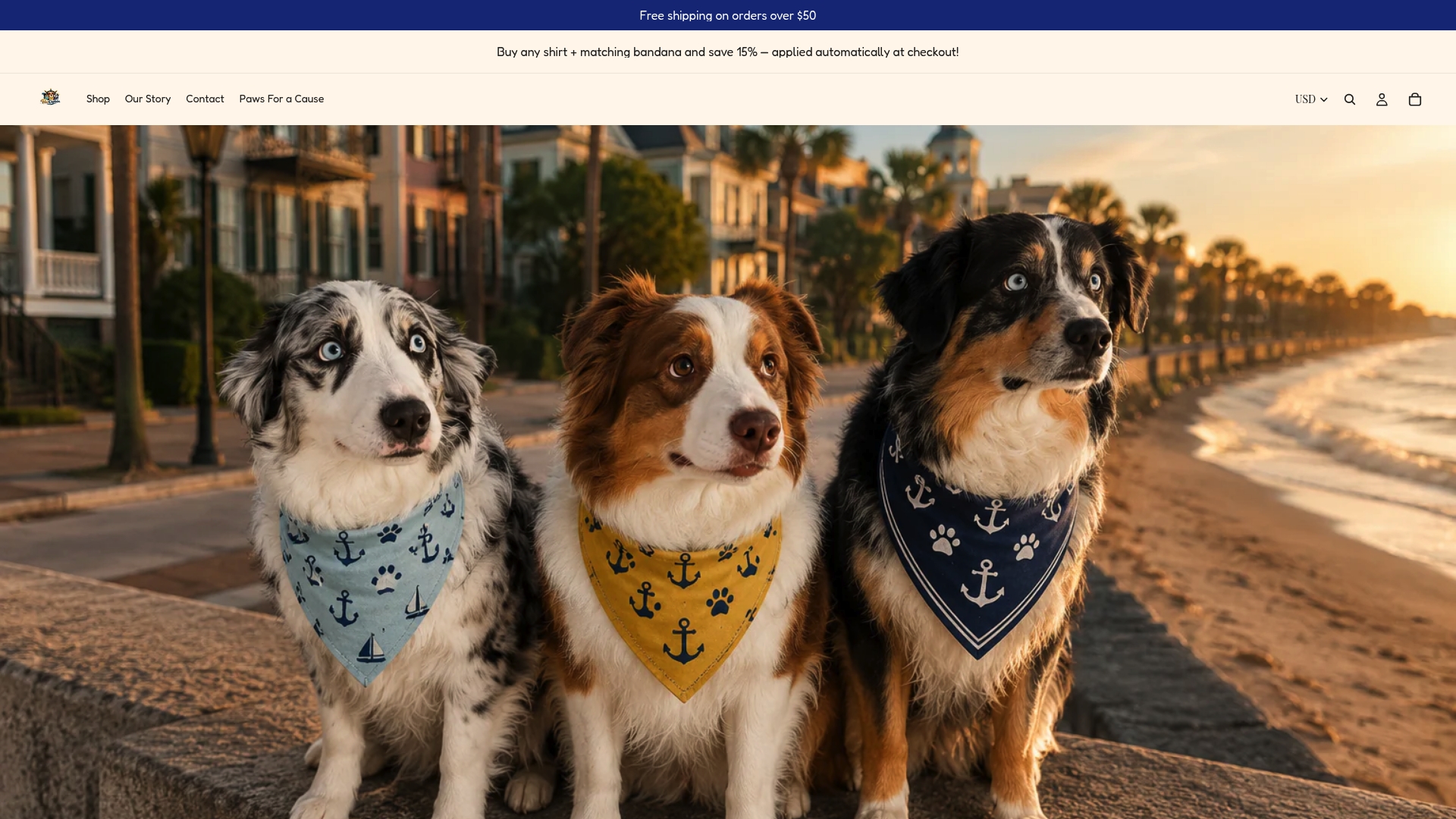
The Coastal Bow Club Matching Set is a strong starting point if you want coordinated pet-owner style without sacrificing comfort. For a complete matching look, the First Mate Set pairs a bandana with a matching tee designed for both dog and owner. Pawcaptain’s coastal aesthetic works across casual and active settings, which aligns directly with the versatility that good pet lounge apparel demands.
FAQ
What is pet loungewear?
Pet loungewear is clothing designed for comfort and mobility during a pet’s relaxed, awake hours. It differs from sleepwear by supporting light activity and all-day wear with more durable, stretch-friendly fabrics.
What are the best fabrics for pet loungewear?
Cotton-spandex blends and modal are the top choices. Both offer 4-way stretch for joint mobility, breathability to prevent overheating, and durability that holds up after repeated washing.
How do I know if pet loungewear fits correctly?
Measure your dog’s chest girth, neck circumference, and back length, then match those numbers to the brand’s size chart. A well-fitted garment allows full shoulder and hip movement without bunching or pulling.
Can pet loungewear help with anxiety?
Yes. Compression-style loungewear provides proprioceptive feedback that calms anxious pets, similar to the effect of a weighted blanket for humans. Introduce it gradually during calm moments for the best results.
Is pet loungewear the same as pet pajamas?
No. Pet pajamas focus on warmth and rest during sleep. Pet loungewear is built for all-day use, with higher durability and fabrics designed to handle movement, moisture, and repeated wear.