

A comfortable dog bed is defined as a sleeping surface matched to a dog’s body size, weight, sleep position, and behavioral profile. The wrong bed causes rejection, poor sleep, and joint strain. The right one supports restorative rest and long-term health. Research confirms that 9 distinct dog personality needs link directly to specific bed types, which means a one-size-fits-all approach fails most dogs. Knowing the types of comfortable dog beds available gives you a real framework for making the right choice.
1. What are orthopedic and memory foam dog beds?
Orthopedic dog beds use high-density foam to distribute a dog’s body weight evenly and relieve pressure on joints. Memory foam, the most common fill in this category, conforms to the dog’s shape and reduces stress on hips, elbows, and shoulders. These beds are the top choice for senior dogs, large breeds, and any dog recovering from surgery or managing arthritis.
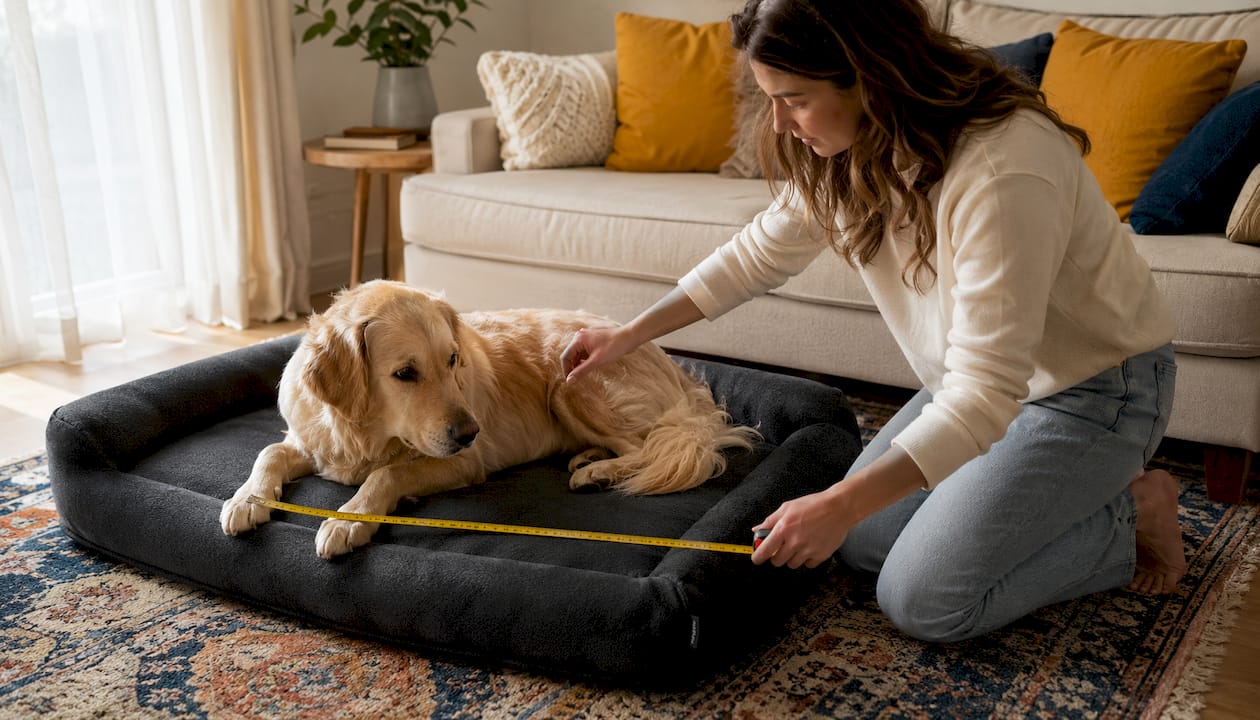
Large dogs need higher density foam to prevent the foam from compressing fully under their weight. A foam that bottoms out provides no support at all. For dogs over 50 lbs, look for foam rated at 1.8 lbs per cubic foot or denser.
Older dogs benefit most from low-profile orthopedic designs with non-slip bases. A low entry height lets arthritic dogs step on and off without pain. Some orthopedic beds also include self-warming linings that retain body heat, which helps dogs with poor circulation stay comfortable through the night.
- Memory foam fill for pressure relief
- Low-profile frame for easy entry
- Non-slip base for stability
- Self-warming lining for senior or cold-prone dogs
- Removable, washable cover for hygiene
Pro Tip: Check the role of padding in joint health before buying. A thicker foam layer does not always mean better support. Density matters more than depth for dogs over 40 lbs.
2. How do bolster, donut, and sofa-style dog beds provide security?
Bolster, donut, and sofa-style beds share one defining feature: raised edges. Those edges serve two purposes. They give dogs a surface to rest their head or chin on, and they create a sense of enclosure that reduces anxiety. Dogs who curl up to sleep or who lean against furniture almost always prefer this style.
The donut shape works best for curlers. The round form lets a dog tuck into a tight circle with the raised edge wrapping around its back. Sofa-style beds, which have a raised back and lower front, suit leaners who like to prop their head up while watching the room. Oval bolster beds split the difference and work for both positions.
Internal usable dimensions matter more than external footprint in these beds. The raised walls eat into the sleeping surface. A bed labeled 36 inches may only offer 28 inches of flat resting area once the bolsters are accounted for. Always measure the interior flat zone before buying.
- Round donut beds for tight curlers
- Sofa-style beds for head-resting leaners
- Oval bolster beds for mixed sleep styles
- Measure interior flat space, not outer dimensions
- Firm bolsters hold shape longer than soft ones
Pro Tip: Choose bolsters with firm, dense fill rather than loose polyfill. Loose fill compresses quickly and stops providing head support within weeks.
3. Which dog beds suit burrowers, hot sleepers, and accident-prone dogs?
Three very different dog types need three very different bed designs. Matching the bed to the behavior is the fastest way to get your dog to actually use it.
Burrowers
Cave or hooded beds give burrowing dogs the enclosed space they instinctively seek. Dogs who dig at blankets, burrow under covers, or hide in tight spaces feel most secure in a bed with a hood or flap they can crawl under. These beds trap body heat, which also makes them a strong choice for small breeds and dogs who feel cold easily.
Hot sleepers
Elevated beds improve airflow by lifting the dog off the floor and allowing air to circulate underneath. This is the best option for thick-coated breeds, dogs in warm climates, and any dog who consistently moves off its bed to sleep on tile or hardwood. Elevated beds also stay cleaner and dry faster after washing.
Accident-prone dogs
Waterproof beds use a sealed inner liner or a coated fabric shell that blocks moisture from reaching the foam. These beds are non-negotiable for incontinent dogs, puppies in training, and senior dogs with bladder control issues. The outer cover should be machine washable. The inner liner should wipe clean with a damp cloth.
Temperature regulation drives bed preference more than most owners realize. A dog who avoids its bed is often too hot or too cold, not simply being stubborn.
4. How to choose dog bed size and shape based on sleep style
Sizing is the single most common mistake dog owners make. Improper sizing is the top reason dogs reject beds, more than material, color, or placement. A minimum 4-inch clearance around the dog’s fully stretched length is the standard measurement rule.
Your dog’s sleep position tells you which shape to buy.
| Sleep position | Recommended bed shape | Key sizing note |
|---|---|---|
| Curler | Round donut or bolster | Measure curled diameter, add 6 inches |
| Sprawler | Flat mat or large rectangle | Measure nose to tail fully stretched |
| Leaner | Sofa-style bolster | Check bolster height matches dog’s neck |
| Burrower | Cave or hooded bed | Interior depth must fit dog fully inside |
| Side sleeper | Flat orthopedic mat | Width should exceed shoulder-to-hip span |
Breed size also guides the starting point for bed dimensions.
- Small breeds (under 20 lbs): 24–30 inch beds
- Medium breeds (20–50 lbs): 30–40 inch beds
- Large breeds (50–90 lbs): 40–50 inch beds
- Extra-large breeds (over 90 lbs): 50 inches and above
A cozy dog nap corner also affects which size works in your space. A bed that fits the dog but crowds the room often gets moved or ignored. Balance the dog’s size needs with the physical space available.
Pro Tip: Measure your dog while it sleeps, not while it stands. Most dogs sleep stretched longer than owners expect, especially sprawlers and side sleepers.
For a full breakdown of how sizing affects long-term comfort, the dog comfort style balance guide covers the tradeoffs in detail.
5. What are specialized dog beds for durability, travel, and unique needs?
Some dogs need a bed built for a specific situation rather than a general sleep style. These specialized options solve practical problems that standard beds cannot.
Chew-resistant beds
Chew-resistant beds use tougher materials like ballistic nylon, ripstop fabric, or reinforced stitching to withstand destructive chewing. They are the right choice for puppies, high-energy dogs, and any dog who has already destroyed a standard bed. The foam inside is typically denser and harder to pull out. These beds cost more upfront but last significantly longer.
Travel beds
Travel beds fold flat or roll up for easy transport. They give dogs a familiar scent and surface in unfamiliar environments, which reduces stress during travel or stays away from home. Look for lightweight frames, carry handles, and machine-washable covers. A travel bed that smells like home settles an anxious dog faster than any other intervention.
Self-warming beds
Self-warming beds use reflective materials or heat-retaining fabrics to bounce the dog’s own body heat back. They require no electricity and work well for dogs in colder climates, small breeds with low body fat, and senior dogs with circulation issues. They pair well with orthopedic foam bases for dogs who need both warmth and joint support.
Self-warming designs suit cold or older dogs who lose body heat quickly during sleep. For dogs with serious mobility issues, pairing a self-warming layer with an orthopedic base addresses both thermal comfort and joint support at once. The pain relief options for senior dogs guide covers how warmth and support work together for aging pets.
Key takeaways
The most effective dog bed matches your dog’s sleep position, body size, and behavioral profile, not just your preference for style or price.
| Point | Details |
|---|---|
| Match bed type to sleep style | Curlers need donut beds; sprawlers need flat mats; burrowers need cave beds. |
| Measure internal dimensions | Bolster and sofa beds reduce usable space; always measure the interior flat zone. |
| Prioritize foam density for large dogs | Heavier dogs need denser foam to prevent bottoming out and protect joints. |
| Size drives acceptance | A 4-inch clearance around the dog’s stretched length prevents bed rejection. |
| Specialized needs require specific beds | Chew-resistant, waterproof, and self-warming beds solve problems standard beds cannot. |
What I’ve learned after years of watching dogs ignore expensive beds
Most owners buy a bed based on how it looks in the room. The dog then ignores it completely, and the owner assumes the dog just “doesn’t like beds.” That’s almost never true. The dog is telling you something specific about fit, temperature, or enclosure.
The most underappreciated factor is thermal comfort. A dog who sleeps on cool tile in summer does not need a plush memory foam bed. It needs an elevated mesh bed with airflow. A dog who burrows under blankets every night does not need an open flat mat. It needs a cave bed. Watching where your dog chooses to sleep on its own tells you more than any product description.
Durability and washability matter more than most owners budget for. A bed that cannot be washed weekly becomes a hygiene problem fast. I always recommend removable covers with a zipper, not a slip-on design. Zipper covers stay in place and wash flat without bunching.
One more thing: dogs change. A two-year-old dog who sprawls may curl up tightly at age nine. Reassess the bed every two to three years, especially as your dog enters its senior years. The made-to-order dog bedding approach works well here because you can spec the right dimensions and materials as your dog’s needs shift.
— Michael
Pawcaptain’s dog beds for every sleep style
Pawcaptain designs its beds around the same principles covered here: the right size, the right support, and materials built to last.
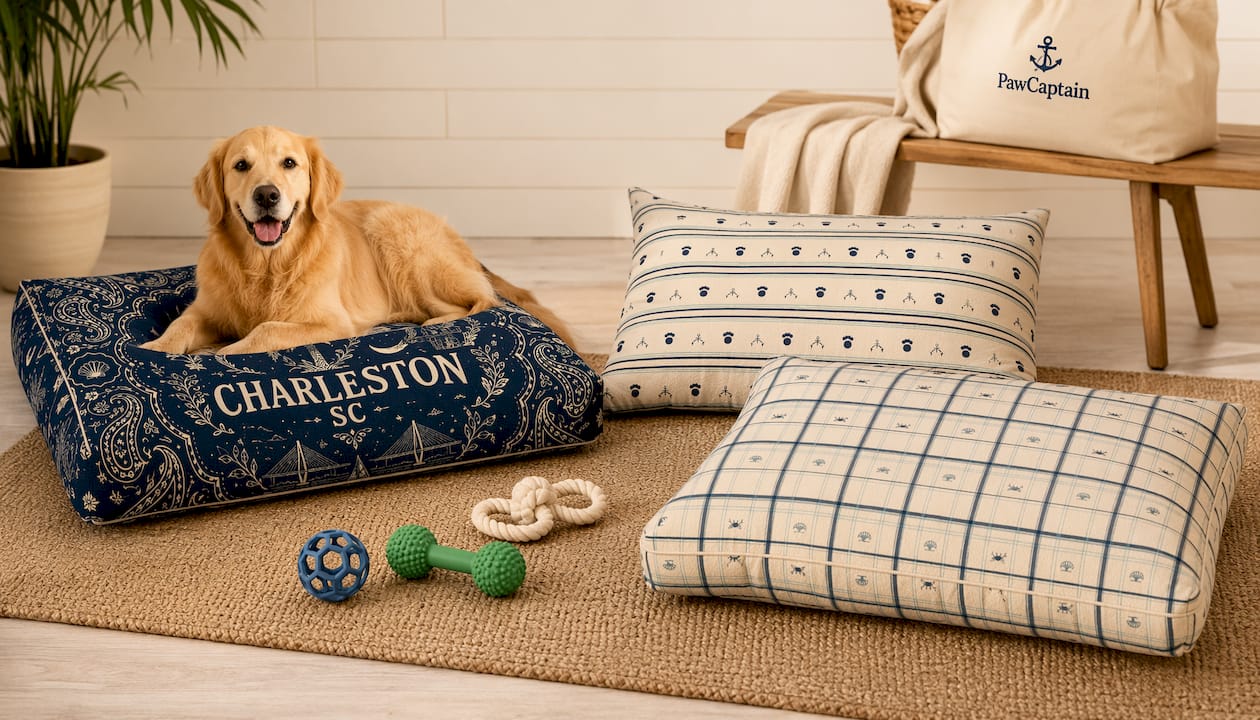
The Charleston Nights dog bed anchors Pawcaptain’s lineup with a range of sizes suited to small breeds through large dogs. For dogs who prefer a snug lounge-style surface, the Lowcountry Stripe dog bed delivers comfort with a coastal design that fits most living spaces. Dogs who need a cozier, more enclosed feel will find the Coastal Crab Plaid dog bed a natural fit. Every Pawcaptain bed is made to order, which means no excess inventory and materials chosen for the dog’s actual needs, not mass production.
FAQ
What type of dog bed is best for senior dogs?
Orthopedic memory foam beds with low-profile frames and non-slip bases are best for senior dogs. Self-warming linings add thermal comfort for dogs with poor circulation or arthritis.
How do I know if my dog’s bed is the right size?
Measure your dog fully stretched from nose to tail and add at least 4 inches on each side. Improper sizing is the leading cause of bed rejection.
What is the best dog bed for a dog that chews everything?
Chew-resistant beds made from ballistic nylon or ripstop fabric with reinforced stitching are the best option. They cost more upfront but outlast standard beds by a wide margin.
Do elevated dog beds actually keep dogs cooler?
Yes. Elevated beds allow air to circulate underneath the dog, which reduces body heat buildup. They work best for thick-coated breeds and dogs in warm climates.
Should I measure inside or outside a bolster bed?
Always measure the interior flat zone. Raised edges reduce usable sleeping surface, so the external dimensions of a bolster bed are not a reliable guide to how much space your dog actually has.